
Storage Tips
5 Reasons to Rent Storage While Renovating Your Apartment
5 Reasons to Rent Storage While Renovating Your Apartment

Enter at least 3 characters.
When planning to store your clothes, it's important to do so carefully to protect them from moisture, dust, and damage. Proper packing and preparation can significantly extend the lifespan of your wardrobe while it's not in use. In this guide, you will learn all the necessary steps and tips on how to prepare clothes for storage, whether for short-term or long-term keeping. Besides the basic steps, it's crucial to understand the specific requirements of different materials and types of clothing, as well as how to adapt storage conditions to the space where you keep your wardrobe. This way, you can prevent not only physical damage but also loss of color, shape, and freshness of the fabrics.

The first step in preparing clothes for storage is selecting appropriate packaging. The best option is plastic boxes with lids, which protect clothes from moisture and dust. Boxes should be sturdy but not too heavy, making them easy to carry. You can also use special vacuum bags that significantly reduce the volume of clothes and protect them from external influences. Vacuum bags are especially useful for winter coats and thick sweaters because they save space, but care should be taken not to use them for delicate materials like silk or wool, as excessive pressure can damage the fibers.
Bags and boxes must be completely dry and clean before packing clothes. Use protective paper wraps or cotton covers for delicate fabrics to avoid direct contact with plastic, which can retain moisture. Cardboard boxes are not recommended for long-term storage as they do not provide sufficient protection against moisture and pests. If you do use cardboard moving boxes, be sure to place them on a base that prevents direct contact with moisture from the floor, such as pallets or wooden boards.
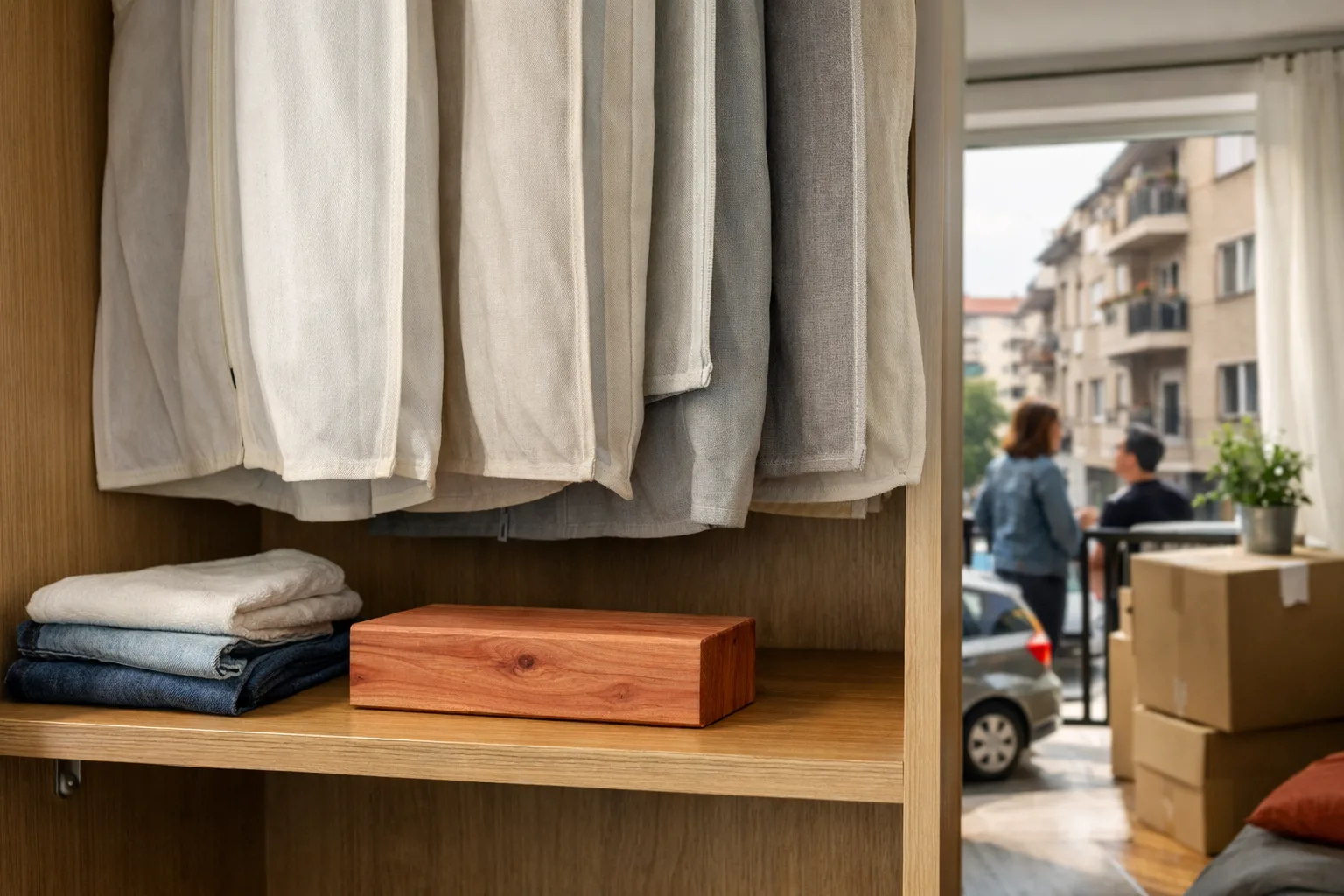
For particularly valuable or delicate clothing, such as wool coats or silk dresses, it is recommended to use special garment bags that hang and allow clothes to remain unfolded and uncrushed. These bags are also useful if you plan to move the clothes multiple times during storage. Additionally, these bags often feature breathable materials that allow air circulation, reducing the risk of unpleasant odors and mold.
Before packing clothes, be sure to wash and completely dry them. Dirt, sweat, or stains can over time damage fibers and attract insects like moths. Use appropriate detergents for each fabric type and follow the instructions on the labels. For delicate materials such as silk or wool, it is recommended to use special detergents that do not damage fibers and help preserve color and fabric structure.
After washing, dry clothes in a well-ventilated area but avoid direct sunlight, which can fade colors. Completely dry clothes reduce the formation of mold and unpleasant odors during storage. If possible, use dryers with gentle drying programs, especially for delicate fabrics, to avoid excessive shrinking or damage.
If possible, wait a few days after drying before packing to ensure there is no residual moisture. This prevents condensation inside boxes or bags, which is one of the most common causes of clothing damage in storage. Also, before packing, check that clothes are completely dry to the touch, especially in folds and seams where moisture can linger longer.
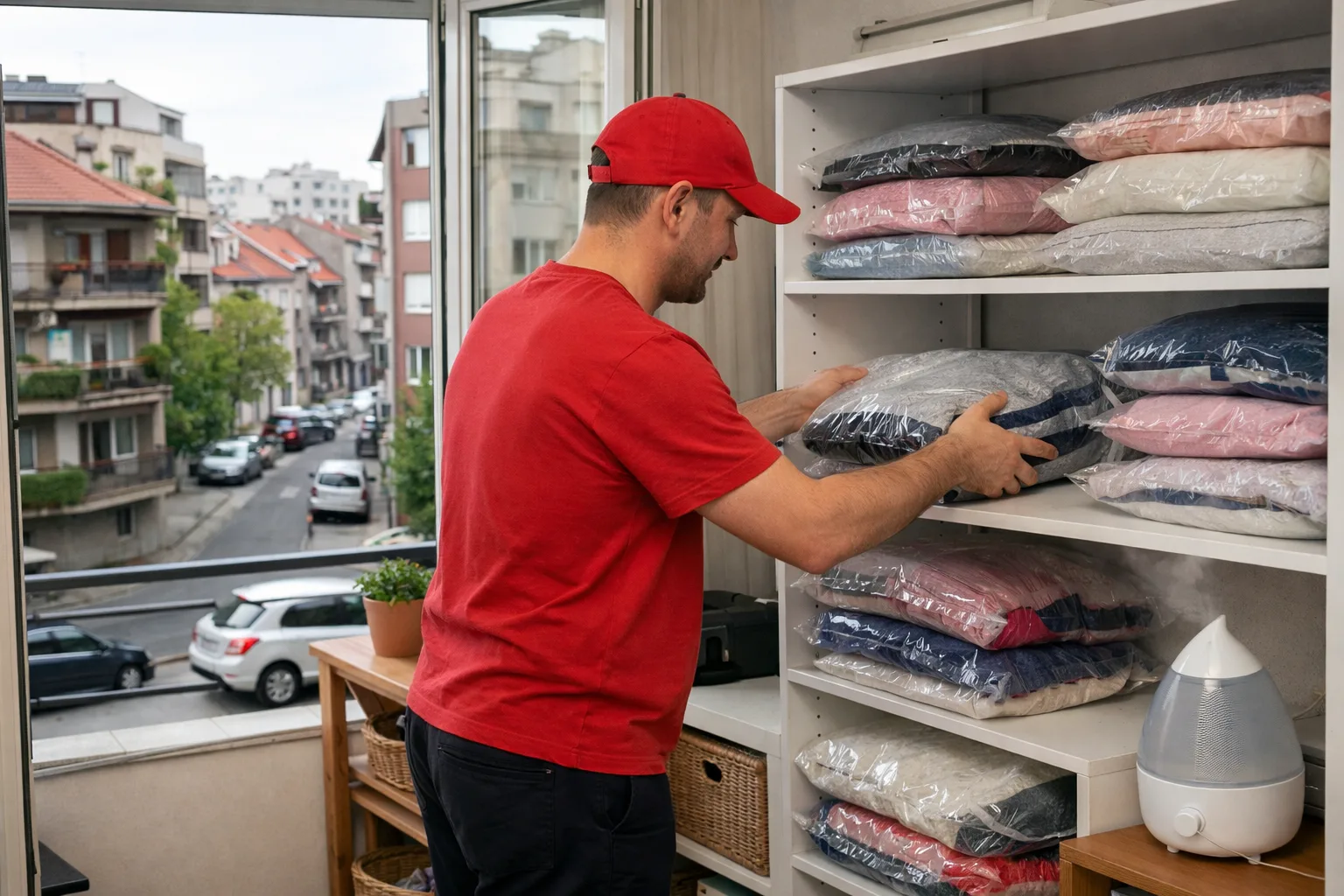
Properly folding clothes into boxes or bags can significantly affect the preservation of your wardrobe. Heavy items like sweaters and jeans should be placed at the bottom, while lighter and more delicate pieces should be placed on top. This arrangement helps prevent wrinkling and deformation of clothes during storage.
Avoid overstuffing boxes or bags, as this can lead to wrinkling and fabric damage. If possible, gently roll clothes instead of folding them, as this reduces the formation of sharp creases and wrinkles. Rolling is especially effective for t-shirts, pants, and thin materials, while for easily wrinkled clothes like shirts, careful folding or using hangers is recommended.
For dresses, shirts, and jackets, it is recommended to use hangers or special bags that allow the clothes to remain unfolded. If you cannot hang them, use packing paper between layers to further protect the fabric. Additionally, you can cover hangers with cotton covers or paper to prevent slipping and damage to the shoulders of the clothes.
Moisture is one of the biggest enemies of clothes in storage. To prevent it, you can place silica gel packets or other absorbent materials that draw moisture from the environment inside the boxes. These packets should be replaced regularly or exposed to sunlight to maintain their effectiveness.
Also, regularly check the storage space and ensure good ventilation. If possible, use dehumidifiers or humidifiers to maintain an optimal humidity level between 40 and 60%. Maintaining these parameters prevents mold growth and unpleasant odors while preserving fabrics from drying out or deforming.
To prevent unpleasant odors, place sachets with natural scents like lavender or cedarwood in the boxes, which not only smell pleasant but also act as natural repellents against moths. Avoid chemical fragrances that can damage fabrics. Also, occasionally air out the clothes and packaging to refresh the space and prevent odor buildup.
Moths and other insects can seriously damage clothes during storage. The most effective protection is preventive: before packing, always wash clothes and use repellents like cedarwood sticks or special sachets with natural oils. These natural repellents not only repel insects but also leave a pleasant scent that refreshes the wardrobe.
Never use insecticides directly on clothes as they can damage fabrics and leave unpleasant odors. Instead, place repellents in boxes or wardrobes where you store clothes. Also, regularly check the storage space and keep it clean to reduce the risk of pest infestation.
Regularly inspect clothes while in storage, especially if stored long-term. If you notice damage or the presence of insects, immediately take measures such as washing, treatment, or rearranging the clothes. Timely action can prevent further spread of pests and preserve your wardrobe.
Certain types of clothes are not suitable for long-term storage because they spoil easily or require special storage conditions. For example, leather and suede should be stored under special conditions due to the risk of drying out and cracking. It is recommended to regularly treat leather items with appropriate creams and store them in places with controlled temperature and humidity.
Synthetic fabrics such as polyester can be prone to static electricity and dust accumulation, so it is advisable to store them in transparent bags that allow air circulation. Also, occasionally air them out to remove static electricity and refresh the material.
Also, clothes with feathers or layers with special fillings should be properly protected as moisture accumulation and unpleasant odors can occur. In such cases, it is best to consult a specialist or use professional storage services. Professionals can provide specialized conditions and treatments that preserve the quality of such garments.
To easily find clothes when you need them again, be sure to clearly label all boxes and bags. Use a waterproof marker or stickers on which you write the contents and possibly the packing date. Precise labeling saves time and reduces the need to unnecessarily open packaging, thereby preserving the integrity of the clothes.
Organize your wardrobe by seasons or types of clothing to make finding items easier. For example, keep winter coats in one box and summer t-shirts in another. You can also use different colored labels or tags for quick identification.
Keep a record of the clothes you have packed and their storage location. Also, note the packing date so you know when it's time to check the condition of the clothes or refresh them if necessary. Digital records or organizational apps can further simplify tracking and managing wardrobe storage.
After removing clothes from storage, it is essential to prepare them again for wearing. First, check for any musty odors or pests and wash or refresh them with steam if needed. Steam ironing is especially effective for removing unpleasant smells and refreshing fabrics without the need for a full wash.
Carefully iron or air-dry the clothes, especially if they were packed in vacuum bags or tightly folded. This will help restore the original shape and softness of the fabrics. For delicate materials, use low temperatures and protective cloths when ironing.
If you notice any damage, such as yellow stains or mold, consult professional cleaners before wearing the clothes again. Proper care after storage extends the lifespan of your wardrobe and prepares it for the new season. Regular maintenance and timely care can also prevent permanent damage and preserve the value of your clothes.
5 Reasons to Rent Storage While Renovating Your Apartment

Why Is Storing Your Belongings a Good Solution for Home Renovation?

We will respond to you as soon as possible.
Below we answer the most common questions related to properly storing clothes so you can be sure your wardrobe remains preserved and protected.
Mold most often appears due to moisture. Before packing, be sure to wash and completely dry your clothes. Use plastic boxes with lids or vacuum bags that prevent moisture penetration. Also, maintain good ventilation in the storage area and consider using a dehumidifier.
For long-term storage, delicate fabrics are better hung in special garment bags to keep them wrinkle-free and in shape. Heavier and less delicate items can be folded into boxes, making sure not to overfill them and to use protective paper between layers.
Natural repellents like cedarwood, lavender, or eucalyptus oil are excellent alternatives to chemicals. Place them in boxes or wardrobes with clothes. It is important that clothes are clean and dry because moths are attracted to dirt and moisture.
Stains should be removed before storage because over time they can set and damage the fabric. Wash or treat stains with special products. Never pack clothes with untreated stains in closed conditions.
It is recommended to check clothes at least once every three to six months, especially during long-term storage. This way, you can spot potential issues like moisture, mold, or pests and react in time.
Vacuum bags are great for saving space but can compress and damage very delicate fabrics like wool or silk if stored tightly for a long time. For such materials, light packing and storage in garment bags is recommended.
The key is clearly labeling boxes and separating clothes by family members and types of garments. Use different colored stickers or numbers with a content list. This will save you time when looking for a specific piece of clothing.