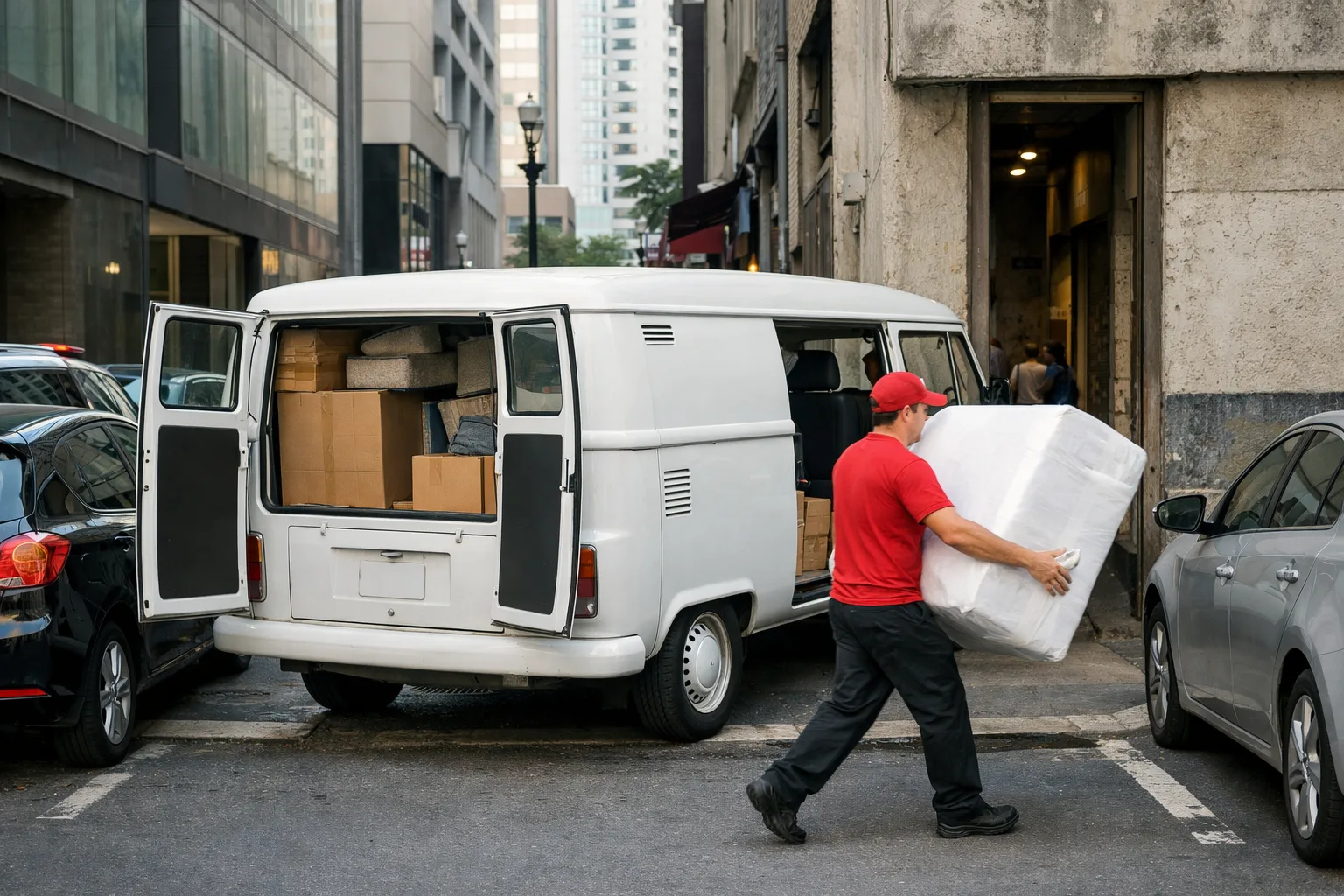
Tips for Van Moves
Should you choose a van or a truck for your move?
Should you choose a van or a truck for your move?

Enter at least 3 characters.
Preparing for an international move often means you need to precisely determine how much can fit into a van, which is the most commonly used vehicle for transporting smaller amounts of furniture and personal belongings. Understanding the actual capacity of the van is crucial for planning costs, packing, and the transport itself. In this guide, we will thoroughly explain the factors affecting volume, how to maximize space utilization, and what to expect when using a van for international moves. Additionally, we will provide practical tips for efficient packing, load weight estimation, and choosing the right vehicle to help make your move as smooth and cost-effective as possible.
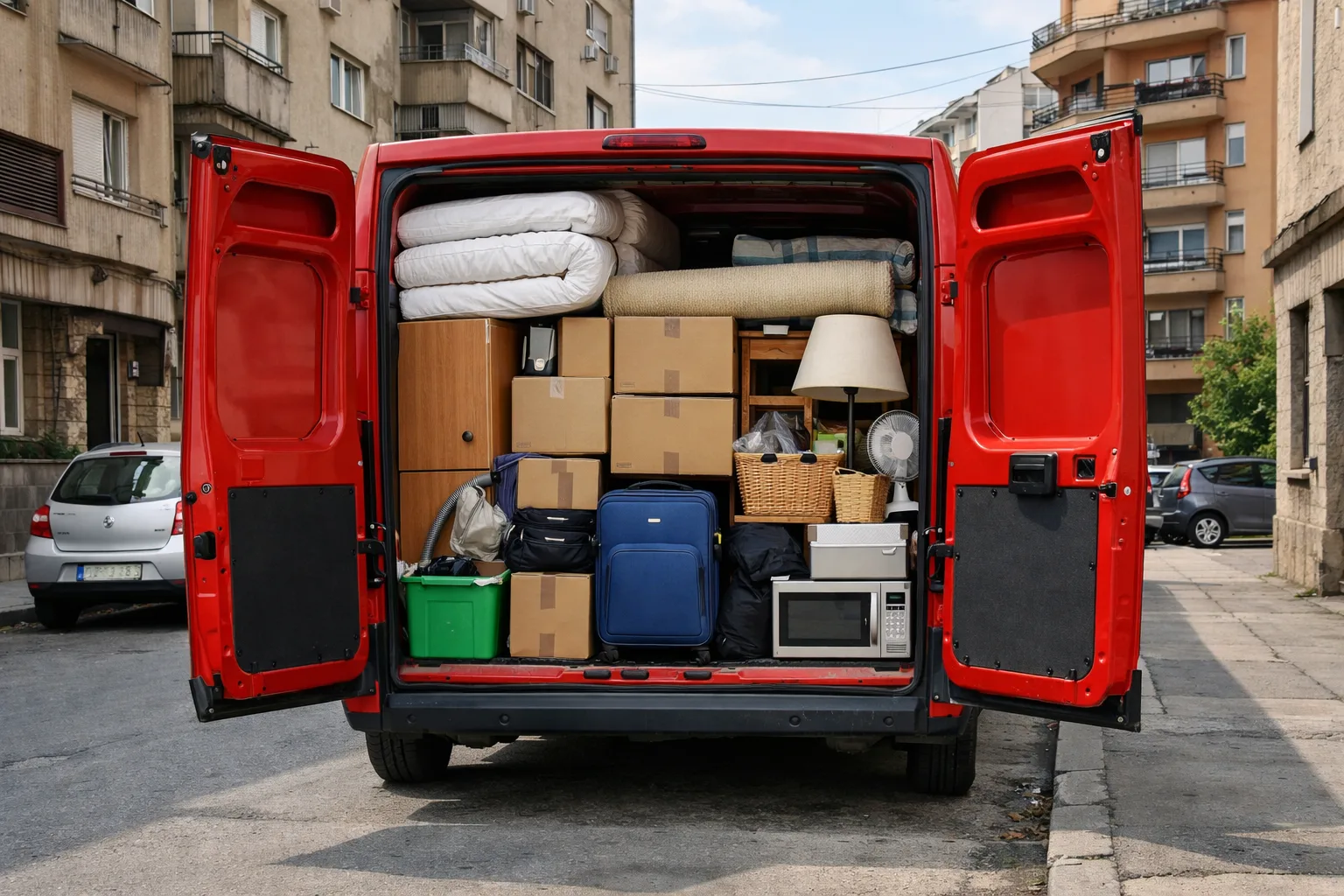
Moving vans are usually measured by the internal cargo space volume, expressed in cubic meters. Standard vans for international moves typically have a volume between 6 and 12 cubic meters, depending on the model and manufacturer. It is important to distinguish volume from load capacity, as a van may have a large space but a lower load capacity due to technical limitations.
The dimensions of the van's interior space are key to estimating how much can fit. For example, a van with internal dimensions of 3 meters in length, 1.7 meters in width, and 1.5 meters in height has about 7.65 cubic meters of space. Proper measurement of these dimensions allows for more accurate packing planning. It is recommended to also consider the space taken up by internal linings and any unevenness on the floor or walls when measuring.
Additionally, the shape of the space and any obstacles such as wheels, locks, or shelves inside the van should be taken into account, as they can reduce the effective loading space. This means the actual usable space may differ from the technically defined volume. Practically, it is useful to sketch the van's interior and mark areas unsuitable for stacking items.
If you are planning a move, it is advisable to consult professionals who can help you accurately calculate the van's volume and load capacity to avoid overloading or unnecessary trips. It is also recommended to check the vehicle's technical specifications and transport regulations in the destination country in advance, as different countries may have varying rules regarding maximum weight and cargo dimensions. If you need a reliable and fast international move, hiring an experienced agency can significantly ease the entire process.
There are various types of vans used for international moves, such as smaller vans (like the Ford Transit Connect), medium-sized vans (Ford Transit, Mercedes Sprinter), and large vans or minibuses adapted for cargo transport. Each has its advantages and limitations regarding capacity. It is important to understand that the choice of vehicle should align with the quantity and type of items you are moving.
For example, smaller vans are more suitable for moves with a small number of items, such as personal belongings and a few pieces of furniture, while larger vans can transport an entire apartment or a small house. Dimensions range from about 4 to 6 meters in length, which significantly affects cargo space volume. Larger vans often have additional features such as sliding side doors and rear doors with ramps, facilitating loading and unloading.
When choosing a van, consider access to loading and unloading areas as well as road conditions. Larger vans may have difficulties navigating narrow streets or parking, which is important for international moves in urban environments. Also, larger vans may require a driver's license of a certain category, so it is important to verify that the driver has the necessary qualifications.

To estimate how much fits in a van, you first need to measure or estimate the volume of the items you are moving. This includes furniture, boxes, appliances, and other objects. Measuring the volume of individual items can be done by multiplying length, width, and height in meters to get cubic meters. For irregular shapes, it is recommended to measure the largest dimensions and use that as an approximate volume.
For example, a box measuring 0.5 m x 0.4 m x 0.3 m has a volume of 0.06 cubic meters. Add up the volumes of all boxes and larger items to get the total volume to be transported. Also, remember to include the space taken by protective materials such as wraps and cushions.
This estimate helps plan how much space you will need in the van and whether one van is sufficient or if it’s better to hire an additional vehicle. It also helps prioritize – which items are most important and must go immediately, and which can wait or be sent separately. It is recommended to create a detailed list with dimensions and weight of items, which will facilitate communication with the moving company and assist in preparing an accurate quote.
Packing is a key factor in how much can actually fit in the van. Smart stacking and space usage can increase capacity by 20-30% compared to random packing. Planning the arrangement of items and using specialized tools like pallets and cargo straps improve safety and space efficiency. It is recommended to make a packing plan beforehand, starting with larger and heavier items and then smaller and lighter ones.
One tip is to place heavier items at the bottom and lighter, fragile ones on top. Also, make full use of the van’s vertical space – items should be stacked up to the ceiling, but without putting too much pressure on lower items to avoid damage. Using cushions, blankets, or special protective materials between layers can prevent damage during transport.
Using standardized boxes and modules makes stacking easier and increases packing density. Spaces between boxes can be filled with soft items like pillows or clothing, reducing movement during transport. Also, labeling boxes by rooms or content type facilitates unloading and organizing at the new location.
Although space plays a key role, it is important not to forget the van’s load capacity limits. Every van has a maximum allowed cargo weight that must not be exceeded for safety and legal reasons. This means that even if there is free space, you cannot overload it with heavy items. Exceeding load capacity can lead to fines and technical problems during driving.
For example, a van with a load capacity of 1000 kilograms can quickly reach its limit if transporting heavy furniture, even when there is still free space. Overloading the vehicle can cause increased tire wear, braking issues, and driving hazards. It can also damage suspension and other vital vehicle components.
When packing, pay attention to the weight of each item and distribute the load evenly in the van to prevent overloading one side or position. Professional moving teams often use scales and special stacking techniques to achieve optimal balance. It is recommended to place heavier items closer to the vehicle’s axles for better stability.
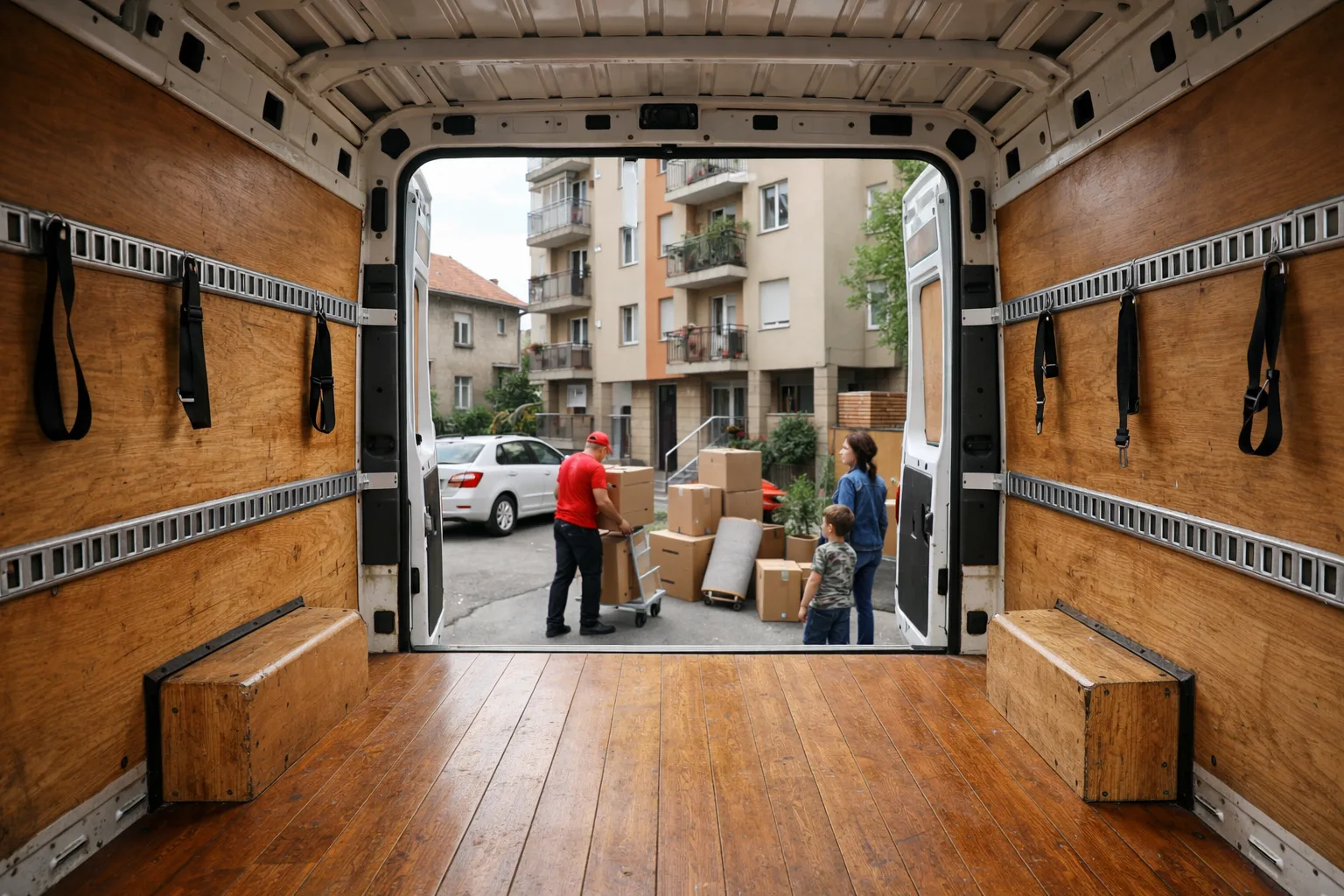
A standard medium-sized van, like a Mercedes Sprinter, has a volume of about 10 to 12 cubic meters and a load capacity of around 1200 to 1500 kilograms. In practice, this means that furniture and belongings from a smaller apartment or studio can fit into one such van. This includes basic furniture pieces and a sufficient number of boxes for personal items.
For example, the complete furniture from one room (bed, wardrobe, table, chairs) and up to 15-20 average-sized boxes can fit in this van if packed and stacked carefully. However, if the furniture is heavier or larger, the number of boxes must be reduced. Also, if you have larger appliances or fragile items, additional space must be left for protection and safety.
This information is crucial for planning international moves, as the size and weight of items determine whether one van is sufficient or if additional vehicles or containers are necessary. It also helps estimate moving costs and timelines.
Before packing and loading items into the van, it is important to make a detailed inventory and estimate their volume and weight. Sorting items and discarding unnecessary belongings reduces load and simplifies the move. It is recommended to group items by rooms or types, which facilitates packing and unloading.
Disassembling large furniture such as beds, shelves, or tables allows for easier packing and better space utilization. It also protects the furniture from damage during transport. Having basic tools and instructions is helpful for disassembly, and if you're unsure, hiring professionals for furniture assembly and disassembly can be cost-effective.
When packing, you should use quality boxes and protection for fragile items. All boxes should be labeled to facilitate unloading and organizing belongings at the new location. These steps save time and money during international moves and further reduce the risk of damage or loss of items.
When planning an international move, hiring a professional moving service can save a lot of stress and time. Experienced movers know how to maximize space in the van and transport belongings safely. They can also offer additional services such as packing for moves, furniture disassembly, and assembly.
When choosing a van for your move, consult with the service about the type and quantity of items you are moving. They can recommend the appropriate van size and provide advice on packing and preparation. Also, check if they have experience with international moves and are familiar with customs procedures, which can be very helpful.
Additionally, verify that the moving service holds the necessary permits and insurance, especially for international moves. Transparent communication about the van's capacity and your needs is key to a successful move. It is recommended to request a written offer and contract terms to avoid unforeseen costs.
Should you choose a van or a truck for your move?

How to find fast and quality intercity van transport for your belongings?

Advantages of using van transport for items throughout Serbia

How to Maximize Space in a Moving Van?
We will respond to you as soon as possible.
Below we answer the most common questions related to van capacity and packing items during international moves. These questions help resolve specific issues and plan your move as efficiently as possible.
A standard medium-sized van can hold about 15 to 20 average-sized boxes, provided they are packed and stacked properly. The number also depends on other items being loaded, as well as the size and shape of the boxes.
Besides volume, you should check the van's load capacity as stated in the vehicle's technical documentation. Add up the weight of all items and verify it is below the van's load capacity. Also, distribute the load evenly to avoid overloading one side.
A smaller van is often insufficient for an entire studio apartment, especially if you have larger furniture and many boxes. In such cases, a larger van or an additional vehicle is recommended to ensure a smooth move.
Use stacking strategies such as placing heavier items at the bottom, utilizing vertical space, packing in standardized boxes, and filling gaps with soft items. Also, disassemble larger furniture to occupy less space.
If the total weight of your belongings exceeds the van's load capacity, you must reduce the load or hire an additional van or vehicle. Overloading a van is unsafe and can lead to traffic fines or mechanical issues.
Loading time depends on the quantity and type of items, as well as the crew's experience. For an average studio apartment, it may take between 2 to 4 hours. Planning and preparing items in advance can significantly shorten this process.
Choose a van based on the estimated volume and weight of your belongings, as well as road conditions and access to locations. Professional moving services can assist in selecting the appropriate vehicle and provide advice on packing and transportation.