
Storage Tips
5 Reasons to Rent Storage While Renovating Your Apartment
5 Reasons to Rent Storage While Renovating Your Apartment

Enter at least 3 characters.
In modern business, efficient management of space and goods is crucial for success. A commercial warehouse offers a solution that brings numerous benefits to companies of various sizes and industries. In this guide, we will thoroughly explain why a commercial warehouse is essential for optimizing business processes, how it can increase productivity and reduce costs, as well as the specific advantages it provides. Understanding these aspects will help you make an informed decision about organizing your storage space. Additionally, we will present practical tips for implementing and maintaining storage systems that will enable you to maximize available resources and improve overall business efficiency.

One of the greatest advantages of a commercial warehouse is its ability to optimize the use of available space. By utilizing shelving, pallet systems, and sophisticated organizational methods, the warehouse allows goods to be stored in a way that saves square footage and facilitates item retrieval. For example, implementing a FIFO (first in, first out) system helps ensure timely stock rotation, especially for products with expiration dates.
Efficient asset management through a commercial warehouse reduces the risk of loss and damage to goods. Accurate records and regular inventory monitoring enable timely responses to potential issues such as obsolescence or overstocking, directly impacting the company's profitability.
Additionally, a commercial warehouse simplifies the inventory process. With organized and clearly labeled goods, the time required for stock counting is significantly reduced, saving labor and money. Introducing barcode systems or RFID technology further increases accuracy and speed of record-keeping.
For optimal space organization, it is recommended to regularly analyze inventory structure and adjust storage shelves according to product size and type. Introducing vertical storage solutions, such as tall shelving and mechanical lifts, can significantly increase warehouse capacity without the need to expand physical space.
Practicing regular cleaning and maintenance of the storage area also contributes to better organization and reduces the risk of goods damage. When a company lacks sufficient own space, storing items and goods in a dedicated facility can be a practical solution. Additionally, training employees on proper storage and handling of goods further enhances efficiency and safety within the warehouse.
A commercial warehouse enables better planning and organization of work processes, resulting in increased employee productivity. Clearly defined workflows and access to warehouse management tools (WMS) help eliminate unnecessary movements and waiting times, speeding up order fulfillment.
Reducing operational costs is a direct consequence of efficient storage and handling of goods. Less product damage, reduced need for urgent restocking, and better space utilization lead to significant financial savings. For example, storing seasonal products in a commercial warehouse lowers storage costs and increases availability when demand is highest.
Additionally, automating certain processes in a business warehouse, such as sorting and packing, can further reduce the need for manual labor, thereby lowering labor costs and increasing delivery accuracy.
Implementing warehouse management software solutions enables performance tracking and identification of bottlenecks in processes, which is crucial for continuous improvement. Regular employee training in using these tools contributes to faster adoption and more efficient work.
Moreover, streamlining processes through standardizing operations and introducing clear procedures reduces the possibility of errors and increases workplace safety, all of which contribute to lowering overall business costs.

A business warehouse allows companies to easily adjust their storage capacity according to growth or seasonal changes in operations. This is especially important for firms with variable demand or plans to expand into new markets.
Flexibility is also reflected in the ability to quickly reorganize warehouse space for new products or changes in the assortment. For example, switching from storing smaller items to larger products can be simple if the warehouse is modularly organized and equipped with adaptable shelving systems.
Additionally, when expanding the business or moving to a larger space, it is necessary to plan for company relocation, including moving equipment and inventory. Well-coordinated warehouse and logistics operations enable the company to focus on its core activities.
For efficient scaling, it is recommended to use storage solutions that allow quick addition or removal of storage units, such as mobile shelves or modular systems. This enables companies to respond swiftly to changes in business volume without major investments.
Also, collaborating with external logistics partners and using storage services as needed (outsourcing) can further increase flexibility and reduce fixed costs, especially during periods of increased demand.
The security of goods in a business warehouse is of paramount importance. Modern warehouse facilities have built-in surveillance systems, access controls, and fire protection, significantly reducing the risk of theft or damage.
Besides physical protection, business warehouses implement procedures for proper handling of hazardous or sensitive materials, ensuring compliance with legal regulations and standards. This is particularly important for pharmaceuticals, chemicals, or food products.
Insurance of goods during storage further protects the company from unforeseen events. Business warehouses often have insurance contracts covering damages, which reduces financial risks and provides business security.
Regular maintenance of security systems and employee training on safety protocols are key to preventing incidents. Additionally, introducing systems for monitoring temperature and humidity helps preserve the quality of sensitive products.
Implementing risk management systems, including emergency and evacuation plans, further ensures business continuity and minimizes potential damages.
Integrating the business warehouse with logistics systems enables faster and more accurate delivery of goods to end customers. Efficient planning of warehouse operations helps reduce waiting times and increase customer satisfaction.
Using warehouse management software solutions allows real-time inventory tracking, route optimization, and coordination with transport companies. For smaller shipments and regular replenishment of retail outlets, van transport of goods can be a practical part of such an organization. This enables timely responses to demand changes and avoids delays.
Business warehouses often have a strategic location near traffic hubs, which further accelerates goods distribution. For example, a warehouse located in an industrial zone near a highway allows faster market access and reduces transportation costs.
To further enhance logistics, it is recommended to establish clear communication between the warehouse and the sales department, as well as to use data analytics for demand forecasting and inventory optimization.
Additionally, implementing technologies such as GPS vehicle tracking and automatic customer notifications about delivery status contributes to transparency and a better customer experience.
Developing e-commerce requires efficient storage and fast order processing. A business warehouse is an ideal solution for companies operating across multiple sales channels, as it enables centralized inventory management.
By combining the warehouse with advanced IT systems, it is possible to automatically synchronize inventory levels across different platforms, avoiding errors and duplicate orders. This increases reliability and delivery speed.
Furthermore, the business warehouse can provide order fulfillment and packaging services, which further facilitates operations and enables faster sales realization across all channels. For safe storage and transport of products, choosing appropriate cardboard boxes according to the dimensions and weight of the contents is also important.
Successful multichannel sales management requires integration between the warehouse system and e-commerce platforms, as well as regular updates of product availability data.
Also, implementing systems for monitoring delivery performance and customer feedback enables continuous service improvement and adaptation to customer needs.
A business warehouse enables companies to be more agile and better prepared for market changes. Faster delivery and reliability in product availability directly impact customer satisfaction and loyalty.
With an efficient warehouse, it is easier to introduce new products, track trends, and adapt to consumer needs. This is a key factor for survival and growth in a competitive business environment.
Additionally, reducing operational costs through warehouse process optimization allows companies to offer more competitive prices, further increasing their market appeal and profitability.
Investing in innovations within warehouse operations, such as automation and digitalization, can further distinguish the company in the market and attract new business partners.
Moreover, transparency in inventory management and quick response to customer demands build a reputation as a reliable partner, which is highly important in today’s business environment.
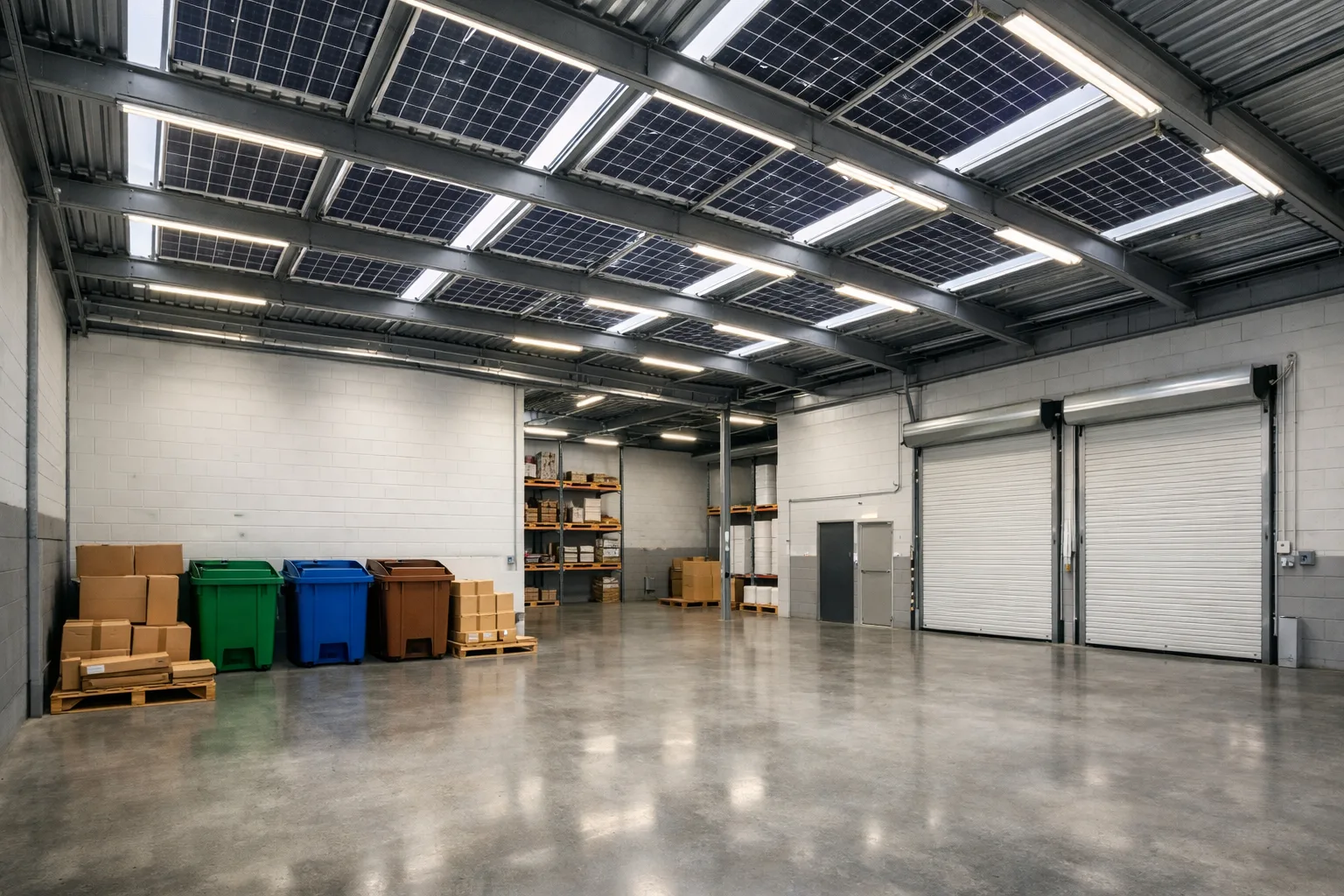
A business warehouse can be designed and equipped to support sustainable practices, such as energy-efficient lighting, packaging recycling, and transport optimization. When relocating inventory, moving packaging should be adapted to the type of goods to reduce the risk of damage and unnecessary waste.
By minimizing unnecessary movement of goods within the warehouse and using modern inventory tracking technologies, resource consumption and harmful gas emissions can be reduced.
A sustainable approach to storage not only contributes to environmental protection but can also be a marketing asset for the company, demonstrating commitment to ecological responsibility and attracting environmentally conscious customers.
Implementing systems for monitoring and managing energy consumption in the warehouse enables identification and elimination of unnecessary costs and emissions, contributing to the reduction of the overall environmental footprint.
Additionally, educating employees about ecological practices and encouraging responsible behavior within the warehouse fosters a culture of sustainability that reflects throughout the company's entire operation.
5 Reasons to Rent Storage While Renovating Your Apartment

Why Is Storing Your Belongings a Good Solution for Home Renovation?


We will respond to you as soon as possible.
Below we address the most common questions related to business warehouses, their advantages, and specific applications across various business sectors.
A business warehouse provides small enterprises with access to organized and secure storage space for goods without the need for significant investments in their own facilities. It also improves inventory management and facilitates faster delivery, which can enhance the competitiveness of small companies.
Common technologies include Warehouse Management Systems (WMS), barcode and RFID scanners, automated sorting and packing systems, as well as video surveillance and access control for security purposes.
Efficient organization of space and processes reduces employee working time, saves on product damage, and decreases the need for urgent stock replenishments. Automation further lowers labor costs and increases accuracy in distribution.
Yes, business warehouses are often equipped with special conditions for storing sensitive or hazardous products, including temperature and humidity control and specialized protection, in compliance with legal regulations.
Centralized storage and integration with IT systems enable fast order processing and precise inventory tracking across all sales channels, thereby increasing efficiency and customer satisfaction.
Key measures include video surveillance, access control, fire protection, proper storage and handling of goods, as well as insurance of inventory to minimize the risk of damage or theft.
By using energy-efficient technologies, recycling packaging, and optimizing transportation, a business warehouse reduces the company's ecological footprint while simultaneously providing added value through environmentally responsible operations.