
Storage Tips
5 Reasons to Rent Storage While Renovating Your Apartment
5 Reasons to Rent Storage While Renovating Your Apartment

Enter at least 3 characters.
Choosing the right type of boxes for storage is crucial for preserving your belongings, efficiently using space, and long-term protection. In this guide, we will thoroughly explain which types of boxes are best suited for various storage needs, what to consider when selecting them, and how to choose boxes that will best protect your property. Whether you are storing household items, documents, or merchandise for sale, properly chosen boxes are key to good organization and security. Additionally, we will provide practical tips for packing, stacking, and maintaining boxes, as well as how to maximize storage space. This way, your belongings will be protected, and the space will be neat and easily accessible.
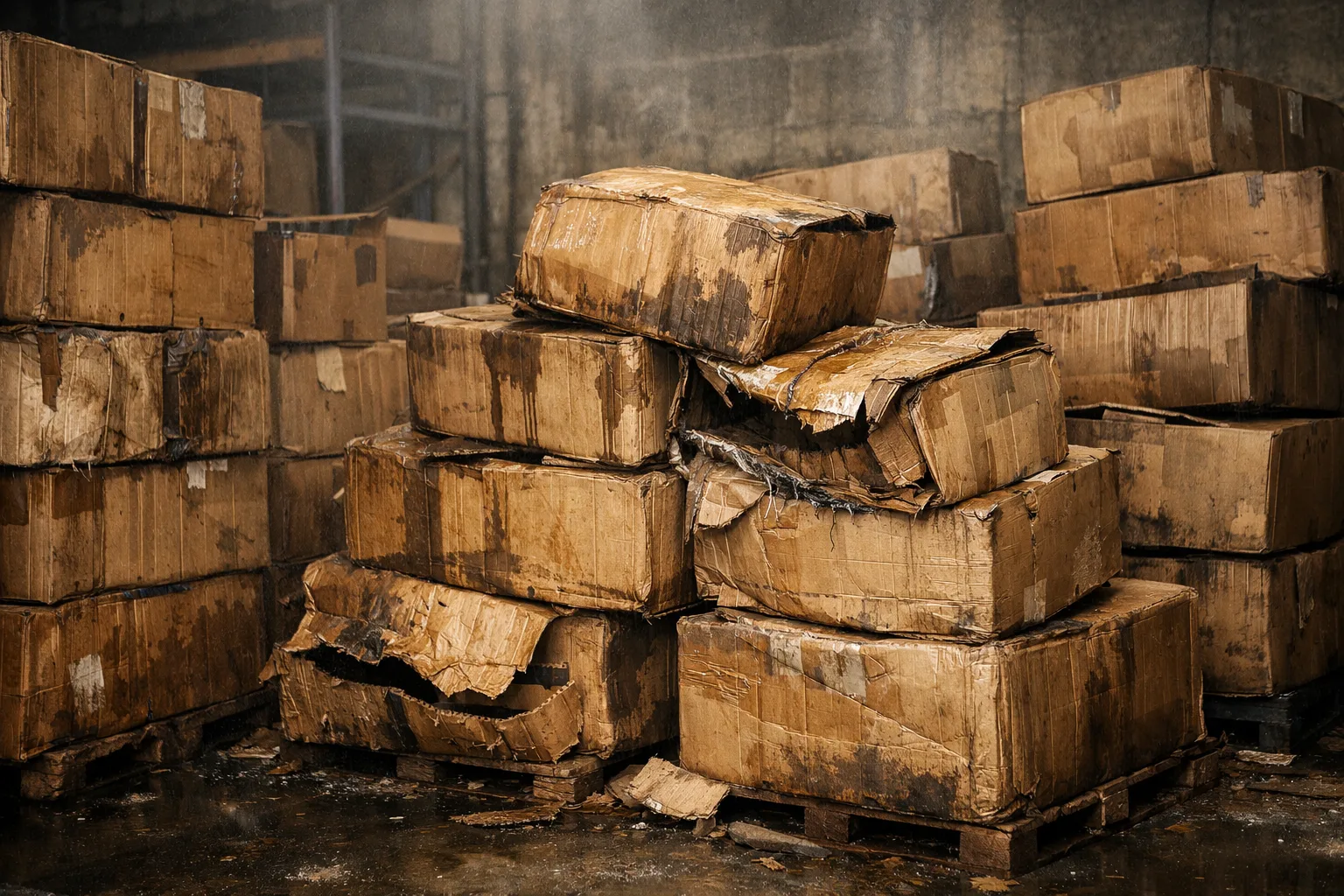
Before choosing boxes for storage, it is important to clearly define what you will be storing in them. Different items require different storage conditions: for example, clothing, books, electronic devices, or fragile items have specific requirements. Understanding these needs helps in selecting the material and type of box that will best suit them.
It is also important to assess the storage duration. For short-term storage, simpler boxes may suffice, while for long-term storage, greater attention should be paid to durability and moisture protection. Additionally, consider whether the boxes will be stacked or placed on shelves, as this affects the choice of strength and design of the boxes.
Finally, keep in mind the storage conditions such as temperature, humidity, and accessibility. Boxes resistant to moisture and dust are ideal for storage spaces without climate control or with variable environmental conditions.
Furthermore, consider how often you will need to access the contents of the boxes. If you plan to frequently retrieve items from certain boxes, it is preferable that they are easy to carry and have lids that open easily. On the other hand, boxes for long-term storage can be sturdier and heavier but with secure closures.
Also, consider the size of the boxes in relation to the space where they will be stored. Oversized boxes can make handling and access difficult, while undersized boxes may lead to overcrowding and damage to contents. Planning the dimensions and capacity of boxes is crucial for optimal arrangement and preservation of items.
Cardboard boxes are the most common choice for storage due to their affordability, lightness, and environmental friendliness. They are ideal for storing lighter items such as clothing, paper documents, or seasonal decorations. However, cardboard is not moisture-resistant and can easily be damaged if the storage area is not adequately dry.
There are various types of cardboard boxes, including standard ones, double-walled for extra strength, as well as specialized boxes for books or clothing. Check their load capacity and whether they have reinforced corners to withstand weight and handling.
For long-term storage and heavier items, cardboard boxes are not recommended as they can easily deform or get damaged. Also, if there is a risk of moisture or insects, cardboard boxes should be additionally protected or avoided.
When packing into cardboard boxes, it is important that the weight is evenly distributed to prevent tearing or deformation. Use paper or bubble wrap for extra protection of fragile items inside the box.
For added security, it is recommended to use high-quality packing tape to seal the boxes, as well as to label the contents and weight on the box, which facilitates later organization and handling.
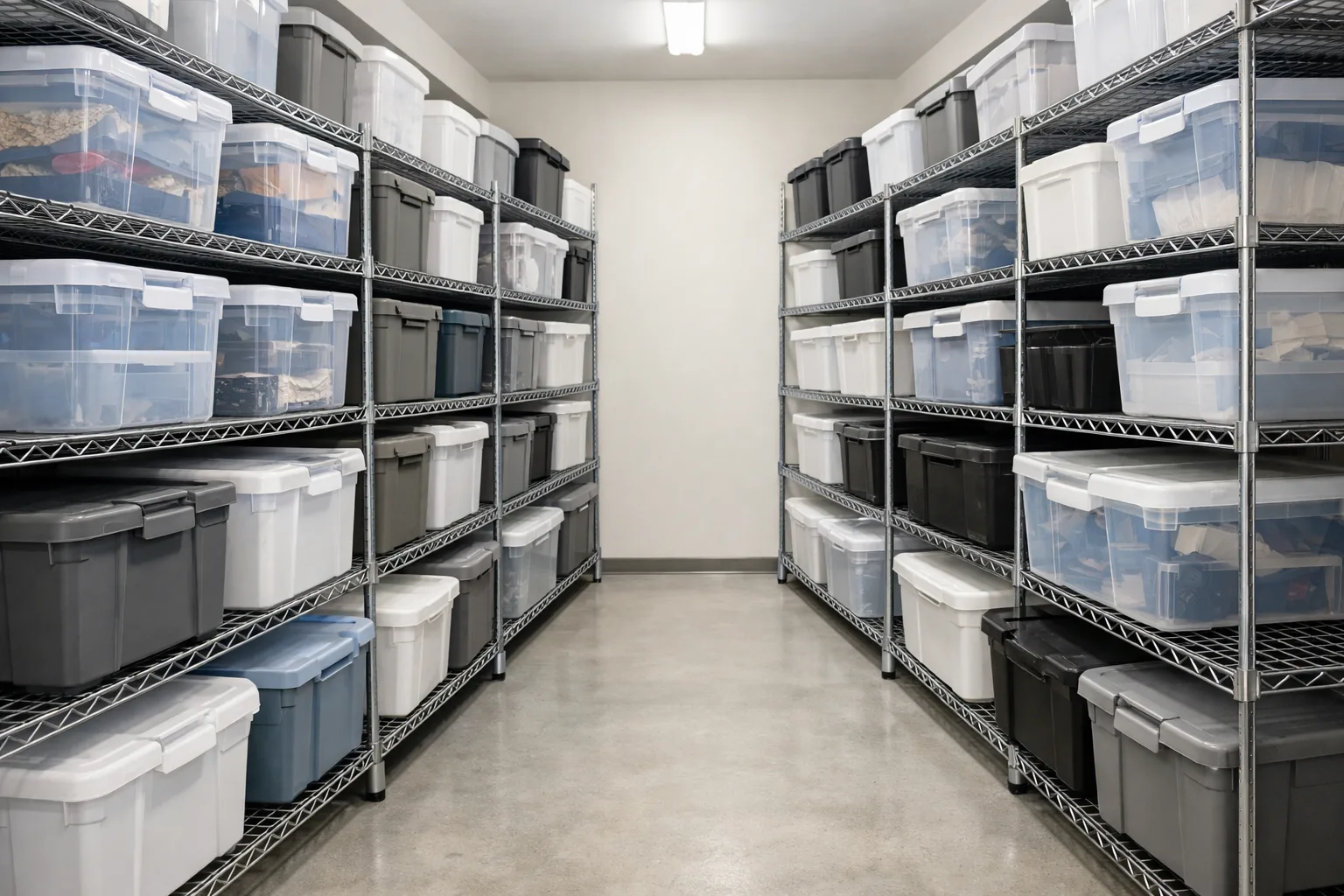
Plastic boxes are extremely resistant to moisture, impacts, and temperature changes, making them ideal for storing valuable or sensitive items. Their sturdy construction allows stacking without risk of deformation, which is important for optimizing space in storage.
They come in various sizes and with lids that can be hermetically sealed, providing additional protection from dust, insects, and moisture. Plastic boxes are especially suitable for storing electronic equipment, tools, and seasonal sports and recreational items.
However, attention should be paid to the quality of the plastic – cheaper boxes can become brittle and fragile over time. Also, plastic boxes take up more space compared to cardboard due to wall thickness, so their use should be carefully planned in small storage areas.
For added convenience, some plastic boxes come with wheels or handles, making them easier to move, especially when full of heavy items. Also, transparent models allow quick content inspection without opening.
When storing plastic boxes, it is important that they are properly sealed to prevent moisture buildup inside the box, which can damage the contents. Occasional ventilation of the space and checking the condition of the boxes further contributes to preserving the contents.
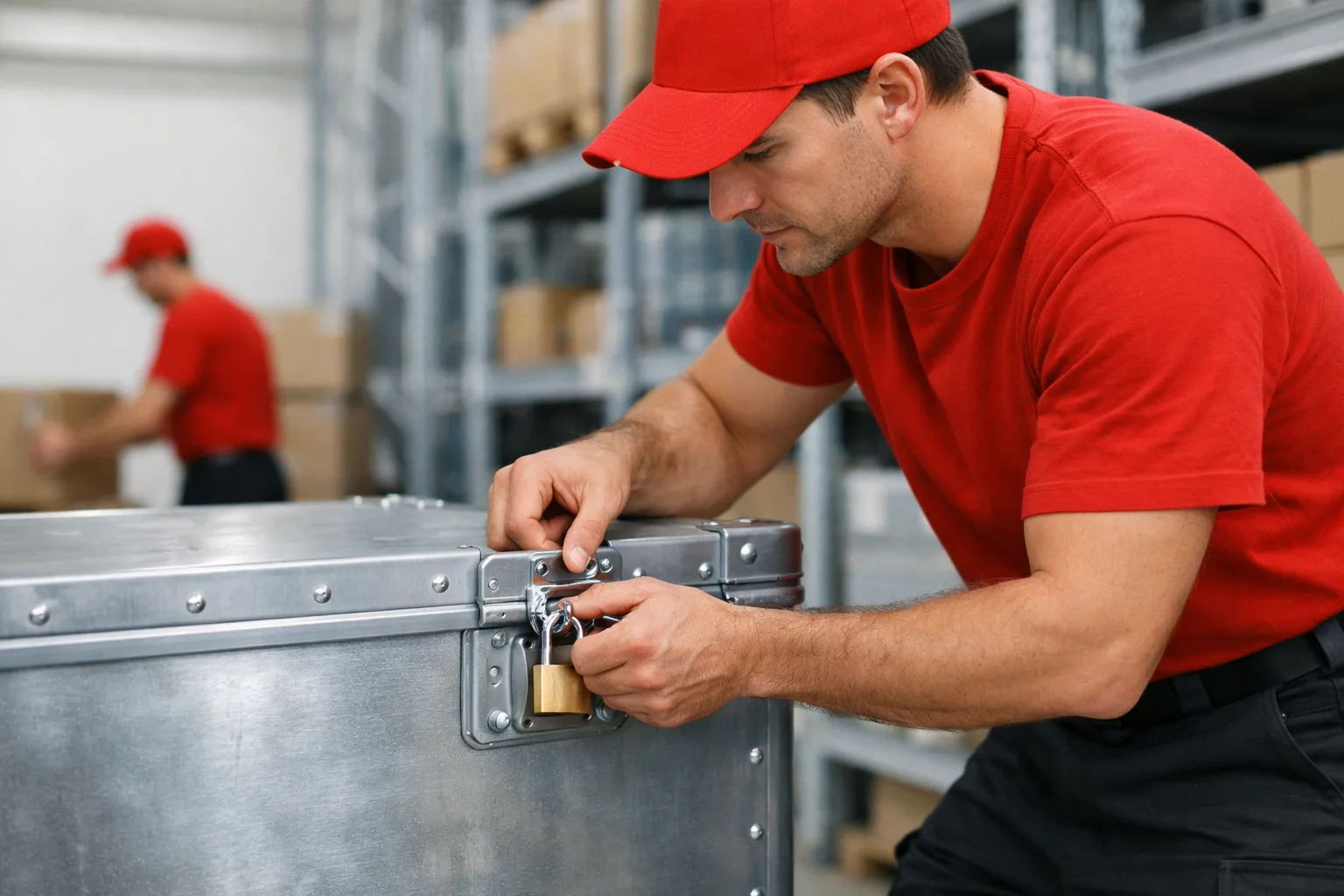
Metal boxes are the most resistant and durable, providing a high level of protection from external influences, fire, and damage. They are often used for storing tools, machinery, or valuables that require special protection.
They are resistant to moisture and mechanical impacts but can be heavier and more expensive compared to cardboard or plastic boxes. Metal boxes with locks further increase the security of your items in storage.
However, metal can corrode if not properly protected, especially in humid conditions. Therefore, it is important to choose boxes with protective coatings or made of stainless material if storage conditions are unfavorable.
For easier handling, some metal boxes have ergonomic handles and quick-opening mechanisms, which can be useful in work environments. Also, the interior of metal boxes can be lined with materials that protect sensitive items from scratches and impacts.
Regular inspection of metal boxes for signs of rust and maintenance of protective coatings is recommended to extend their lifespan and ensure maximum protection of the contents.
For certain types of items, there are specialized boxes that offer additional functionality and protection. Examples include archival document boxes that are moisture-resistant and have integrated mechanisms for organizing papers.
Clothing storage boxes often come with breathable materials or integrated vacuum bags that save space and protect fabrics from dust and moths. There are also food storage boxes with hermetic lids that prolong product freshness.
The choice of specialized boxes depends on the type of items and storage conditions, so it is advisable to consult experts or manufacturers to ensure your belongings are properly protected.
In addition to the mentioned types, there are also boxes for storing artworks, which feature special linings and cushioning to prevent damage. Wine or glassware boxes are also designed with additional compartments and protection.
When selecting specialized boxes, pay attention to additional features such as UV resistance, locking capabilities, or modularity, which can significantly facilitate the organization and preservation of valuable items.
The quality of a box is reflected in its durability, material, and design. When choosing, check the thickness and strength of the material, the quality of joints and lids, as well as resistance to moisture and impact.
For cardboard boxes, it is important they have at least double walls if you plan to store heavier items. Plastic boxes should be made from polypropylene or a similar high-quality material that is not easily breakable.
Also, pay attention to whether the boxes have markings for maximum load capacity and if the manufacturers have tested their durability. A quality box guarantees the safety and preservation of contents during storage.
Besides visual inspection, it is recommended to purchase boxes from reputable manufacturers who provide warranties and quality certificates. This is especially important for boxes intended for long-term storage or valuable items.
Also, consider additional functionalities such as waterproofing, UV resistance, and the possibility of airtight sealing, as these features significantly contribute to preserving contents under various conditions.
Proper organization is key to efficient storage. Boxes should be clearly labeled and stacked so that those you need more frequently are easily accessible. Place heavier boxes at the bottom and lighter ones on top to prevent damage.
Use shelves and pallets to elevate boxes off the floor, reducing the risk of moisture and damage. Also, leave enough space for passage and visibility within the storage area.
Regularly check the condition of boxes, especially cardboard ones, and replace them if you notice signs of damage. Adjust the organization according to needs and seasonal changes in storage.
For easier content identification, use labels or markers to write on the boxes. You can also create a digital inventory with locations and descriptions, which significantly speeds up finding needed items.
Also, consider using colors or markings for different categories of items, which facilitates visual organization and maintaining order in storage. Regular maintenance and inspection prevent accumulation of unnecessary items and damage.
Nowadays, environmental awareness plays an important role in choosing packaging and boxes. Cardboard boxes are biodegradable and easily recyclable, making them an eco-friendly choice for short-term storage.
Plastic boxes can be recycled, but it is important they are reused and disposed of properly. Choose boxes made from recycled materials and those that are durable to reduce waste.
Metal boxes are also durable and recyclable, but their production has a higher environmental footprint. When choosing, consider durability and reusability as key factors for sustainable storage.
Besides choosing the right materials, proper maintenance of boxes is important to extend their lifespan and reduce waste. Regular inspection and repair of minor damages can significantly contribute to resource preservation.
Also, consider donating or reusing boxes you no longer need instead of discarding them. This helps reduce waste and supports the circular economy in storage processes.
5 Reasons to Rent Storage While Renovating Your Apartment
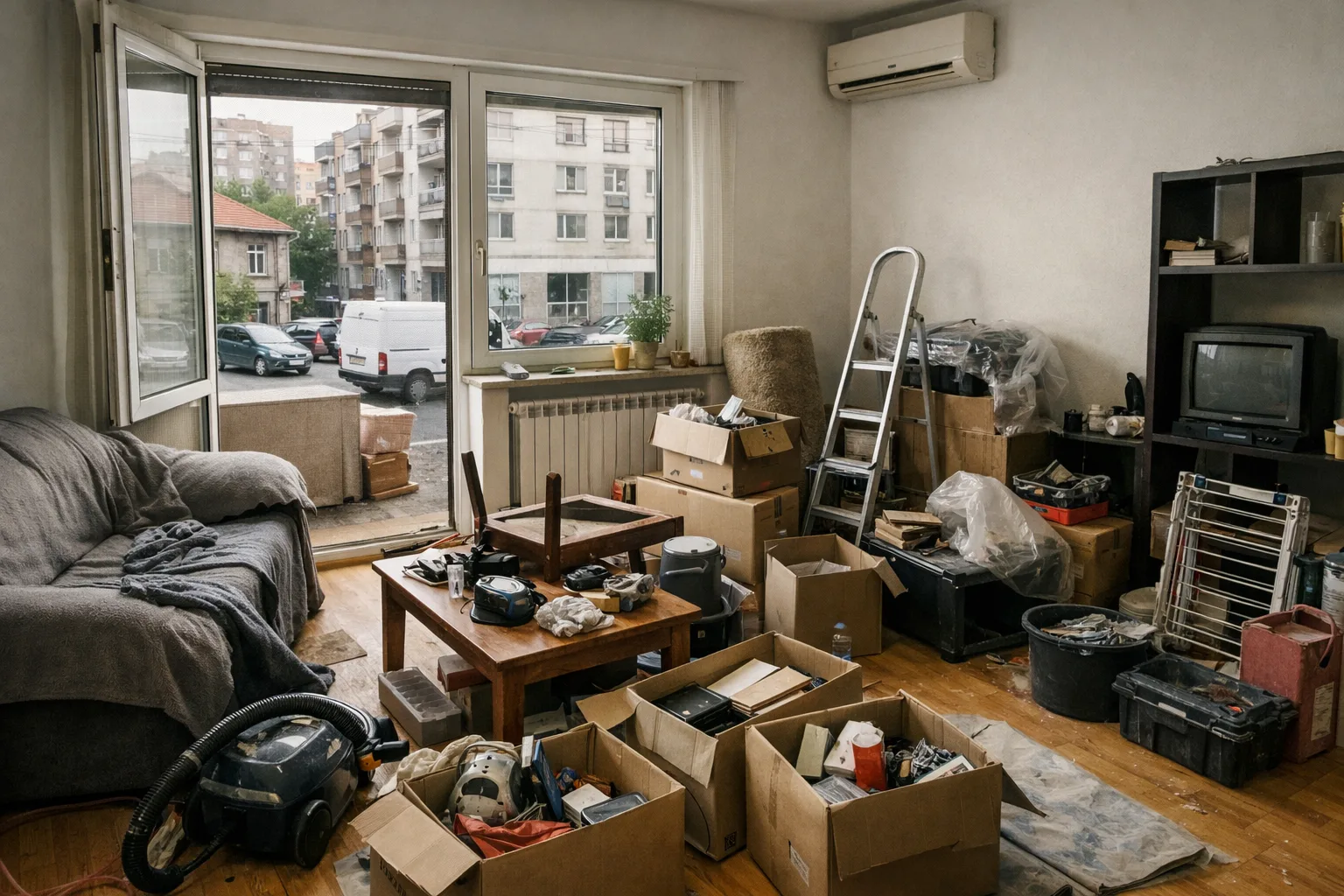
Why Is Storing Your Belongings a Good Solution for Home Renovation?
We will respond to you as soon as possible.
Below we answer the most common dilemmas and questions related to selecting and using boxes in storage spaces to help you make the best decision.
The most common mistakes include selecting boxes that are not suited to the weight and type of items, ignoring storage conditions such as humidity and temperature, as well as inadequate labeling and organization. Additionally, using cardboard boxes for long-term storage in damp areas can lead to damage to the contents.
Check the type of cardboard (it’s best to use boxes with double or triple walls), the load capacity indicated on the box, and whether the corners and joints are reinforced. Heavier items require stronger and thicker boxes, while standard cardboard boxes may suffice for lighter items.
Yes, plastic boxes are more resistant to moisture and can hermetically seal the contents, making them suitable for storage in areas with variable humidity conditions. However, it is important that the lids fit tightly and the boxes are watertight.
Metal boxes are recommended for storing valuable, sensitive, or heavy items, as well as when additional security and protection from mechanical damage and fire are needed. They are also useful in industrial warehouses where robust boxes are required.
It is recommended to arrange items by type and frequency of use. Place heavier and more durable boxes, such as plastic or metal ones, at the bottom or in easily accessible spots, while using cardboard boxes for lighter items. Label the boxes and keep clear records for more efficient retrieval.
A more eco-friendly option is cardboard boxes made from recycled materials for short-term storage or reusable plastic boxes made from recycled materials. Proper maintenance and reuse of plastic boxes also reduce their environmental footprint.
Keep boxes in a dry and clean place, away from direct moisture and sunlight. Avoid placing heavy items on top of cardboard boxes and regularly check their condition. Also, use protective films or covers for additional protection against dust and moisture.