Tips for International Moves
How to Pack Furniture for a Move to Germany?
How to Pack Furniture for a Move to Germany?

Enter at least 3 characters.
Moving abroad with children is a challenge that requires careful planning and adjustment on multiple levels. Beyond logistical issues, it is important to pay attention to the emotional and educational aspects, as well as legal and health preparations that will ease the transition for the entire family. In this guide, we will thoroughly cover the key steps to ensure your international move goes as smoothly and stress-free as possible for the youngest family members.

The first phase of moving abroad with children begins with detailed planning. It is important to involve the entire family in discussions about the upcoming changes to reduce stress and anxiety. Preparation should include clarifying the reasons for the move, expectations, and plans for a new beginning. It is also recommended to create a list of all administrative and logistical tasks, including obtaining passports, visas, and other documents required for crossing borders.
When it comes to children, it is helpful to prepare them for the new environment through stories, books, or videos about the country and culture you are moving to. This can help reduce fear of the unknown and encourage their curiosity and enthusiasm. Additionally, consider consulting with the school or kindergarten in the new country to familiarize yourself with the educational system and enrollment options.
Besides administrative and emotional preparations, it is important to plan the timing of the move to avoid school exams or significant events in the children's lives. If possible, choose a period when children have the fewest obligations and can more easily adapt to the new environment. Involving children in packing and preparation can help them feel actively engaged and reduce feelings of being lost.
A practical tip is to create a calendar of activities and deadlines that includes all important dates, such as school registration deadlines, medical check-ups, and visa appointment scheduling. It is also useful to prepare a moving budget that includes unforeseen expenses, as international moves often incur additional costs.
Talk to other families who have already gone through a similar process or join online support groups for emigrants, which can provide valuable information and reduce feelings of isolation.
Before moving, it is essential to resolve all legal obligations related to the children, such as obtaining valid passports and visas. For children under 18, consent from both parents or guardians is often required for travel abroad. Therefore, it is important to check the embassy or consulate requirements of the country you are moving to and secure all necessary documentation.
Also, if a parent traveling with children is traveling alone, it is recommended to obtain official consent from the other parent to avoid complications at the border. In some situations, additional translations and document notarization may be necessary, so it is important to plan ahead to avoid unnecessary delays.
Another important aspect is registering children in the new country – from obtaining residence permits to school enrollment. In some countries, children must have certain vaccinations or health check-ups to be admitted to educational institutions, so timely verification and preparation of health documentation is crucial.
It is advisable to consult with a lawyer specializing in immigration law or with immigrant support services in the host country, as rules can be complex and vary from case to case.
Also, pay attention to deadlines for submitting residence permit applications and other administrative procedures, as delays can lead to issues with the legal status of both children and parents.
If you plan for the children to acquire citizenship of the new country, inform yourself about the conditions and procedures for naturalization, as well as the possible rights and obligations that arise from it.
Selecting the right school is one of the most important steps when moving with children. It is essential to research the country's education system and available options – public, private, international, or special schools for immigrant children. Each option has its advantages and disadvantages, depending on the language of instruction, curriculum, and social integration.
It is recommended to contact the school in advance and arrange enrollment, as well as to speak with teachers or a school counselor. Also, check if the school offers support for children who do not speak the local language, such as language classes or additional lessons, which can be a key factor for successful adaptation.
In some cases, it may be necessary to obtain translations of school certificates or other educational documents. Additionally, grading systems may differ from the home country, so it is important to prepare children for changes in work methods and expectations.
It is good to inquire about extracurricular activities offered by the school, such as sports clubs, art workshops, or language courses, as these can help children integrate faster and make new friends.
If the child is older, consider the possibility of additional classes or private tutors who can assist in mastering the material and adapting to the new education system.
Also, keep track of school calendars and important dates, such as parent-teacher meetings and school holidays, so you can respond promptly and support the child in their school obligations.
Moving abroad can be stressful for children due to changes in environment, loss of familiar friends, and adapting to new rules. Parents should pay attention to children's emotional needs and provide constant support through conversations and shared activities.
It is important for children to have the opportunity to express their emotions and fears, whether through talking, play, or creative activities. Maintaining contact with friends and relatives from the home country can also help reduce feelings of isolation and preserve identity.
Integration into the new community is key to children's emotional well-being. Encouraging participation in sports, hobbies, or local children's groups can help children make new friends and feel accepted. Parents should be patient and allow time for adjustment, as the process is individual and may take several months.
Practicing family rituals and traditions from the home country can help children feel more secure and maintain a connection to their heritage.
If you notice signs of anxiety, depression, or other emotional issues in children, do not hesitate to seek help from professionals such as psychologists or counselors for children and families.
It is also important for parents to set an example of openness and a positive attitude toward changes, as children often observe and mirror their reactions and feelings.
Before moving, it is essential to conduct a complete medical examination of the children and obtain all necessary medical documentation, including vaccination records. Inform yourself about the healthcare system of the destination country and the conditions for accessing healthcare services.
Purchasing international health insurance that covers children can be very important, especially during the first months before you gain access to local healthcare. The insurance policy should include emergency medical care, regular check-ups, and possibly specialist services.
If the child has chronic illnesses or special needs, it is important to contact local healthcare facilities in advance to ensure continuity of treatment. Also, find out about the availability of medications and procedures for their import if necessary.
It is recommended to bring basic medical supplies and medications the child uses, along with a doctor's prescription and usage instructions in the host country's language.
If needed, schedule appointments for preventive check-ups or specialist consultations immediately upon arrival to ensure timely medical care.
Also, inform yourself about the availability of emergency services and emergency phone numbers in the new country, as well as procedures for calling for help.
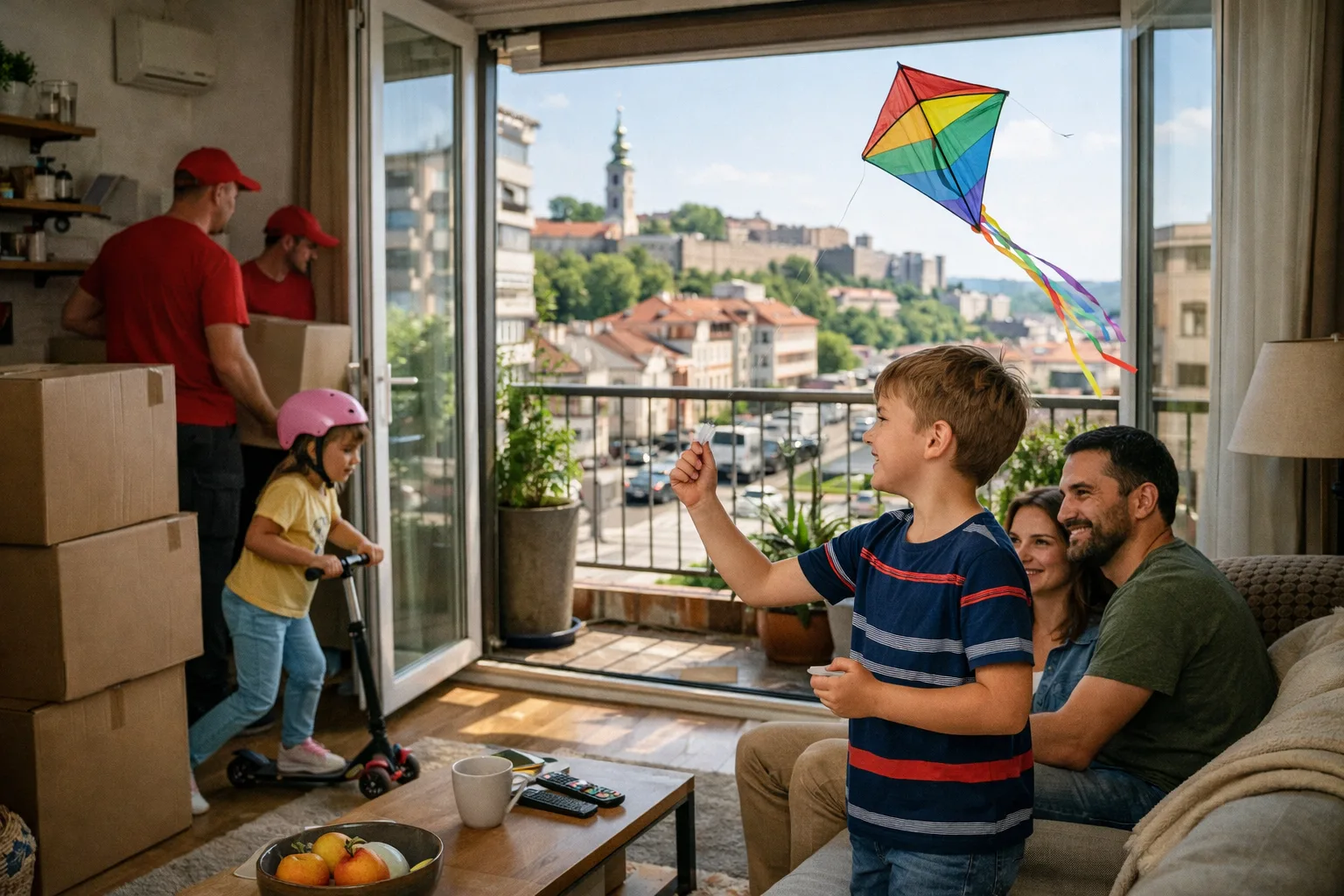
Packing belongings for an international move with children requires extra organization. It is recommended that children have their own bag with essential items such as favorite toys, clothing, and basic hygiene supplies to make travel and the first days in the new environment easier for them.
When it comes to larger items and furniture, make a detailed inventory and clearly label boxes, especially those containing children's belongings. If you use international moving services, it is important to clearly indicate which items require special care or faster transport.
Also, plan packing time so it is not too stressful for the children. Involving children in the process can motivate them and reduce the feeling of losing something. On moving day, prepare a meal or snack for the children, as well as activities to keep them entertained during the journey.
It is recommended to carry important documents, medications, and valuables with you in your hand luggage for easy access.
When packing clothes, choose layered combinations suitable for various weather conditions in the new country.
If the move includes pets, plan pet transport and necessary documentation separately, as they also require special attention and preparation.
Traveling long distances with children requires additional preparation. The choice of transportation should be adapted to the children's age and needs, as well as the duration of the trip. Air travel is the most common choice for international moves, but it is important to check the airline's rules for traveling with children in advance, as well as luggage conditions and special requirements.
For younger children, it is recommended to bring necessary travel supplies, including diapers, change of clothes, favorite toys, and food or drinks. Planning breaks and rest stops during the trip can help reduce tension and fatigue.
If traveling by car or train to the airport or final destination, pay attention to safety seats and children's comfort. With good preparation and planning, the journey can be less stressful for both parents and children, which is crucial for a good start to the new life.
It is recommended to have ready activities for children during the flight or drive, such as books, tablets with educational content, or games that can entertain them and reduce boredom.
Also, inquire about special assistance options at airports or on transportation, such as priority boarding or help with luggage, which can make traveling with children easier.
If you are traveling with babies or young children, check the possibilities for carrying strollers or other aids during the trip, as well as the availability of changing and feeding rooms at airports.
After arriving in a new country, the family faces the challenge of adapting to a new culture, customs, and laws. Knowing the basic rules and behavioral norms will ease daily life and help avoid misunderstandings.
It is beneficial to get involved in the local community through activities, schools, sports clubs, or cultural events, which will help children and parents make friends and feel accepted. Also, it is important to familiarize yourself with the rights and obligations you have as residents or citizens, especially regarding education, healthcare, and labor rights.
If legal questions or uncertainties arise, it is recommended to consult a legal advisor or local institutions that can provide necessary information and support. Openness, flexibility, and willingness to learn are key factors for successful integration and a happy family life in the new environment.
Practicing learning the local language through courses or daily communication significantly facilitates adaptation and increases the confidence of all family members.
Also, it is important to familiarize yourself with local customs related to school, working hours, holidays, and other social norms to avoid cultural misunderstandings.
If possible, find a mentor or a person from the local community who can help you navigate and provide useful advice about life in the new country.
How to Pack Furniture for a Move to Germany?

How to Move Furniture from Abroad to Serbia

Common Mistakes Made During International Moves
How to Save Money on an International Move?
We will respond to you as soon as possible.
Moving abroad with children raises many questions and concerns. Below we answer the most important specific situations and problems parents face during this process.
For moving abroad with children, valid passports for each child, appropriate visas or residence permits, and consent from both parents or guardians if the child is traveling with only one parent are required. It is also recommended to have translations and certified copies of important documents such as birth certificates.
It is important for parents to openly talk with children about the reason for the move and what to expect. Using books, movies, and discussions about the new culture can help children prepare. Providing support, involving children in planning, and enabling contact with old friends reduce anxiety.
Research the education system and available schools – public, private, and international. Contact schools in advance, inquire about support for children who do not speak the local language, and check enrollment requirements. It is important to consider the school's location and reputation.
Before moving, conduct a complete medical examination and obtain all medical documentation. Find out about the availability of necessary medications and therapies in the new country. Purchasing international health insurance is often recommended until local healthcare is established.
Plan transportation that is most suitable for the children's age, bring necessary supplies such as food, toys, and change of clothes. Organize breaks during the trip and prepare for unforeseen situations. For air travel, inform yourself about the airline's rules for traveling with children.
Prepare a separate bag with items that children can use immediately upon arrival, such as favorite toys, clothing, and basic hygiene products. Clearly label boxes containing children's belongings. Involve the children in the packing process to help them feel included and reduce stress.
Getting involved in local communities, schools, sports, and cultural activities helps children and parents make new friends and feel accepted. Additionally, learning about local customs and laws helps avoid misunderstandings and makes daily life easier.