
Tips for moving a company
7 Tips for a Successful Company and Office Move
7 Tips for a Successful Company and Office Move

Enter at least 3 characters.
Relocating a company is a complex, multi-phase process that requires detailed planning and precise organization to avoid business interruptions and unnecessary costs. In this guide, we provide comprehensive advice and steps for efficient preparation and execution of your company's move, with a special focus on maintaining operational continuity and minimizing risks. By applying these practical recommendations, your company will be able to continue working without delays, while employees and clients are timely informed and involved in the process. We will also highlight the importance of coordination between different departments and the significance of technical preparation to ensure a safe and successful relocation.

Thorough planning is a key factor in the success of any company relocation. The initial step is to create a detailed timeline covering all phases of the process – from preparation and packing, through transportation, to establishing operations at the new location. It is important to anticipate potential obstacles, such as equipment delivery delays or technical issues, and develop contingency plans to minimize the risk of operational downtime.
Involving all relevant teams and key employees during the planning phase enables clear task and responsibility allocation. Regular meetings and transparent communication help ensure everyone is aware of deadlines and obligations, contributing to efficient coordination. Additionally, it is essential to promptly inform clients, suppliers, and business partners about the address change and any temporary contact adjustments, thereby maintaining trust and continuity of cooperation.
Budgeting is an integral part of planning and should include all costs related to the move, such as hiring a moving service, adapting the new space, technical equipment, and additional working hours. Accurate resource estimation and investment in organization can significantly reduce downtime and prevent unexpected expenses. It is also recommended to allocate room in the plan for unforeseen situations, allowing flexibility during the move's execution.
Selecting a new location is a strategic decision that can have a long-term impact on the company's operations. When choosing, it is important to consider accessibility for employees and clients, availability of public transportation, as well as proximity to business partners and key markets. Additionally, assess whether the space meets the technical and logistical requirements specific to your activity, including size, room layout, and potential for future development.
Verifying legal conditions and permits for conducting business at the new location is necessary before making a final decision. Space adaptation may require additional investments and time, so it is advisable to engage experts for assessment and planning to avoid unexpected costs and delays. In some cases, consulting local authorities or business associations can be beneficial for obtaining additional information and support.
Organizing a site visit with representatives from various departments of your company, such as IT, logistics, administration, and production, allows for a comprehensive assessment of technical and functional needs. This approach helps identify potential issues and tailor the space to the specifics of your business, thereby reducing risks and facilitating the relocation process.
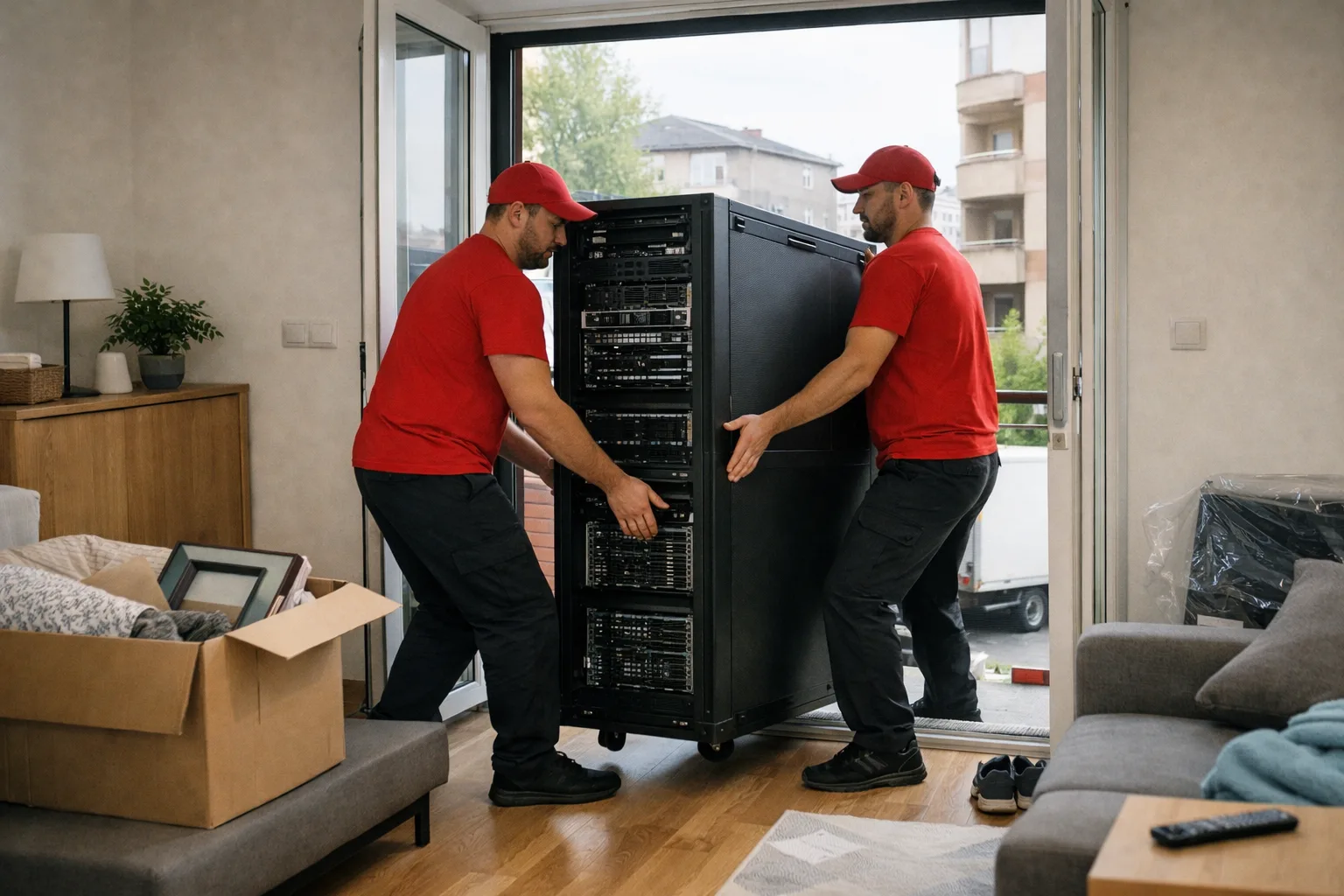
Technological infrastructure is the foundation of modern business, and its uninterrupted functionality during the move is of utmost importance. Before starting the move, it is necessary to create a detailed list of all devices and systems, including computers, servers, network equipment, phones, and other specialized devices. This list serves as a guide for disassembly, packing, and reinstallation.
Collaboration with IT experts is crucial for defining secure procedures for disassembly, transport, and reinstallation of equipment. It is recommended to plan a transitional period during which systems will be available simultaneously at both the old and new locations, allowing uninterrupted operation and reducing the risk of data loss or service interruptions.
It is essential to make backup copies of all important data and verify system security before the move. Attention should also be paid to protecting equipment during transport, including protection against moisture, shocks, and temperature changes. These measures are key to preserving data integrity and technical equipment, thereby avoiding potential problems and additional costs.
A detailed and realistic moving schedule enables efficient coordination of all activities and minimizes work interruptions. It is important to define exact dates and time frames for each step of the process, including packing, transport, installation, and equipment testing. The move should be carried out in phases, especially in larger companies, so that key departments can continue working without delays.
Planning the move during periods of reduced business activity, such as weekends or holidays, can significantly reduce the impact on daily company operations. Additionally, coordination with the moving team and internal teams must be precise and continuous, with clearly defined responsibilities and communication channels.
The schedule should also include time for adjustment and testing of all systems at the new location, as well as for resolving any technical or logistical issues. This phase is critical to ensure that business operations can continue without interruption and that all employees are ready to work in the new environment.
Open and timely communication with employees is essential for a successful move. Informing them about all phases of the process, deadlines, and changes helps reduce uncertainty and increases employee engagement. Organizing regular meetings and providing opportunities for questions contributes to transparency and better team preparation.
Clients and business partners should be promptly informed about the address change and any potential temporary work interruptions. Using various communication channels, such as email, the official website, social media, and direct contacts, enables effective message delivery and maintains trust. Transparency in communication prevents misunderstandings and loss of business opportunities.
In addition to informing, it is important to provide support to employees during the moving process, including training for working in the new environment and adapting to new technologies or procedures. This approach fosters a positive work atmosphere and facilitates the transition, which reflects on the overall productivity of the company.

Packing equipment and materials must be carefully organized to reduce the risk of damage and loss during transport. It is recommended to use specialized materials such as antistatic foils, protective boxes, and padding, as well as clear labeling of all boxes and devices according to sector and equipment type. This facilitates unpacking and installation at the new location.
Engaging a professional moving team specialized in corporate relocations with experience in business moves is highly important, as they possess the knowledge and equipment to handle sensitive and expensive equipment. Before agreeing on the date and transport conditions, it is crucial to clearly define the scope of work and specific requirements to avoid misunderstandings and delays.
During transport, special attention should be paid to equipment safety, including protection against moisture, shocks, and temperature changes. Insurance and supervision during transport further reduce risks and save time, and in case of any issues, enable quick response and resolution.
Upon arrival at the new location, the priority is to quickly and efficiently establish work processes to minimize downtime. Organizing teams responsible for unpacking, equipment installation, and verifying the functionality of all systems allows for a coordinated and systematic approach.
Technical checks and testing of all systems before fully transferring business operations are necessary to identify and resolve any issues. Additionally, this phase may include organizing additional employee training for working in the new environment or with new devices, which contributes to faster adaptation and efficiency.
Flexibility and readiness to resolve unforeseen issues in the initial days at the new location are crucial for maintaining business continuity. Timely response and support for employees enable overcoming challenges and ensuring uninterrupted production or service delivery.
After completing the move, it is important to continuously monitor business operations and identify any issues that may affect work efficiency. Regular reports and meetings with teams allow for timely identification and resolution of shortcomings, contributing to the ongoing improvement of processes.
Evaluating the success of the move should include verifying whether all planned objectives were achieved, as well as analyzing the costs and time spent on the process. This retrospective provides valuable insights that can be used for future planning and optimization of business processes.
Maintaining good relationships with employees and clients during and after the move contributes to a positive company image and increases the chances of success at the new location. Continuous communication, support, and adapting to the needs of all participants are key factors for long-term development and business stability.
7 Tips for a Successful Company and Office Move

How to move a company from Belgrade to Niš quickly and easily?

How to pack and move a boutique in Belgrade?

How to Move Your Business Quickly and Affordably
We will respond to you as soon as possible.
Below we answer the most common questions and dilemmas that arise when a company plans a move, focusing on preserving business continuity.
It is important to plan the move in phases and use periods with lower workload, such as weekends or holidays. Additionally, hiring extra staff or temporarily redirecting key activities can help ensure work continues without interruption.
It is recommended that IT equipment be packed in specialized boxes that protect against shocks and moisture. A proper schedule for disassembly and reinstallation should be made in cooperation with IT specialists, and data must be securely backed up before transport.
The best time to plan a move is during periods of reduced workload or holidays to minimize the impact on business operations. It is also important to allow enough time for preparation and setup at the new location before fully transferring work.
Clients should be informed in advance via email, website, social media, and phone calls. It is important to highlight the new address, changes in contact information, and any possible short service interruptions so clients can adjust accordingly.
Yes, professional moving companies have the experience and equipment necessary for safe and efficient transport of business equipment, reducing the risk of damage and work interruptions. They can also assist in organizing and coordinating the entire process.
It is important to have a backup plan and a team ready to respond quickly. Communication with employees and clients must be transparent, and problems should be resolved immediately to minimize negative impacts on business operations.