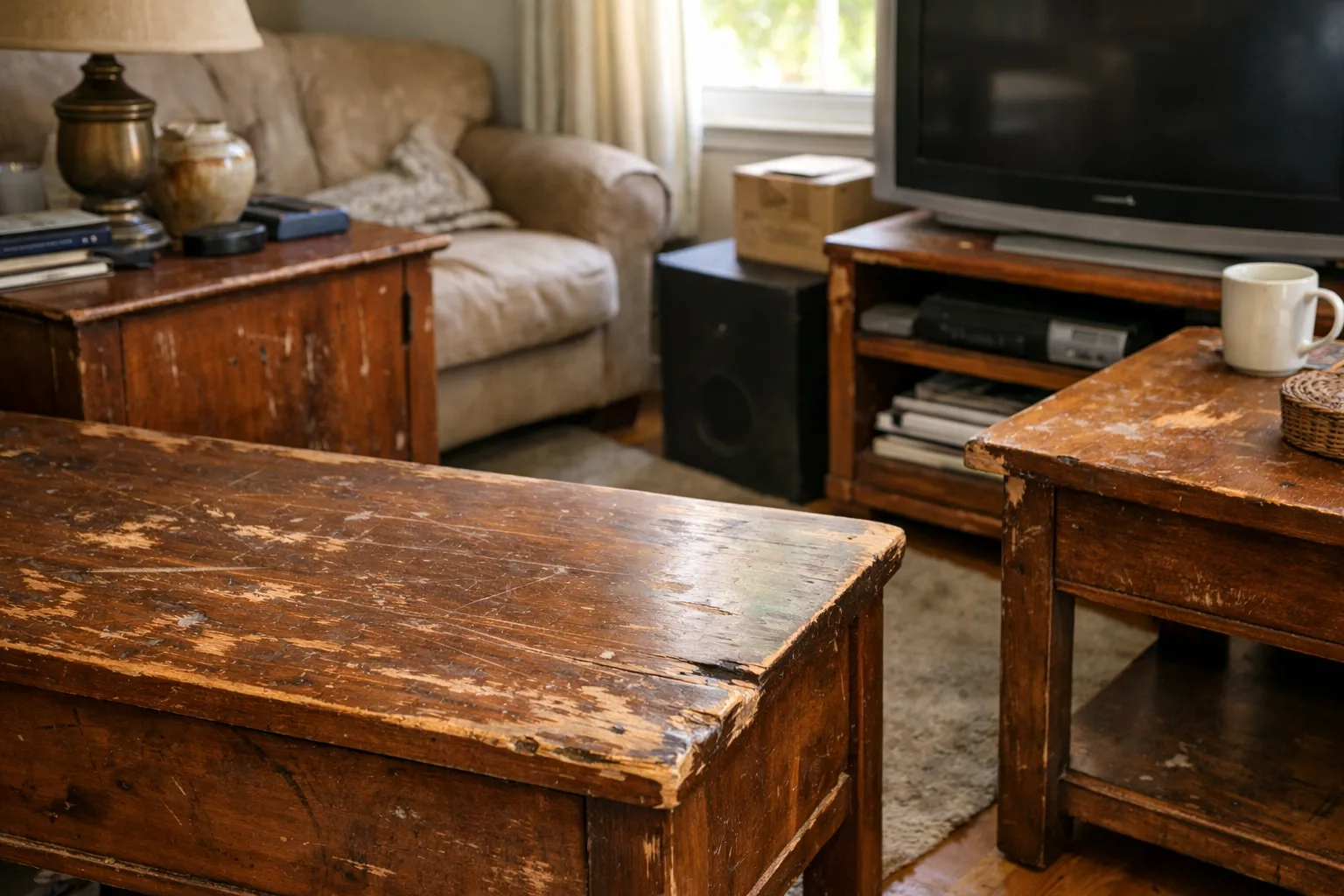
How to pack antique furniture?
How to pack antique furniture?

Enter at least 3 characters.
Moving a home library can be a significant challenge due to the sensitivity and value of the books you own. Proper packing not only protects your precious copies from damage but also facilitates their transport and later organization in the new space. In this guide, we will thoroughly explain how to effectively and safely pack books, which materials to use, and how to organize your library for a stress-free move without unnecessary complications. We will pay special attention to practical tips that will help ensure the moving process goes smoothly and safely for your books. Additionally, we will provide advice on how to maximize space in boxes and protect books from moisture and dust during transport, which is often an overlooked aspect of moving. Finally, we will also cover how to plan the layout of your library in the new space so that your books are easily accessible and neatly organized.
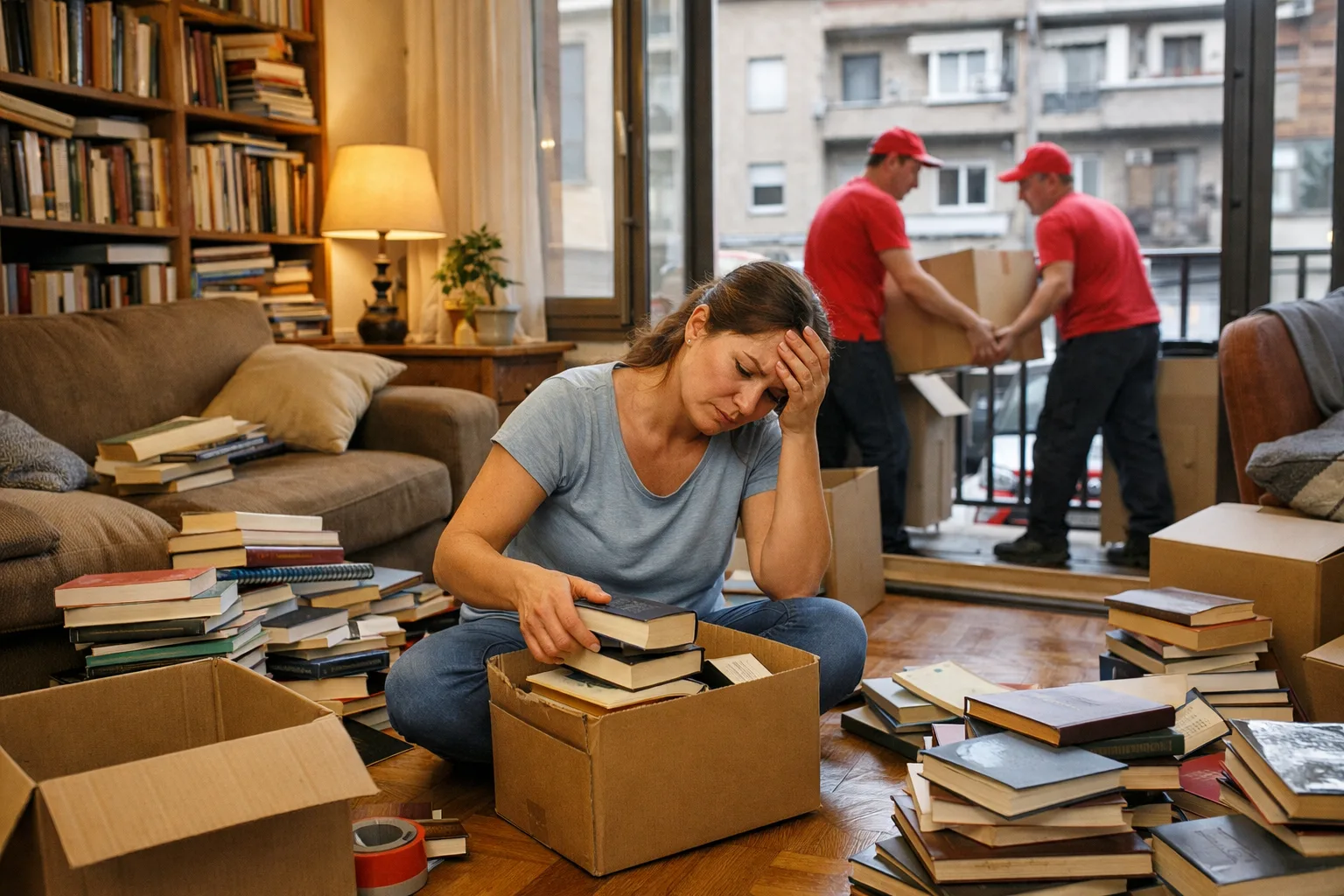
Before you start packing your library, it is crucial to prepare an appropriate space that will allow you to sort and pack books without risk of damage. Ideally, choose a clean, flat, and well-lit surface, such as a table or floor in a room with enough space for sorting. Good lighting helps you clearly see titles and organize items more easily, which is especially important when you have a large number of books. Also, it is advisable that the space is protected from moisture and dust, as books are sensitive to these factors and can easily be damaged if not properly protected during packing.
For packing books, it is essential to provide quality and suitable materials. Sturdy moving boxes of medium size are recommended, as overly large boxes can become too heavy and prone to breaking, while small boxes can complicate organization. Also, use packing paper or bubble wrap for additional protection, adhesive tape to seal boxes, a marker for clear labeling, and plastic bags that can serve as moisture protection in case of unexpected weather conditions. It is also good to have wet wipes or a cloth on hand for quick dust cleaning from book covers before packing.
In addition to basic materials, it is useful to have extra items such as old newspapers or paper that can serve as filler inside boxes. This filler prevents books from shifting during transport and protects them from impacts. Preparing all necessary materials in advance allows the packing process to be faster, more efficient, and organized, reducing stress and the possibility of mistakes during the move. It is also recommended to have gloves on hand to protect your hands, especially if the books are old or dusty, to avoid damaging the books and protect yourself.
It is important to make a plan and estimate how many boxes you will need before starting to pack, as well as to have spare materials in case you encounter unexpected situations. Also, if possible, designate the packing area as a "work corner" where only books will be packed, to avoid mixing with other items and maintain order throughout the process.
Sorting books before packing is a key step that contributes to neatness and reduces the risk of loss or damage during the move. It is recommended to sort books by size, subject, or even frequency of use, depending on your needs and future arrangement in the new space. For example, you can separate fiction, professional literature, children's books, and so on. Such categorization not only facilitates packing but also later unpacking and organizing the library.
When removing books from shelves, be sure to check their condition. Damaged or particularly valuable copies should be packed separately and additionally protected to avoid further damage. Also, remove any papers, bookmarks, or tags you do not want to move, as they can get lost or damaged during transport. If you have books with loose covers or pages, consider temporarily binding or providing extra protection to prevent further deterioration.
After sorting the books, it is important to clearly label the groups of books on the boxes. Use precise and understandable labels such as "Fiction - small," "Professional Literature - large," or "Children - picture books." This will significantly ease unpacking and finding desired titles after the move, as well as organizing the library in the new space. You can also create an inventory list for each box, which will further help in tracking and control during the move.
Additionally, if you have a digital library inventory, now is the perfect time to update it and link it to the labels on the boxes. This can be a simple Excel document or a book collection management app, allowing you to quickly search and track all titles after the move.
Selecting the appropriate boxes for packing books is crucial for the safety of your copies during the move. Boxes should be sturdy and medium-sized, as overly large boxes filled with books can become too heavy and prone to breaking, while small boxes may complicate organization and increase the number of packages. Ideally, boxes should have reinforced edges and bottoms, which further prevent damage during carrying and transport.
Specialized book boxes with reinforced bottoms and dimensions tailored to standard books are the ideal choice. If you cannot obtain these, regular moving boxes with reinforced bottoms are a good alternative. It is important that boxes are in good condition, without damage or damp spots, to provide adequate protection. Before use, check that boxes are clean and dry, as moisture can permanently damage books.
Before packing, line the bottom of the box with a layer of paper or bubble wrap for extra cushioning. Also, avoid leaving large gaps inside the box that could cause books to shift during transport. Fill any empty spaces with paper or bubble wrap to ensure stability and security of the contents. If you have boxes with lids, make sure they close properly and can be additionally secured with packing tape.
Another useful tip is to avoid placing boxes with books directly on vehicle floors or storage areas; instead, place them on pallets or other surfaces that prevent contact with moisture and dirt. This is especially important if the move takes place in rainy or humid conditions.
Properly stacking books in boxes is key to preserving their integrity during the move. It is best to place books upright, as they stand on a shelf, to prevent bending and breaking of covers and pages. This technique also facilitates unpacking and organization in the new space. If books vary in size, try grouping them by dimensions to create a more stable stack.
Heavier and larger books should be placed at the bottom of the box, while lighter and smaller copies can go on top. You can also use an alternating stacking technique, where one row of books stands upright and the next lies flat, which increases stability and reduces shifting during transport. This method is especially useful for boxes packed to the top and helps distribute weight evenly.
It is extremely important not to leave empty spaces inside the box. If there are any, fill them with paper, bubble wrap, or other packing materials to prevent books from moving. This reduces the risk of damage and makes the packing more stable and secure. Also, avoid overpacking books tightly, as this can damage covers and pages. The goal is to achieve firm but gentle packing.
Another tip is not to place heavy books on top of the box, as this can damage lighter books underneath. If you have books with special covers or bindings, be sure to protect them additionally with soft paper or wrap before placing them in the box.
Rare and delicate books require special attention and additional protective measures when packing. It is recommended to carefully wrap them in wrapping paper or soft paper, which will protect covers and pages from scratches and other damage. If the books are very old or valuable, consider consulting a book preservation expert before the move.
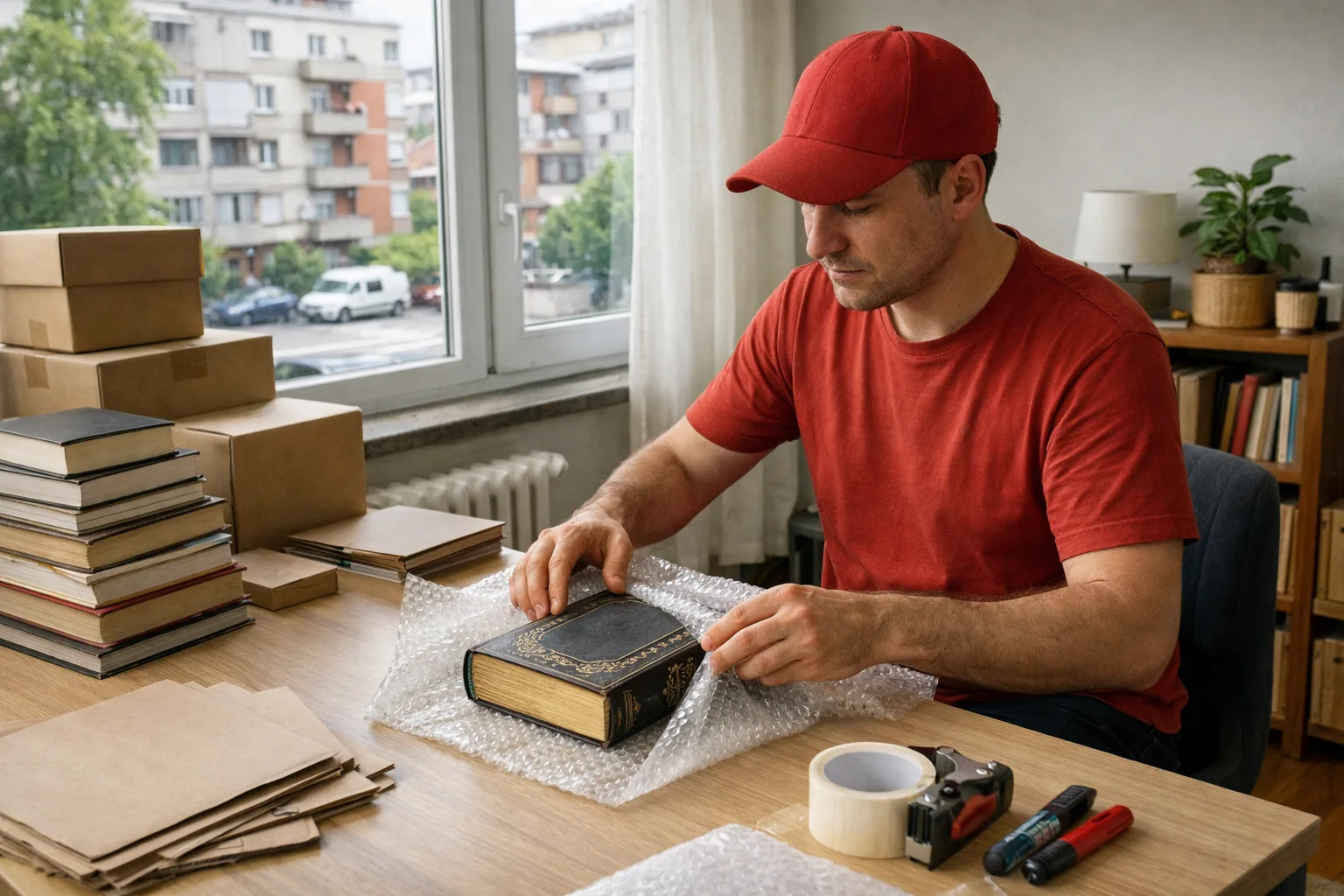
For extra security, especially valuable copies can be wrapped in bubble wrap, which provides better cushioning against shocks and vibrations during transport. After wrapping, place them in a smaller box with additional padding, such as styrofoam or paper, to prevent movement inside the box. These boxes should be clearly labeled and kept separate from other books.
Be sure to label the box with rare editions clearly with markings like "Fragile" or "Delicate." This will alert everyone handling the move to exercise special care, significantly reducing the risk of unpleasant damage. It is also recommended to carry these boxes personally or transport them separately, if possible, to maintain full control over them.
Additionally, if you own books with special storage conditions, such as those that must not be exposed to direct light or high temperatures, plan the transport to protect them from these factors. In some cases, it may be useful to use thermal insulation materials or specialized boxes.

Clear and precise labeling of boxes is crucial for quick and safe arrangement of books in the new home. Use a marker to write in large, legible letters and note not only the contents but also the room where the box should go, which facilitates placement upon arrival. For example, labels like "Living Room - Fiction" or "Study - Professional Literature" can significantly speed up unpacking.
A good practice is to place labels on multiple sides, such as the top and side of the box, so they are visible regardless of how the boxes are stacked. You can also use different colors of markers or stickers for various categories or rooms, for example, blue for the living room, red for the office, and green for the children's room. This kind of visual categorization makes identification easier and reduces the chance of errors during placement.
In addition to labeling the boxes, it is recommended to keep a list of packed boxes with their contents and labels. This list can be in paper or digital form and significantly facilitates finding specific books and verifying that all boxes have arrived undamaged at the new location. The list can also serve as a record for any claims or repairs.
Another useful tip is to mark the weight on the boxes, which can help during carrying and arranging the load. If a box is heavy, mark it accordingly to avoid improper lifting and potential injuries.
If you have boxes with delicate or rare editions, additionally mark them with warnings such as "Do not throw" or "Do not place under weight" so that everyone handling the boxes is aware of the special care required.
Boxes with books can often be heavy, so it is important to carry them properly to avoid injuries and damage. When lifting boxes, use the technique of bending your knees and keeping your back straight, which reduces strain on the spine and prevents injuries. Also, it is recommended not to carry overly heavy boxes alone but to ask for help or use appropriate equipment, such as moving services with workers.
If you are moving on your own, consider using a dolly to transport boxes to the vehicle. This not only makes the job easier but also reduces the risk of boxes falling and books getting damaged. Additionally, a dolly allows for more efficient movement and saves energy. When using a dolly, watch out for obstacles and uneven surfaces to avoid tipping or damaging the load.
When loading boxes into the vehicle, arrange them so that heavier boxes are at the bottom and lighter ones on top, with a stable layout that prevents shifting during transit. Use straps or other securing methods to further secure the load and prevent damage. Also, avoid placing boxes with books next to heavy or sharp objects that could damage the boxes or books.
Another tip is to keep the vehicle clean and dry during transport to prevent moisture or dirt from entering the boxes. If possible, use covers or tarps for additional protection of the boxes from weather conditions.
Finally, when unloading boxes, be careful to avoid throwing or dropping them abruptly, as this can damage the books inside. Plan ahead where you will place the boxes so that the unloading process is as organized and safe as possible.
Upon arriving at your new home, unpacking your library should be done systematically and thoughtfully. It is recommended to first bring boxes with the most important or frequently used books so you can immediately place them in accessible spots. This allows your library to be functional from the very beginning of your stay in the new space.
During unpacking, be sure to check the condition of the books and boxes. If you notice any damage caused during the move, document it and consider options for repair or replacement. Timely action can prevent further deterioration of the books. Also, it is recommended to clean the books of dust and any stains before placing them on shelves.
Organizing your library in the new space is a great opportunity to reassess the layout and possibly free up space for new titles. Consider practical shelving and storage solutions that will contribute to more efficient use of space and easier book retrieval in the future. For example, you can use vertical shelves, boxes for additional organization, or even digital catalogs to keep track of your collection.
Also, consider the conditions in the new space, such as lighting, temperature, and humidity, to place books in spots optimal for their preservation. Avoid direct sunlight and areas with high moisture, as these can damage covers and pages.
Finally, involve family members or housemates in the unpacking and organizing process, as working together can be more efficient and enjoyable, and it also helps maintain order and quickly establish a functional space for reading and storing books.
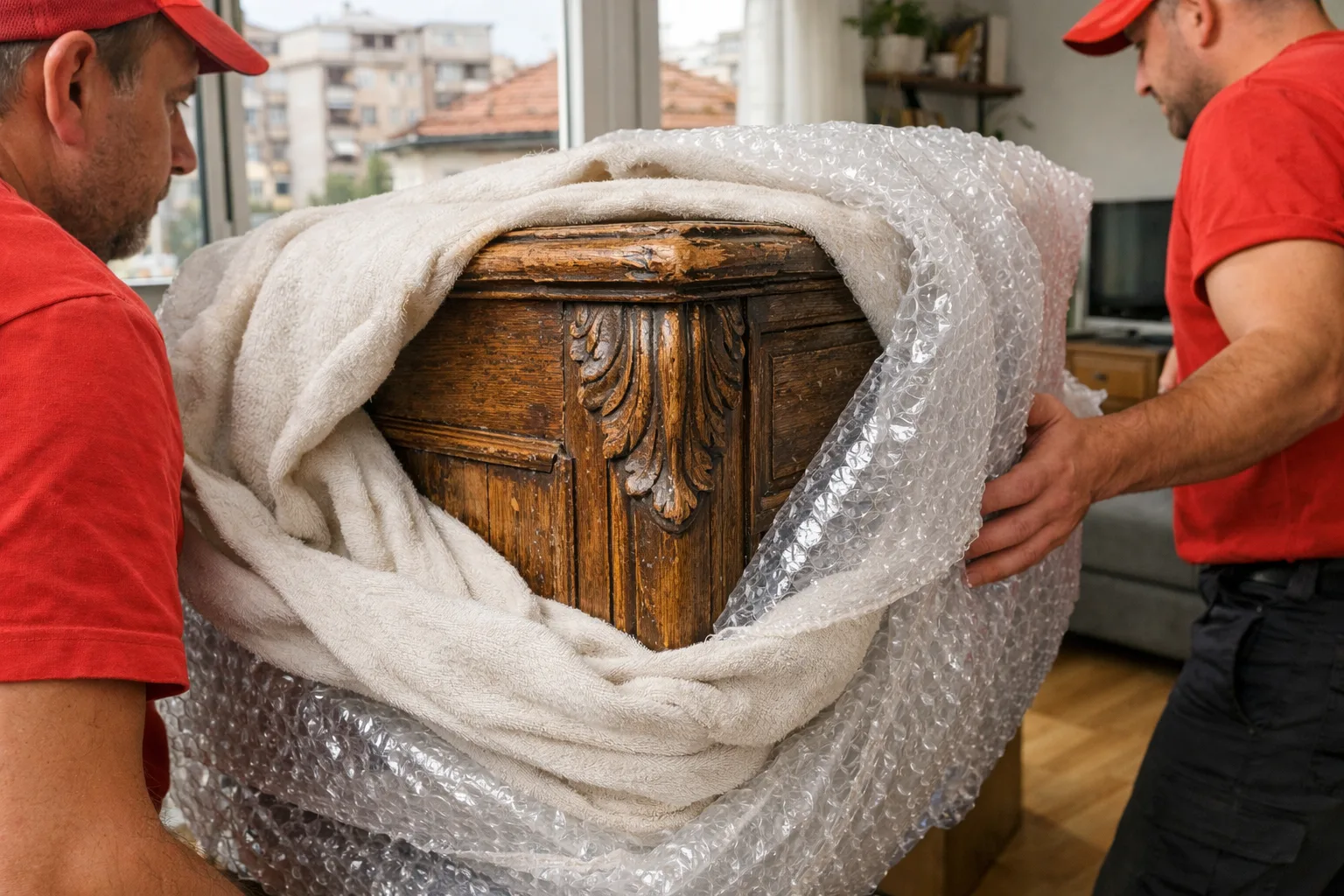
Advantages of Professional Packing Before Moving in Belgrade
We will respond to you as soon as possible.
Below we answer the most common questions that arise when packing a home library for moving, to help you avoid mistakes and ensure the safe transport of your books.
Protect hardback book covers by wrapping them in packing paper or bubble wrap before placing them in the box. This prevents scratches and damage, especially if the books shift inside the box during transport.
It is recommended to stack books upright, similar to how they are placed on a shelf, as this reduces pressure on the covers and pages. However, heavier and larger books can be laid flat for greater stability and a more even weight distribution in the box.
Use plastic bags for additional protection of books sensitive to moisture, especially if there is a risk of rain or high humidity during transport. Also, choose boxes that are not damaged or damp and keep them in a dry place before and during the move.
It is optimal that one box does not weigh more than 15 to 20 kilograms to be safely carried. Avoid overfilling boxes with books, especially if they are large and heavy, as this can lead to box damage and pose a risk to the carriers.
Clearly mark each box with a marker indicating the contents (for example, "Novels", "Professional Literature") and the room it belongs to (e.g., "Living Room"). For rare or delicate books, label the box as "Fragile" or "Handle with Care".
Yes, it is recommended to dust the books with a dry cloth or soft brush before packing. Clean books are less prone to damage and moisture during transport and are more pleasant to handle when unpacking.
Pack damaged books separately, wrapped in additional protective material such as bubble wrap or paper. Clearly indicate on the box that the contents are fragile so special care is taken during the move.