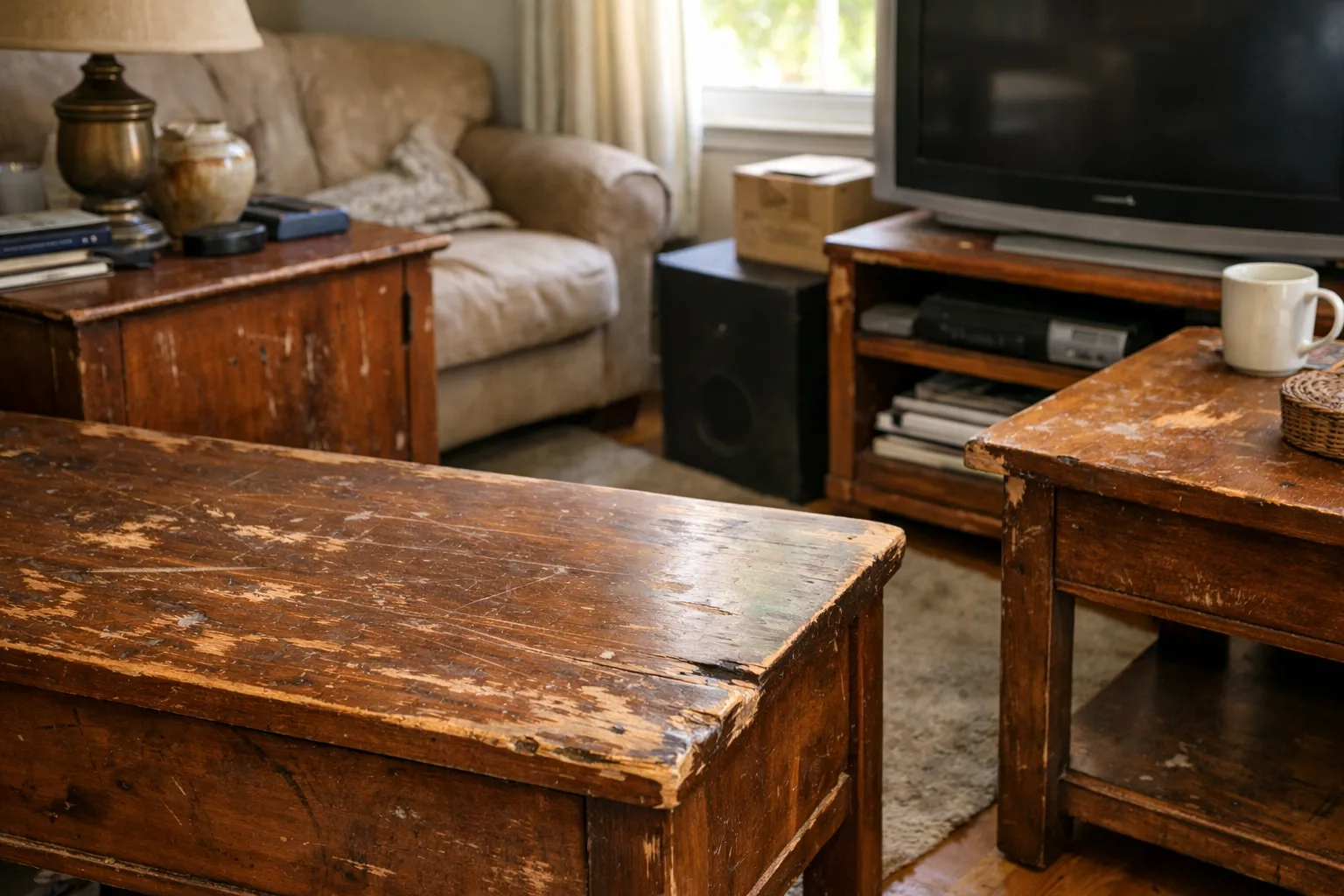
How to pack antique furniture?
How to pack antique furniture?

Enter at least 3 characters.
Preparing for a move involves many details, and one of the most important is acquiring quality packing boxes. Well-chosen boxes make organization easier, protect your belongings during transport, and speed up the moving process itself. In this guide, you will learn how and where to get moving boxes, what to pay attention to when choosing them, as well as practical tips for saving money and preserving your items. Additionally, we will provide useful information on proper storage of boxes before the move and extra packing techniques that will help make your move as smooth and efficient as possible. It is also important to plan your time for packing and acquiring materials to avoid stress and unforeseen situations. Well-organized preparation can significantly reduce effort and allow you to focus on other aspects of the move, such as coordinating with the carrier or notifying relevant services about your address change.
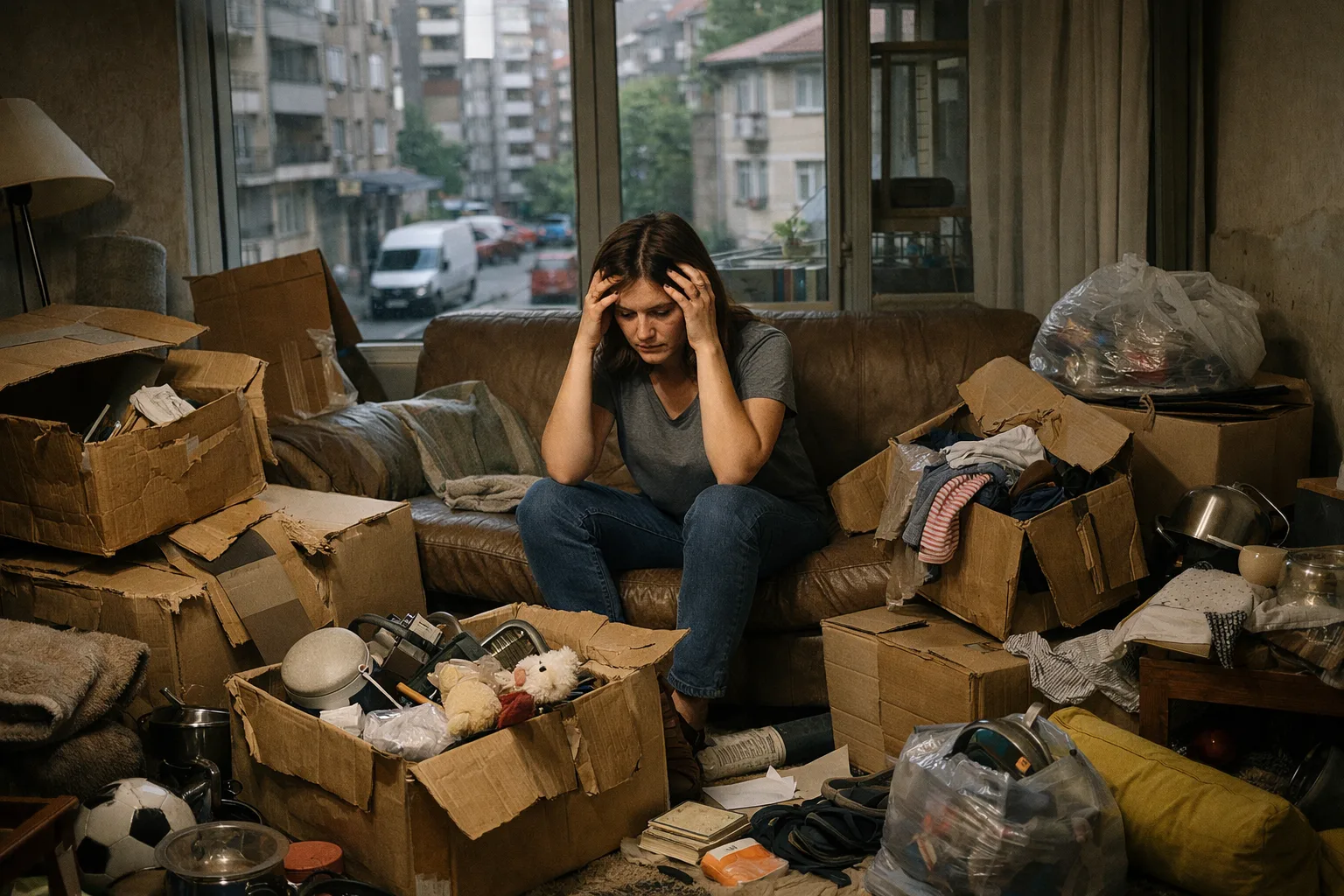
Boxes are the fundamental element of every move because they protect your belongings from damage and facilitate transport. The right boxes should be sturdy, appropriately sized, and suited to the types of items you plan to pack. For example, fragile items like glassware or plates are best packed in boxes with dividers or extra protection.
Poorly chosen boxes can lead to breakage, crushing, or loss of items, which can significantly complicate the move and increase costs. Also, using boxes that are not the right size can make carrying and stacking in the vehicle more difficult, potentially prolonging the move and increasing the risk of injury.
The choice of boxes also affects packing efficiency because properly selected boxes allow for easier stacking in a van or truck, which can reduce the number of trips and the overall moving time. Well-packed boxes save space and make accessing items easier upon arrival at the new address, reducing stress and effort during unpacking.
Moreover, the right boxes contribute to safety during transport by minimizing the chance of shifting and damage to contents. Boxes that are too large can cause items to move inside, while boxes that are too small may be overfilled and prone to breaking. Therefore, it is important to carefully select box dimensions and types according to the contents.
Additionally, using specialized boxes for certain items, such as wardrobe boxes with hanging rods or book boxes with reinforced bottoms, can further simplify packing and protect belongings from damage. Investing in the right boxes saves time and money in the long run during your move.
Buying new boxes from stores specializing in packing supplies is the simplest option but can be more expensive. These boxes are high quality and designed for moving, but you should carefully estimate the quantity needed to avoid unnecessary expenses. Some stores also offer boxes in various sizes and accessories like sealing tape and marker pens, which can be useful for complete preparation.
Obtaining boxes from supermarkets or stores that receive goods in cardboard packaging can be a free or cheaper option. It is important to check the sturdiness of the boxes and whether they are previously damaged or dirty. Collecting boxes from these sources can be a more environmentally friendly solution as it recycles materials that would otherwise be discarded.
Internet platforms and local free item groups often have offers for donated or used boxes that can be used for moving. Collecting these boxes can be cost-effective but may require additional time for gathering and inspecting their condition. It is recommended to contact donors in advance to arrange pickup and avoid wasting time.
Besides the mentioned options, you can also consider purchasing boxes through online stores that offer home delivery, which can be especially useful if you don't have time for personal pickup. Additionally, some moving companies offer a service for selling or renting moving boxes, which can be convenient if you plan a professional move.
Don't forget to pay attention to the quality of sealing tapes and other accessories when acquiring boxes, as poor materials can compromise the safety of the packaging. It is always better to invest in reliable products that will make the entire moving process easier for you.
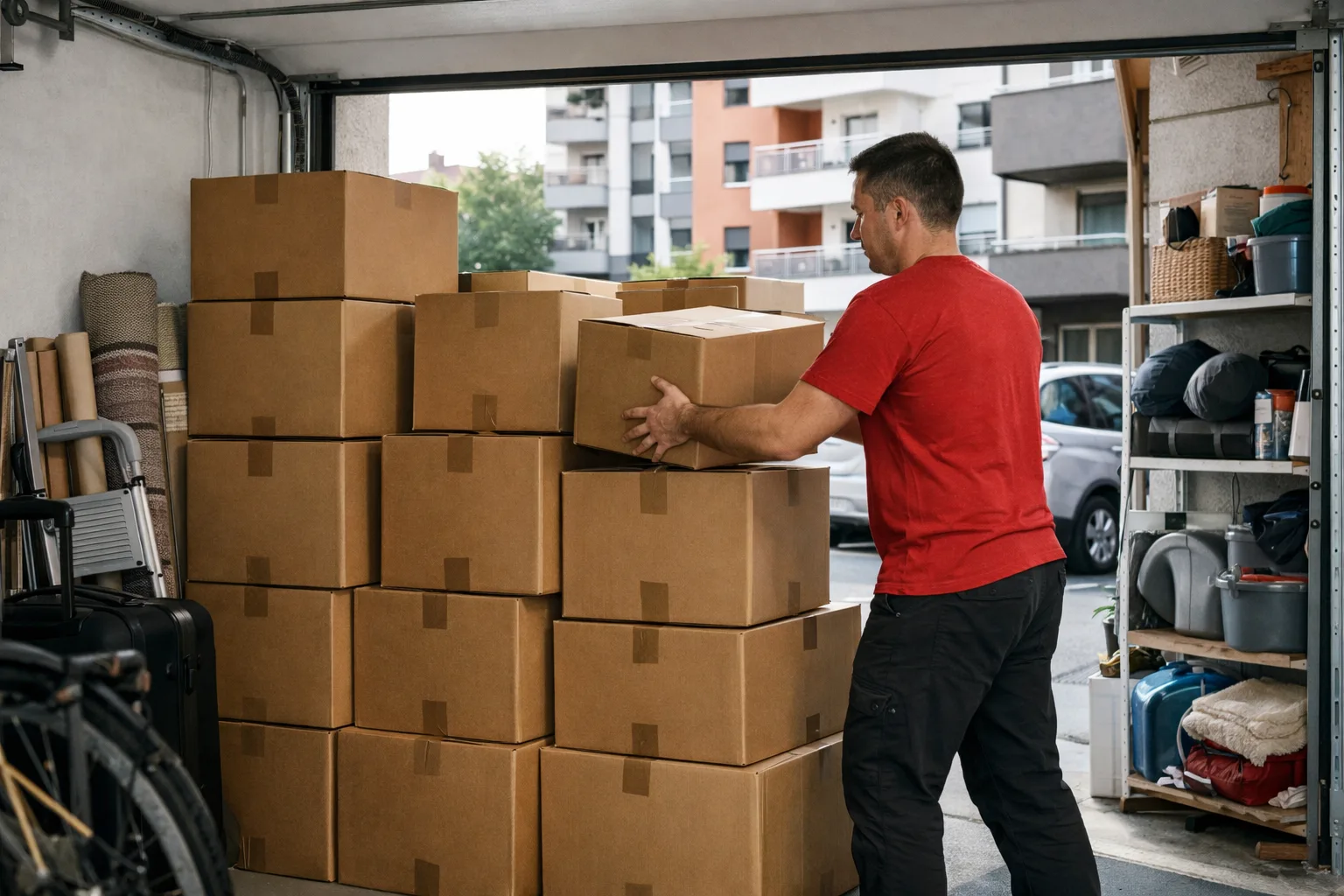
When planning a move, it is good to make a list of items to be packed and determine the quantity and sizes of boxes accordingly. For heavier items, such as books, choose smaller boxes that won't be too heavy. Also, consider how many boxes you need for different rooms in the apartment or house to better organize packing.
For bulkier and lighter items, such as clothing and bedding, larger boxes can be used to save space and facilitate packing. In these boxes, you can also use vacuum bags for clothing to further save space and protect items from dust and moisture.
Experience shows that on average, for an apartment of 50 to 70 square meters, about 20 to 30 boxes of various sizes are used, but this also depends on the amount of belongings and packing method. It is recommended to always get a few extra boxes for unforeseen needs, as well as for packing items you find just before the move.
To more accurately estimate the required number of boxes, you can use online moving calculators that provide recommendations for the number and type of boxes based on entered data about apartment size and number of household members. This can help avoid buying too many or too few materials.
Also, keep in mind that it is better to have a few extra boxes than too few, as this will give you flexibility in packing and reduce stress right before the move. Additional boxes can also be used for packing items found at the last moment or for disposing of waste and unnecessary belongings.
New boxes are sturdy, reliable, and designed for multiple uses during the move, reducing the risk of damage to belongings. They are made from quality cardboard that can withstand weight and pressure during transport, which is especially important for fragile and valuable items.
They may have additional features such as handles for easier carrying, special compartments for fragile items, or labels for marking contents. These features significantly facilitate packing and unpacking, as well as organizing items by rooms.
Buying new boxes can save time because they are ready to use immediately and do not require cleaning or repairs, which is especially important if you are moving on short notice. Also, new boxes are hygienically safe, which is important for packing clothing, bedding, and kitchenware.
Additionally, new boxes often come in standardized dimensions that make stacking and transport easier, and their uniformity contributes to stability when stacked in a vehicle or storage. This can reduce the risk of shifting and damage during transport.
Also, buying new boxes can be environmentally friendly if you choose products made from recycled cardboard or those that can be recycled after use. This way, you contribute to environmental preservation while ensuring the safety of your belongings.
Quality used boxes should be clean, without tears, dents, or moisture that can weaken the cardboard. Before using them, check that the boxes are dry and do not have unpleasant odors that could transfer to your belongings.
It is good to check if the boxes are sturdy enough to hold the weight of the items you plan to pack, especially if they are heavier objects like books or kitchen appliances. Press the box with your hands to feel its firmness and check if it deforms easily.
It is ideal for used boxes to come from the same source or batch so they stack more easily and have similar dimensions, which facilitates organization and transport. Also, boxes of the same size allow for more stable stacking in the vehicle and reduce the risk of shifting during transit.
It is recommended to reinforce used boxes with tape, especially on the edges and bottom, to increase their durability. Additionally, if you notice minor damage, you can repair it before use to prevent further deterioration.
When choosing used boxes, avoid those that were used for heavy or greasy items, as they may have stains or odors that are difficult to remove. Also, check if the boxes have been exposed to moisture, as this can significantly reduce their load capacity and safety.
Supermarkets and stores often have surplus cardboard boxes intended for disposal, so you can ask the staff if they can give you boxes that are in good condition. It’s best to do this a few days before the move to have enough time for collecting and preparing them.
Local Facebook groups and item exchange platforms are great places to find free boxes. People often offer boxes after their moves and are willing to give them away. Follow posts regularly and don’t hesitate to contact the providers directly.
It is important to pick up boxes in person and check their condition. Also, plan enough time for collecting and possibly cleaning these boxes before packing. If the boxes are dirty or damaged, you can reinforce them with tape or use them for less sensitive items.
Besides online groups, you can also ask friends, family, or neighbors who have recently moved. Often people have boxes they no longer need and will gladly give them to you for free.
Also, some local companies or offices may have surplus boxes ready for recycling that are still in good condition. It’s worth trying this option, especially if you need a larger quantity of boxes.
Boxes should be kept in a dry and clean place to prevent damage from moisture and dirt. Damp boxes can lose their firmness and easily fall apart, which can jeopardize the safety of your belongings during transport.
Boxes not in immediate use should be stacked by size, but not too high to avoid crushing the lower boxes. It is recommended that the heaviest boxes be at the bottom and lighter ones on top to maintain storage stability.
If boxes have lids, keep them closed or in a safe place so they don’t deform or get lost during storage. Also, label boxes that are already packed to better track the progress of your moving preparations.
It is important to avoid storing boxes in direct sunlight or near heat sources, as this can weaken the cardboard and cause deformation. Ideally, the storage area should be well-ventilated and protected from extreme temperatures.
If possible, place boxes on pallets or elevate them off the floor to prevent potential damage from moisture on the ground. Also, regularly check the condition of the boxes during storage to respond promptly in case of damage.
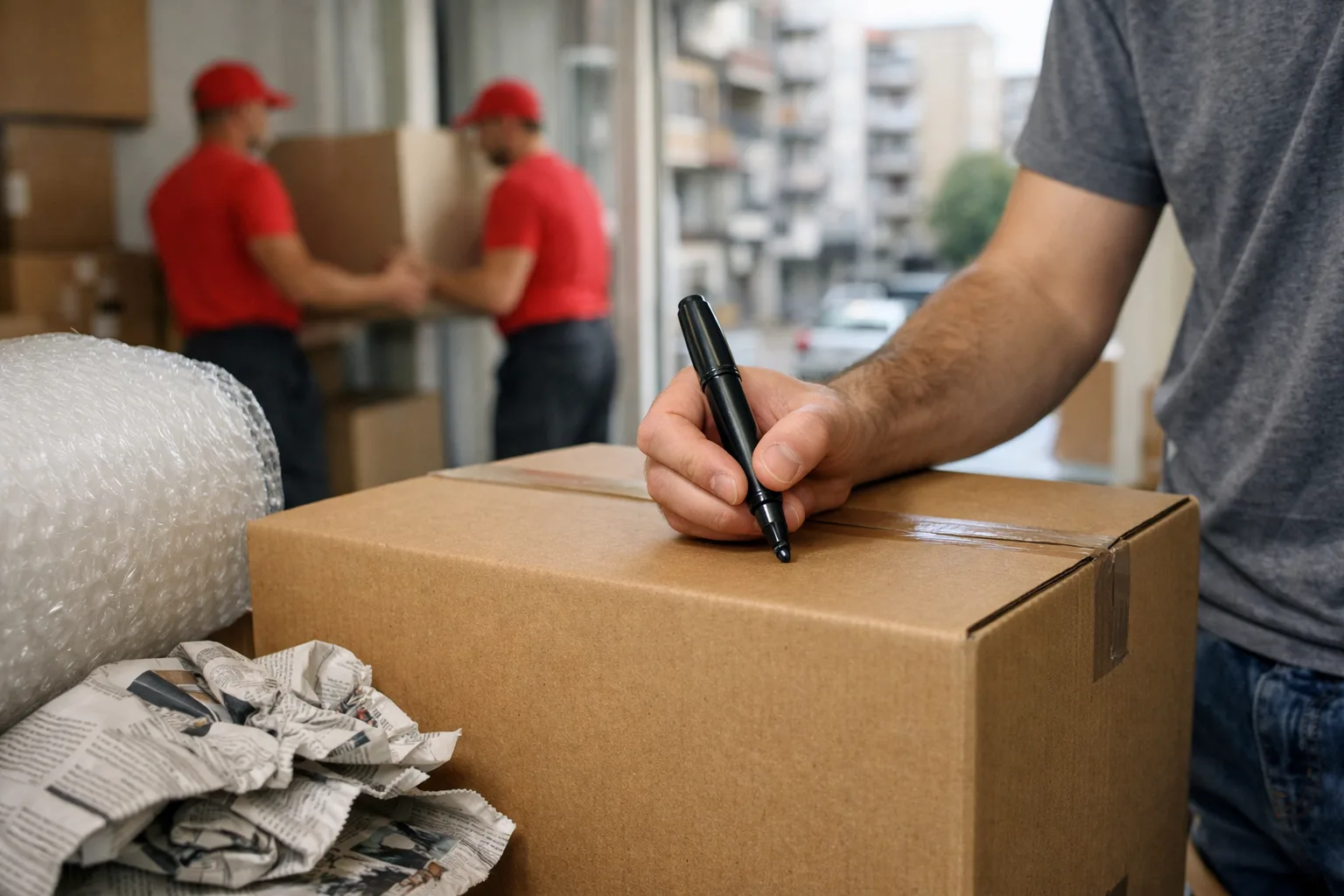
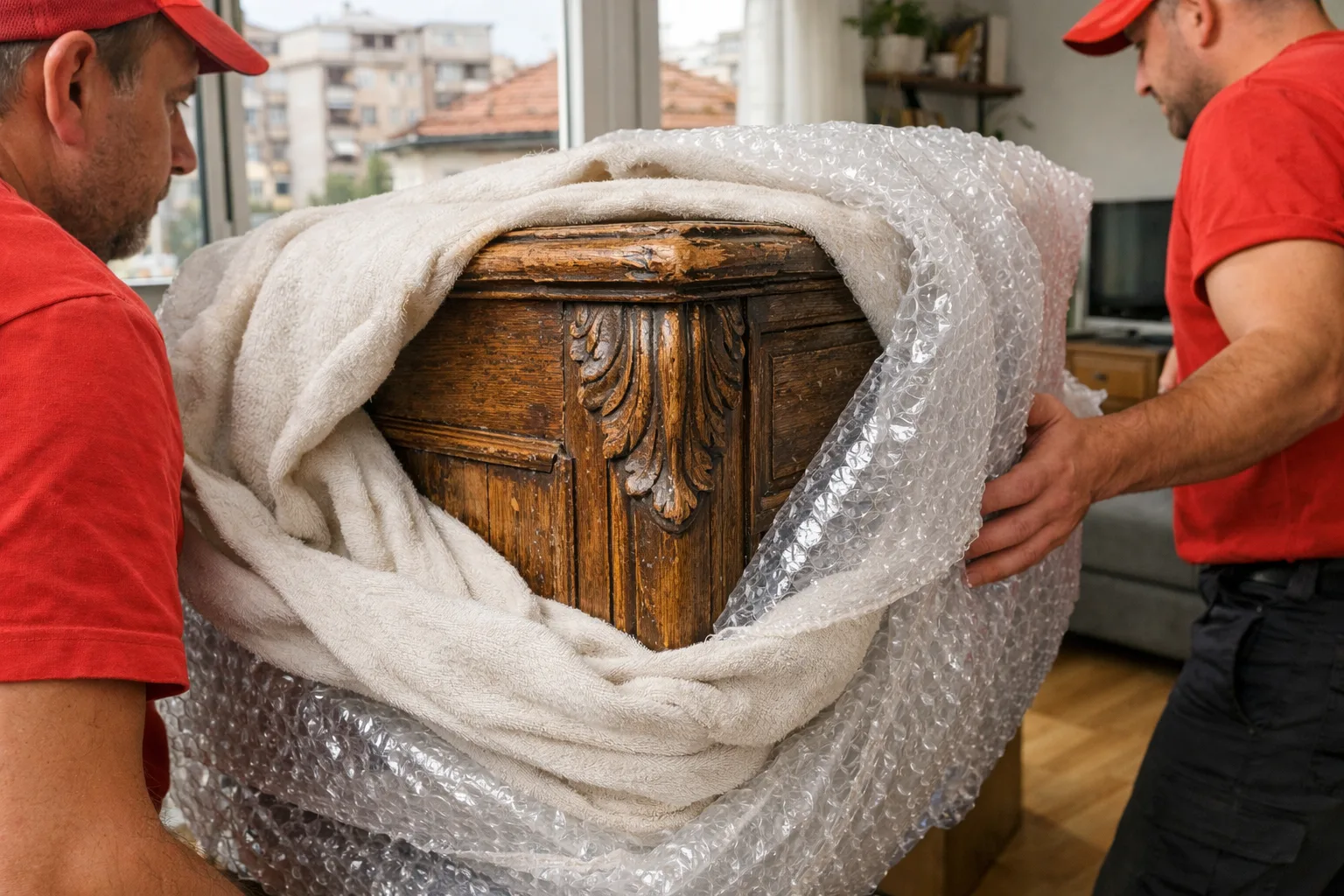
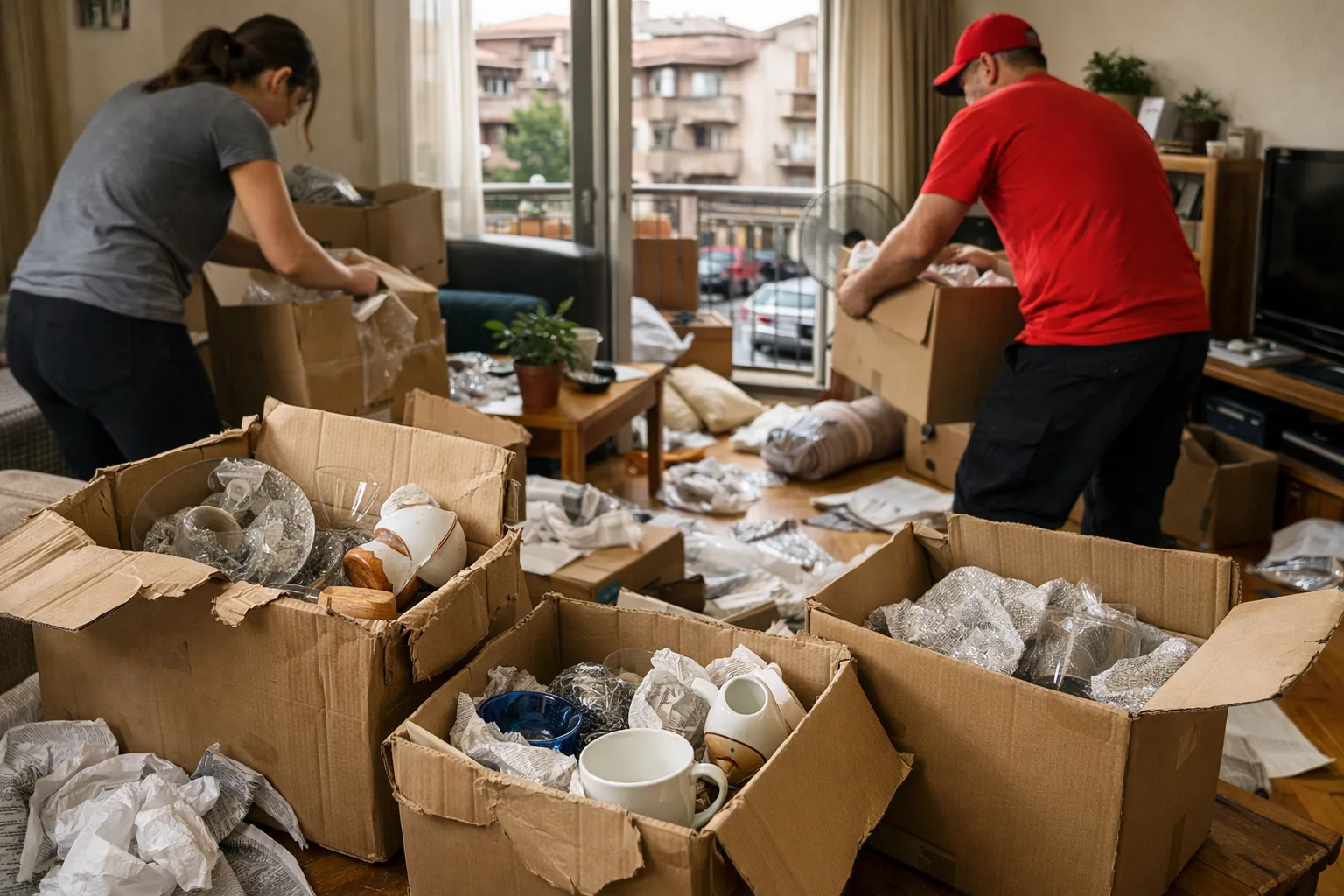
For fragile items, use boxes with extra protection such as styrofoam, bubble wrap, or newspaper to reduce the risk of damage. Also, pack these items individually and label the boxes as "fragile" so they are handled with care.
Labeling boxes clearly with their contents and the room they belong to will make unpacking and organizing at the new location easier. Use waterproof markers and stickers for clear identification, and you can also create an inventory list for each box.
Do not overfill boxes as excessive weight can cause them to break or make carrying difficult. Always distribute weight evenly and use multiple boxes for heavier items. Also, use sealing tape to ensure boxes do not open during transport.
In addition to standard boxes, consider using specialized packaging and professional packing for specific items, such as boxes for pictures, mirrors, or electronic devices, which provide extra protection.
Also, when packing, leave space for easy box opening and don't forget to pack essential items you'll need immediately upon arrival, such as basic kitchen utensils, clothes for the first night, and personal documents.
Advantages of Professional Packing Before Moving in Belgrade
We will respond to you as soon as possible.
Below are answers to the most common questions and issues related to acquiring and using moving boxes, which will help you choose the best solution and prepare properly.
The choice depends on your budget, amount of belongings, and timeframe. New boxes are more reliable and ready to use, while second-hand ones can be a more economical option if they are in good condition and you have time to collect them.
Check the cardboard for dents, moisture, or tears. Gently press the bottom and sides of the box to feel its resistance. For heavy items, choose smaller boxes that can better support the weight.
Try supermarkets, stores, local social media groups, or item exchange platforms. Always check the condition of the boxes before taking them.
Make a list of your belongings and estimate the quantity and sizes of boxes based on the amount and weight of items. For an average apartment, between 20 and 30 boxes of various sizes are typically used.
Yes, cardboard boxes can generally be recycled if they are not heavily damaged or contaminated. Also, many boxes can be saved and reused for future moves or storage.
Boxes should be kept in a dry place, protected from moisture and dirt. Stack them carefully, not too high, to avoid deformation or damage.
Yes, there are boxes with additional compartments and stronger cardboard designed for fragile items like glass, dishes, or technical equipment. Using such boxes is recommended for safer moving.