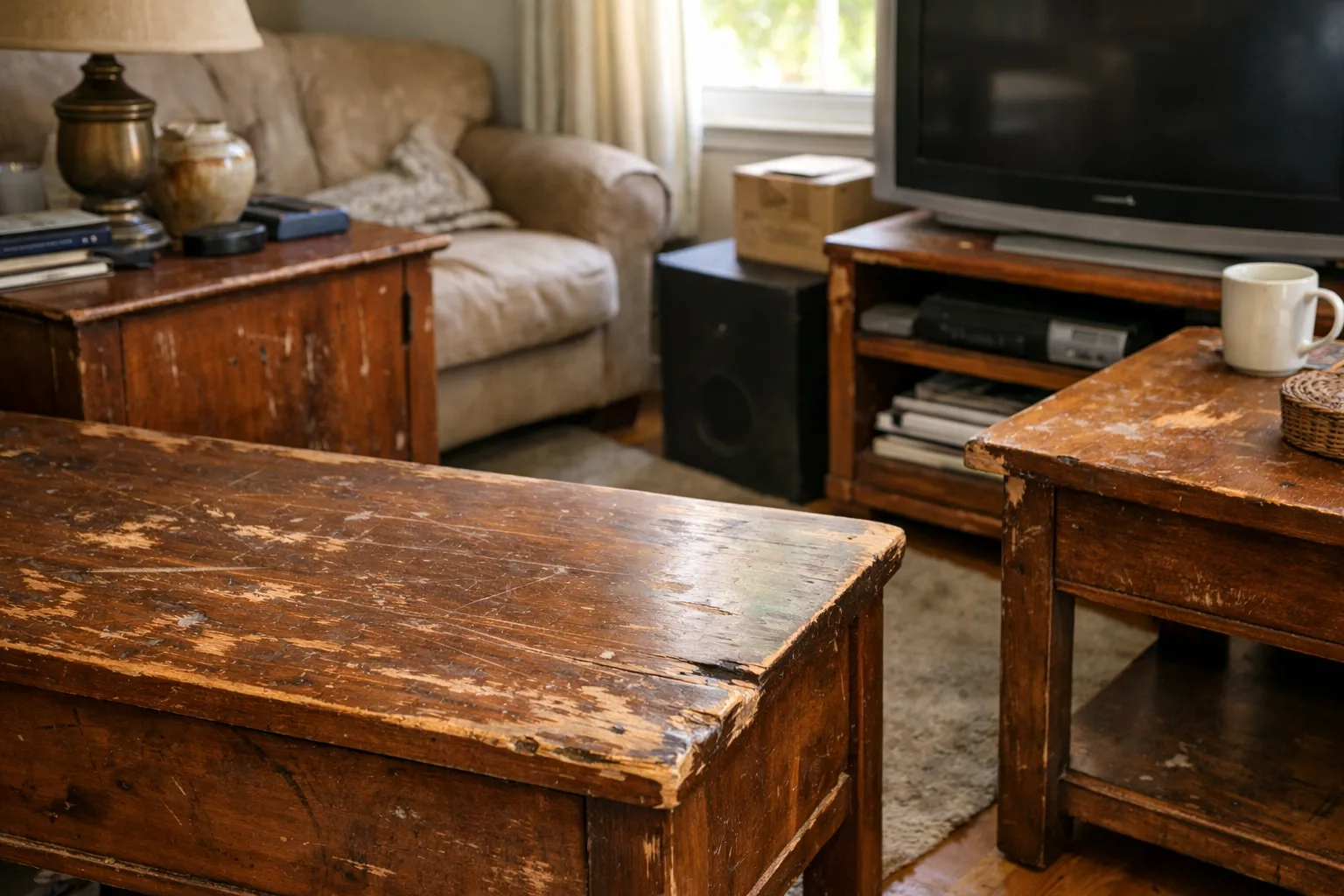
How to pack antique furniture?
How to pack antique furniture?

Enter at least 3 characters.
Properly chosen boxes are key to efficient, safe, and organized packing during a move or storage. Oversized boxes can make carrying difficult and increase the risk of damage, while undersized boxes can lead to overcrowding and breakage of items. This guide explains in detail how to select the right box size for different types of belongings, offering practical tips and concrete examples to help make your packing process simple and stress-free. Additionally, correctly chosen boxes contribute to better space organization, save time during packing and unpacking, and reduce the chance of loss or damage. Understanding various factors when selecting boxes, such as dimensions, weight, and purpose, will help you avoid common mistakes and ease the entire moving or storage process.

Packing boxes come in various sizes, usually expressed in centimeters or inches, including length, width, and height. Standard moving box sizes range from small boxes (e.g., 30x30x30 cm) to large ones (e.g., 60x40x40 cm). Understanding these dimensions helps with better packing planning and space optimization, as properly fitting boxes inside a vehicle or storage area can significantly reduce the number of trips needed or space occupied.
When choosing, it’s important to assess not only the total volume of the box but also its load capacity. Larger boxes may have greater capacity but aren’t always suitable for heavier items because they are harder to lift and can get damaged or deformed. Therefore, when purchasing, pay attention to load capacity labels and the quality of the materials the boxes are made from, as this directly affects safety and durability during transport.
Besides standard sizes, there are specialized boxes for certain items like clothing, mirrors, or plates, so it’s good to familiarize yourself with these if you have specific needs during your move. For example, clothing boxes often come with built-in hangers, allowing garments to stay on hangers and avoid wrinkles during transport. Also, plate boxes have additional dividers that prevent shifting and breaking of delicate items.
When selecting box size, estimating the weight of the items you plan to pack is crucial. Heavier items like books or kitchen appliances require smaller but sturdier boxes to make carrying easier and reduce the risk of damage. Oversized boxes filled with heavy items can be impractical and pose a lifting hazard.
For example, a box measuring 40x30x30 cm can be ideal for books because it allows an optimal weight that’s easy to carry. On the other hand, a large 60x40x40 cm box filled with heavy items can become impractical and dangerous to carry. It’s better to distribute heavy items into several smaller boxes, reducing effort and injury risk.
Always consider the arrangement and weight distribution inside the box. Heavy items should be packed at the bottom, with lighter ones on top, and when choosing boxes, select a size that allows this arrangement without overpacking. Also, using additional cushioning materials like styrofoam or bubble wrap can further protect items and prevent damage during transport.

There are various types of boxes that differ in material, strength, and specific purposes. The most common are cardboard boxes, which are lightweight, easily accessible, and economical, but it is important to choose those with sufficiently thick walls for the weight of the items. Boxes with double or triple layers of cardboard provide additional security, especially for heavier and fragile items.
For fragile and valuable items, double or triple layered boxes are recommended as they offer extra protection. Boxes with additional compartments or drawers facilitate organization and further protect the contents by preventing movement and collisions inside the box.
There are also plastic boxes which are more durable and waterproof, but they are more expensive and heavier. Their use is recommended for storage or moves where there is a higher risk of moisture or damage, such as basements or outdoor spaces. Plastic boxes are ideal for long-term storage as they protect against dust and insects.
Small boxes are ideal for heavier items such as books, tools, or kitchen utensils because they are easier to carry and reduce the risk of breakage. Their dimensions usually do not exceed 40x30x30 cm, allowing for easy handling and reducing the chance of injury when lifting.
Large boxes are more suitable for lighter and bulkier items like clothing, bedding, or toys. They allow for packing larger volumes but are not recommended for heavy items as they can become too heavy and prone to damage. Large boxes should be filled carefully and additional materials used to protect the contents.
When planning a move, it is useful to combine different box sizes to optimize space in the vehicle and facilitate arrangement when carrying. Also, labeling boxes by size and content can help with unpacking and quick organization at the new location.
To choose the appropriate box size, you need to accurately measure the dimensions of the items you plan to pack. Measure the length, width, and height of the item, then add a few centimeters for protective material such as bubble wrap or paper. This ensures the item will not be too tight and will have enough space for protection.
For example, if you have a vase measuring 25x15x15 cm, a good practice is to choose a box at least 35x25x25 cm to allow for additional packing and protection. Also, for fragile items, the space between the item and the box walls should be filled with cushioning material to prevent movement.
For irregularly shaped items, measure the largest possible length, width, and height, then consider how the item will be placed in the box, as the packing method can affect the required box size. In some cases, the item may be better positioned diagonally or in a certain orientation to maximize space usage and increase protection.
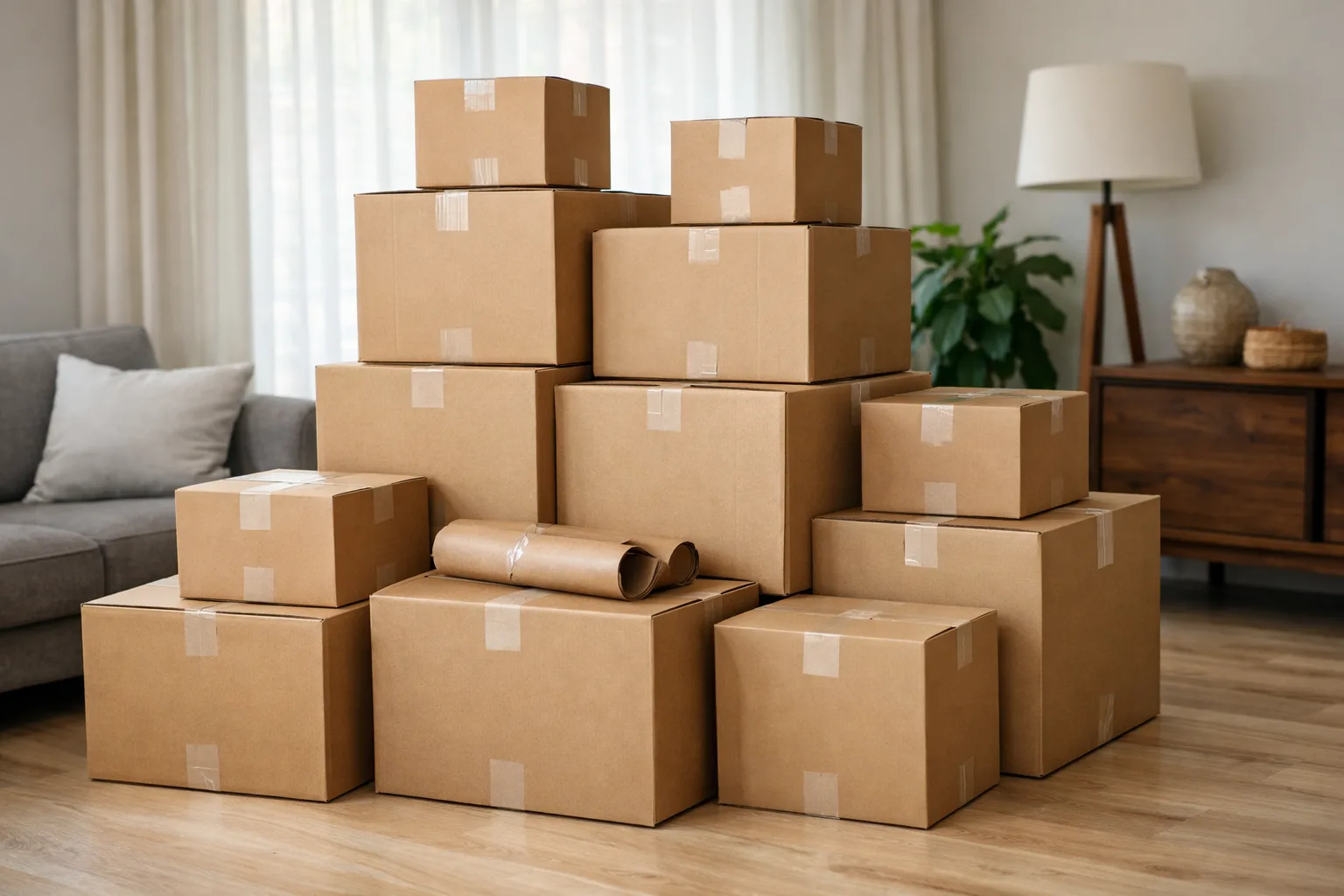
Smart arrangement of items in the box can significantly increase packing efficiency and content protection. Heavy and sturdy items should be at the bottom, while lighter and fragile ones go on top. Also, boxes should not be overfilled to prevent damage and facilitate carrying.
Use additional materials such as paper or plastic protection between items to avoid their movement during transport. This is especially important for medium-sized boxes used for various types of items. Filling empty space inside the box with old paper, styrofoam, or cloths can prevent shifting and breakage of contents.
Proper organization also helps with later unpacking, as you can label boxes by content and priority. It also reduces the chance of boxes becoming too heavy and fragile. It is advisable to use markers or labels for clear identification, as well as to make an inventory list for easier overview.
Moving boxes can be purchased at specialized stores, office supply stores, as well as supermarkets that offer packing materials. Also, many moving companies offer the service of selling boxes in custom sizes, which can be very convenient if you want to get everything in one place.
Online stores are a good option as they offer a wide range of box sizes and types, and you can often find packages at more affordable prices. It is important to check the dimensions and the maximum weight the box can support, as well as reviews from other customers to ensure product quality.
Also, consider buying used boxes if they are in good condition, as this can be an economical and environmentally friendly solution. It is important that the boxes are sturdy and undamaged. You can find used boxes on classifieds platforms, in local communities, or from friends who have recently moved.
Quality boxes can be used multiple times, which contributes to savings and waste reduction. After moving, it is important to store boxes properly – in a dry and clean place, stacked one on top of another, so they are not exposed to pressure that could deform the cardboard.
Before reusing boxes, check if they are damaged, especially at the corners and bottom, as damaged boxes can compromise the safety of items during transport. If you notice damage, you can reinforce them with tape or replace them with new boxes for safety.
Also, if you plan to store items for a longer period, choose boxes that protect well against moisture and dust, and you can additionally protect them with plastic wrap or stretch film. Regularly check the condition of the boxes during storage to promptly address any issues such as moisture or pests.
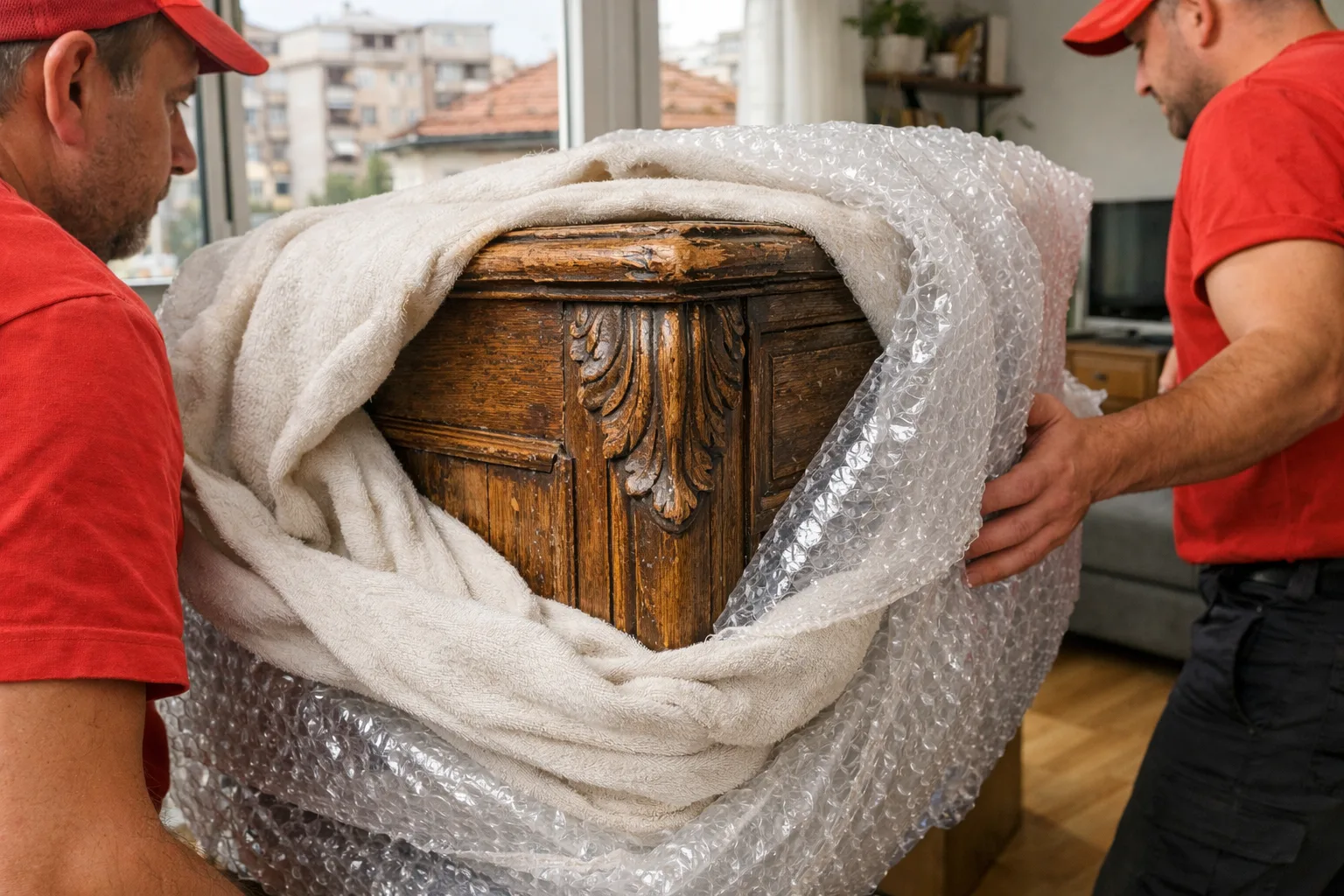
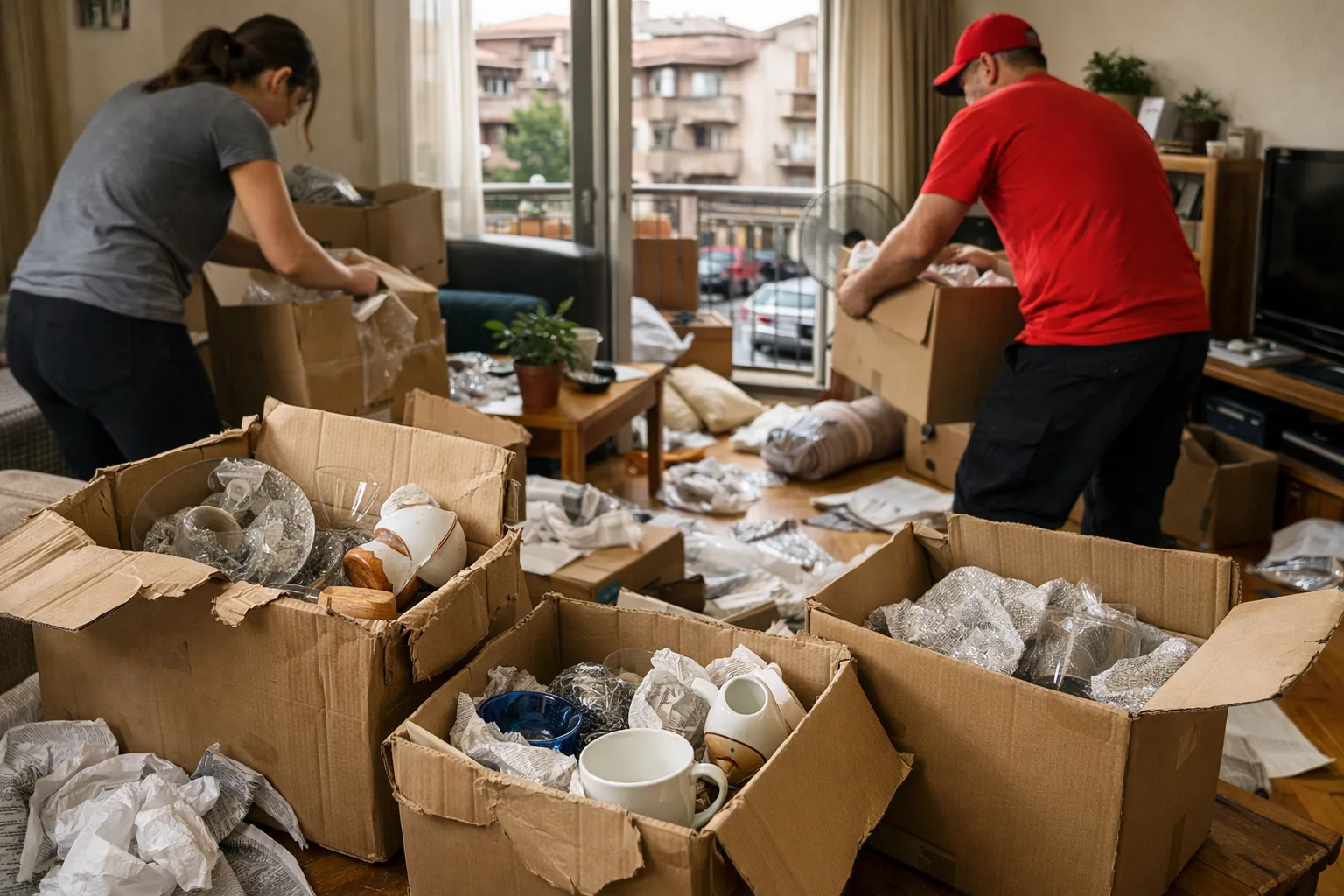
Advantages of Professional Packing Before Moving in Belgrade
We will respond to you as soon as possible.
Below are answers to the most common dilemmas that arise when selecting box sizes for packing and moving. These tips will help you make the right decisions and avoid common mistakes.
For books, smaller boxes around 40x30x30 cm are recommended, as they are sturdy and light enough to carry, and prevent overpacking that can lead to damage.
Choose boxes with double or triple layers of cardboard and dimensions that allow adding protective material like bubble wrap or paper between the items and the box walls.
For heavy items, it is better to use several smaller boxes for easier carrying and reduced risk of damage, while large boxes are suitable for lighter and bigger items.
Measure the length, width, and height of the item and add a few centimeters for protective material, so the box is large enough to allow safe packing.
You can buy boxes at office supply stores, specialized packing stores, supermarkets, as well as online, where the selection is often the widest.
Yes, if the boxes are undamaged and sturdy, used boxes are a good and eco-friendly option, but it is important to check their strength before use.
Store boxes in a dry and clean place, stacked one on top of the other without heavy loads, and check them for damage before reuse.