How to pack antique furniture?
How to pack antique furniture?

Enter at least 3 characters.
Packing clothes for a move can be a stressful and time-consuming task, but with good organization and the right techniques, this process can become much faster and more efficient. In this guide, you will learn how to quickly and safely pack your wardrobe, keeping it neat and ready for your new home. Apply our tips and make your move easier! Besides saving time, proper packing protects your clothes from damage, dust, and moisture during transport. Additionally, an organized approach reduces stress and allows you to focus on other important aspects of moving, such as preparing new spaces and coordinating with the moving company. Below you will find detailed advice to help you carry out every step of this process with ease and confidence.
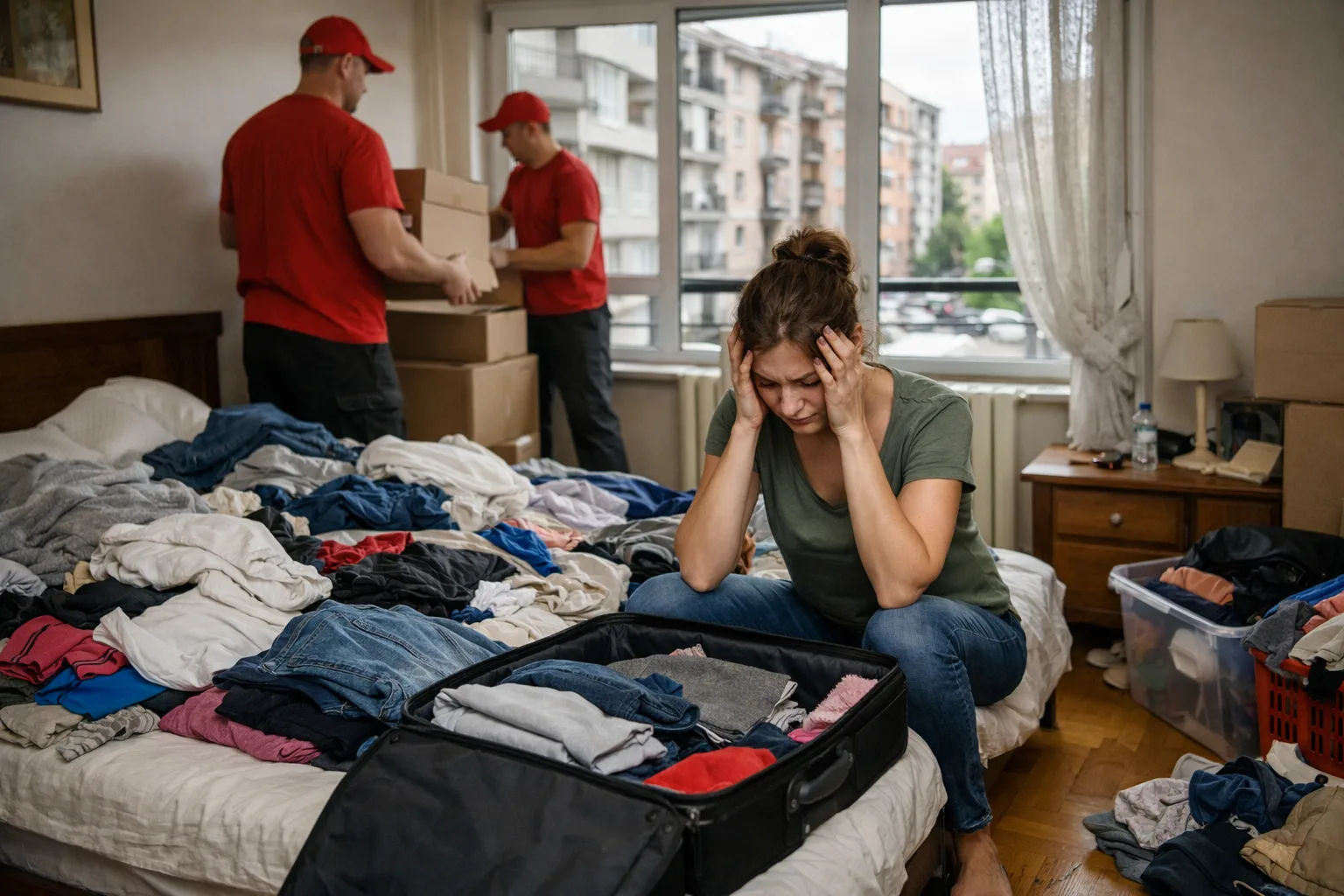
The first step to packing clothes quickly is good preparation. Before you start folding your wardrobe, make a plan that will help you organize your time and space. Decide which types of clothes you will pack first and which you can set aside for later. For example, clothes you are not currently using, like winter coats during the summer, can be packed at the beginning, while everyday items can be left for last.
Prepare boxes, bags, or sacks that you will use for packing. Ideally, have vacuum bags that significantly reduce the volume of clothes, as well as sturdy boxes that will protect delicate materials. If you lack suitable boxes, you can obtain them through our moving boxes service, where you choose the size and type according to your needs. It is recommended to have boxes of different sizes so you can adapt packing to various types of clothes and avoid unnecessary empty space.
Also, categorize clothes – for example, everyday, formal, seasonal clothes, and underwear. This will allow you to find items faster after the move and use space in boxes more efficiently. Additionally, label boxes with colors or numbers to track contents more easily and simplify unpacking in your new home.
Before packing, it is important to sort your clothes. Check what you really need in your new home and what you can donate, sell, or throw away. This step saves time and space during transport. Consider which pieces you haven't worn for a long time and whether you really need them, as unnecessary clothes only complicate the move.
Pay attention to seasonal clothes – if you are moving in a different season, sort your wardrobe so that currently unused items are packed separately and labeled for later. Also, check the condition of your clothes and decide if they need washing or repairs before packing, which will save you time after the move.
Sorting helps you avoid overfilling boxes unnecessarily while freeing yourself from old clothes that only take up space. It also reduces the number of packages, speeding up the entire moving process. This step can also be an opportunity to decide on renewing your wardrobe and get rid of items you no longer need.
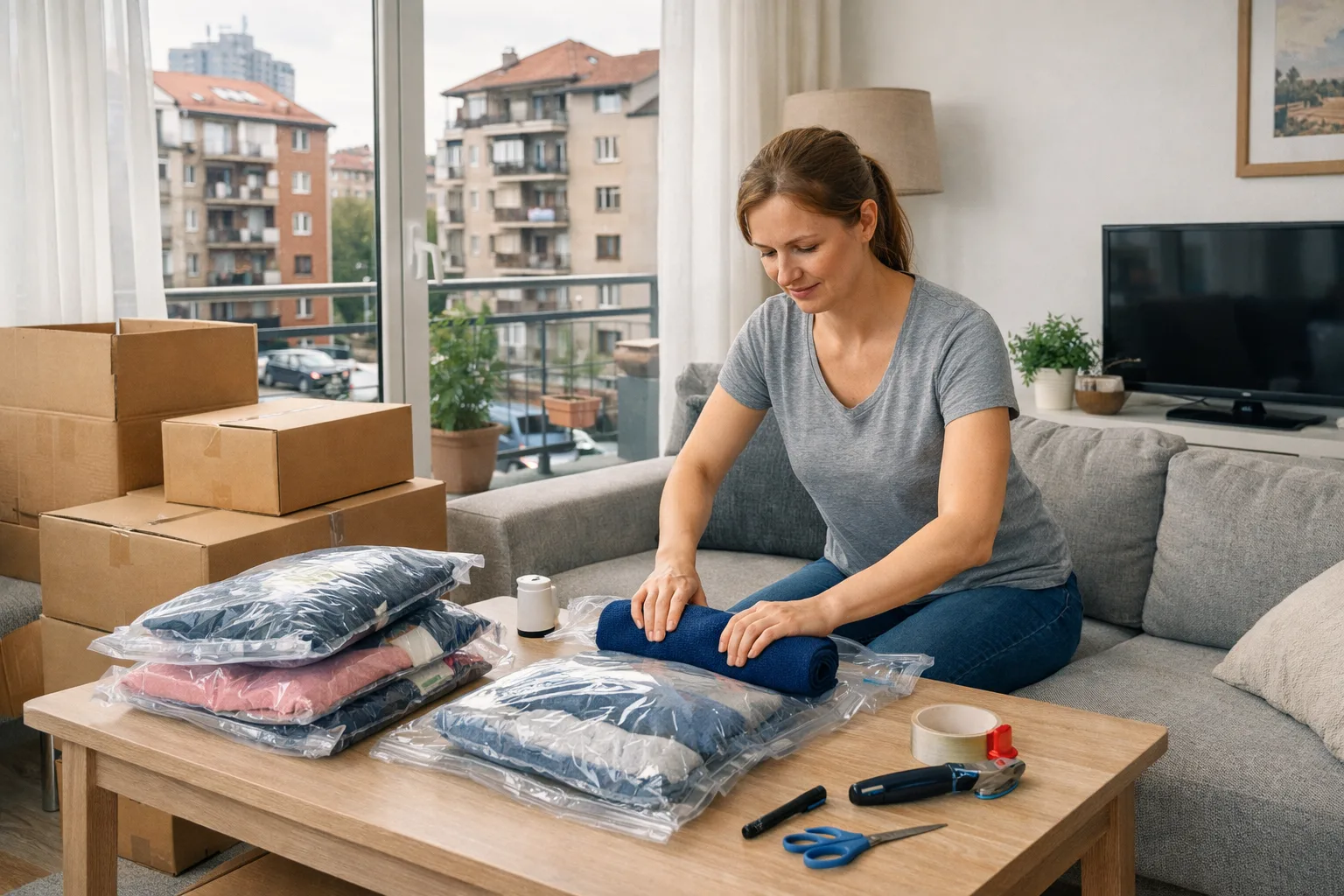
Choose the right types of clothing packaging – vacuum bags are excellent for reducing volume, but for delicate fabrics, it's better to use sturdy boxes with protective paper. Vacuum bags are especially useful for durable materials like denim or winter jackets, while silk and wool require softer and more careful packing methods.
Zippered clothing bags are practical for quick organization of underwear and smaller items. For garments that cannot be folded, such as coats or dresses, it is best to use wardrobe boxes or special hanging garment bags. These bags protect clothes from dust and moisture while facilitating easier transport and organization.
Make sure the packages are not too heavy to avoid damaging the clothes and to ease carrying. Proper filling and stacking in boxes or bags speeds up packing and protects garments during transport. It is recommended that box weight does not exceed 15 kilograms to prevent breakage, facilitate carrying, and keep clothes undamaged.
The method of folding clothes plays a key role in packing speed. The most efficient way is the so-called “rolling” – tightly roll clothes into cylinders that take up less space and resist wrinkling. This technique is especially suitable for t-shirts, pants, and sportswear, and you can additionally use elastic bands or rubber bands to keep the rolls secure.
For shirts and dresses, classic folding with careful creasing is recommended to keep them neat and ready to wear immediately after unpacking. Use packing paper or thin cloths between layers to prevent wrinkling and fabric damage.
Besides rolling, you can also use the layering technique in boxes, placing packing paper or thin cloths between layers for extra protection. This saves space and speeds up the packing process. Also, folding clothes by weight, with heavier items at the bottom, helps preserve shape and makes carrying boxes easier.
To speed up unpacking, don’t forget to clearly label each box or bag. Use permanent markers and stickers indicating the contents and the room where the clothes should go. You can also use different colors to mark boxes belonging to different categories or family members.
Labels can also specify clothing types (for example, 'Winter Jackets', 'T-Shirts', 'Pants'), which makes finding needed items in the new space easier. Additionally, you can create an inventory list for each box saved on your phone or printed, which is useful if you have many packages.
Also, write special notes such as 'fragile', 'handle with care', or 'for wardrobe', further protecting your clothes and speeding up organization. This information also helps movers properly handle your belongings.
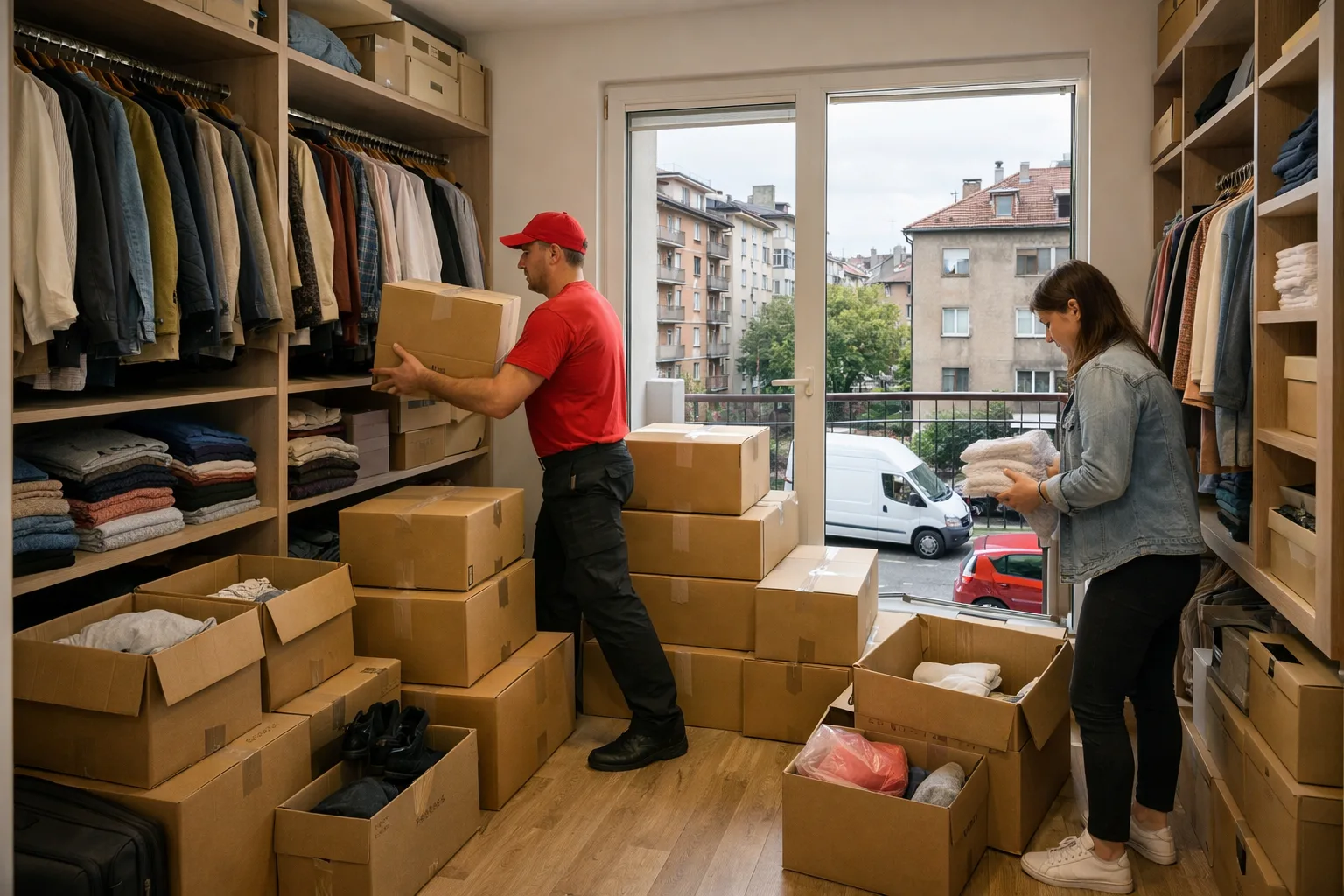
Valuable and delicate clothing requires special care. Before packing, check that all items are clean and dry to avoid damage and unpleasant odors. If necessary, have them professionally cleaned before the move.
Use packing paper or silk scarves between layers of clothing to prevent damage and wrinkling of materials. This is especially important for delicate fabrics like silk, lace, or cashmere.
For extra protection, pack delicate items in special garment bags or boxes with internal padding to preserve them during transport. Also, consider insuring valuable pieces during the move, especially if using professional moving services.
Wardrobe boxes are an ideal choice for packing hanging clothes such as coats, dresses, and suits. They save time because you don’t have to fold clothes; you simply hang them inside the box. If you want to make your move easier and keep your clothes wrinkle-free, we recommend using wardrobe boxes for moving. This is especially useful for business attire that needs to remain neat and ready to wear.
These boxes are especially useful if you have a larger amount of business or formal clothing, as it won’t wrinkle and will be ready to use immediately. Additionally, wardrobe boxes make organizing closet space in your new home easier, as clothes remain sorted and easily accessible.
Use wardrobe boxes in combination with other types of packaging for maximum efficiency. They also facilitate transport, as clothing stays organized and easy to reach. When purchasing or renting wardrobe boxes, pay attention to the quality of the material and the size that suits your needs. For a complete clothing packing and protection service, you can hire our team for professional moving packing.
Quick packing doesn’t just mean efficient stacking, but also smart unpacking. When you arrive at your new home, start by unpacking wardrobe boxes and bags with the most needed clothing. Prioritize clothes you will use immediately to avoid unnecessary chaos.
Organize your closet according to the categories you used during packing; this will help you quickly place all clothes and maintain order. Use the space in wardrobes and drawers so that your most frequently used items are easily accessible.
Take the opportunity to immediately check the condition of your clothes and possibly reorganize or prepare them for washing and care, which will save you time and stress in the coming days. Also, consider adding extra organizational elements like boxes for underwear or belt holders, which will help keep your wardrobe tidy even after the move.
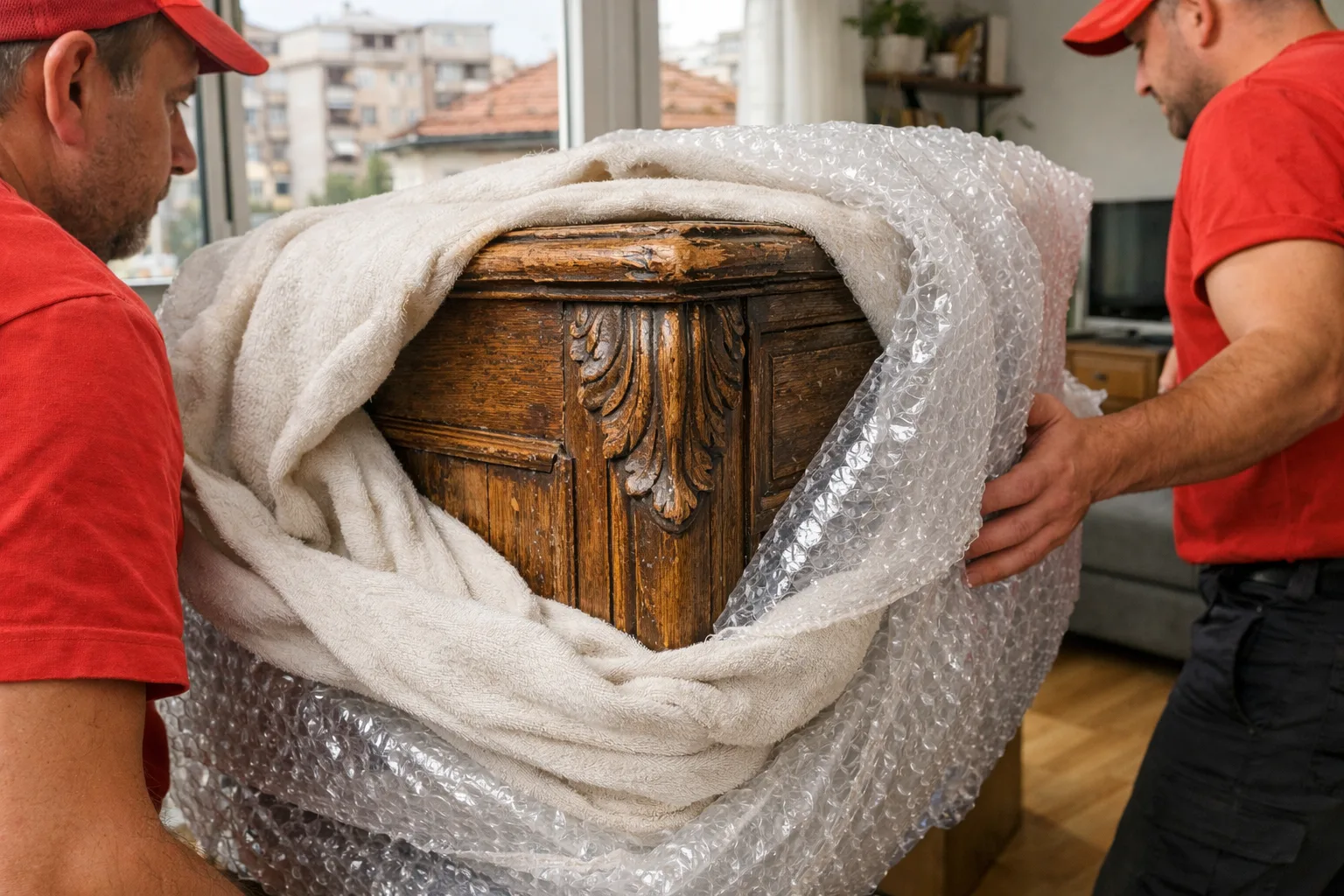
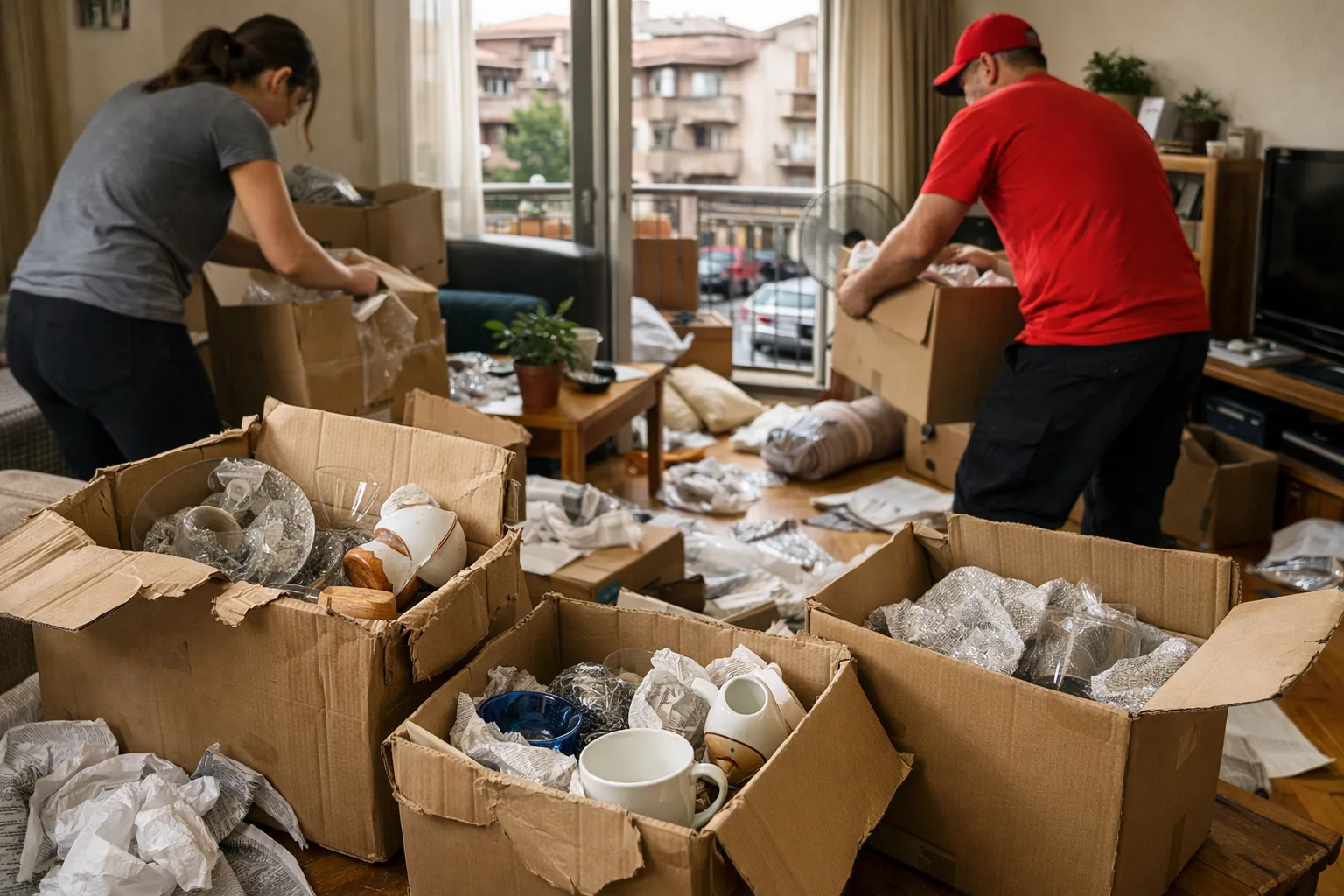
Advantages of Professional Packing Before Moving in Belgrade
We will respond to you as soon as possible.
Below we answer the most common doubts that arise when quickly packing clothes for a move. These tips will help you avoid mistakes and speed up the entire process.
The best way to save space is to use the rolling technique for clothes and vacuum bags. Rolling reduces volume, and vacuum bags further compress clothing, making packing and transport easier.
It depends on the type of clothing. For heavier and more delicate materials, boxes are recommended because they protect clothes from wrinkling and damage. For lighter and seasonal clothes, as well as to save space, vacuum bags are practical.
Pack delicate clothes in wrapping paper or silk scarves between layers, use special garment bags or wardrobe boxes with linings. Before packing, make sure the clothes are clean and dry.
It is advisable to start at least two to three weeks before the move, especially with seasonal and less frequently used clothes. Everyday clothing can be packed last, a day or two before moving.
Use clear and visible labels on boxes and bags. Indicate the contents, type of clothing, and the room where the clothes belong. Additional notes like 'fragile' or 'for wardrobe' can help during unpacking.
Yes, by using wardrobe boxes that allow packing clothes directly on hangers. This is a quick and efficient method for coats, dresses, and suits as it saves time and prevents wrinkling.
Organize your wardrobe according to the categories you used when packing, and unpack the wardrobe boxes and bags with the most essential clothes first. Also, check the condition of the clothes immediately to avoid further confusion.