
How to pack antique furniture?
How to pack antique furniture?

Enter at least 3 characters.
Packing a chandelier presents a special challenge due to its fragility, weight, and complex shape. Improper packing can lead to damage that is often costly to repair or even irreparable. Therefore, proper preparation and material selection are crucial for protecting the chandelier during transport, moving, or storage. In this guide, we will provide detailed steps and practical advice for efficient and safe packing, with a special focus on protecting glass parts, proper wrapping, and choosing suitable materials. We will also cover topics related to disassembly, labeling parts, as well as tips for safe transport and storage to ensure your chandelier arrives undamaged at its destination. In addition to the basic steps, we will focus on specific techniques that will help you avoid common mistakes and ensure long-lasting protection of the chandelier, whether it is an antique or a modern design. Finally, we will offer recommendations for additional equipment and tools that can significantly ease the packing and transport process.

The first step in packing a chandelier is a detailed assessment of its construction and condition. It is necessary to determine the chandelier's dimensions, the number and type of parts, as well as the materials from which it is made. This assessment allows planning an adequate packing method and selecting suitable materials that will provide optimal protection. It is also important to identify parts that are particularly sensitive, such as glass decorations or thin metal frames, to give them extra attention.
It is recommended to turn off the chandelier and remove all bulbs, decorative elements, and easily detachable parts before starting to pack. Each detached part should be carefully packed and labeled to avoid damage or loss during transport. Additionally, photographing the chandelier before disassembly can help with later reassembly. Make a detailed list of all parts and their locations to facilitate organization and reduce the possibility of errors.
Preparing the workspace is key for safe handling. Ensure a clean, flat, and stable surface with enough space to arrange parts and packing materials. This reduces the risk of damage and facilitates packing organization. Also, have all necessary tools and materials at hand before starting work. It is advisable to use a workbench with a soft surface or mat to further protect chandelier parts during handling.
For packing a chandelier, it is essential to use materials that provide good protection against impacts, scratches, and moisture. Among the most effective are bubble wrap, special felt or foam for wrapping delicate parts, as well as thick cardboard or wooden boxes for transport. If you want to avoid risk and save time, you can hire a professional moving packing service, where experts will provide suitable materials and carefully protect your chandelier. When selecting materials, pay attention to the thickness and quality of the wrap to ensure maximum cushioning.
In addition to basic materials, it is important to use plastic bags or films for moisture protection, especially if the chandelier has metal or electrical components that could be damaged by moisture. Also, packing paper or crumpled newspaper can be used to fill gaps inside the box and provide additional cushioning. It is recommended to use acid-free paper to prevent chemical reactions with metal parts.
Adhesive tape should be of good quality and strong enough to secure the wraps but must not be applied directly to delicate chandelier surfaces to avoid damage. For added safety, boxes should be clearly marked with warnings such as "fragile" and "handle with care," which will assist during transport and handling. Also, consider using special tapes with bright colors or inscriptions for better visibility and caution during handling.
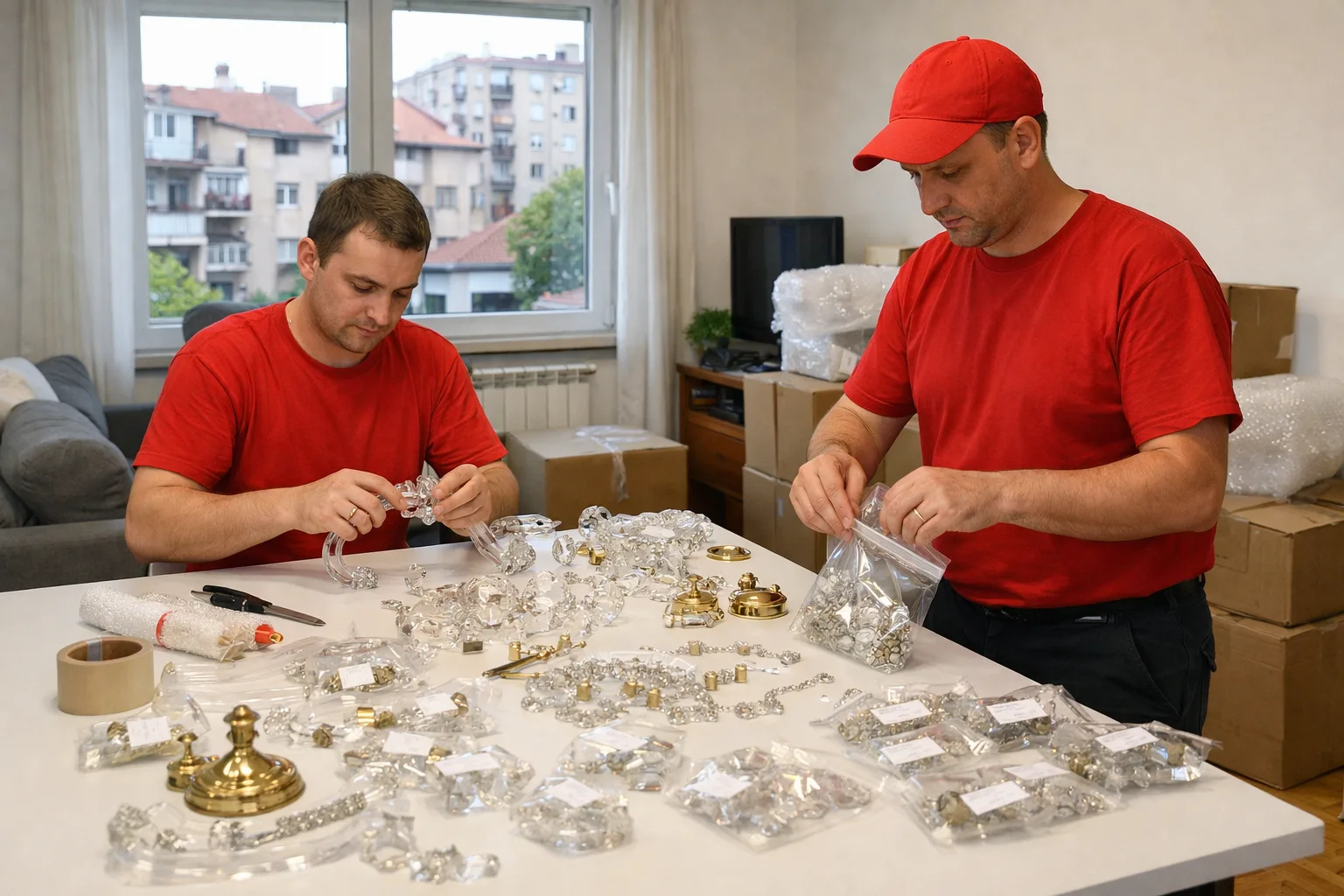
Disassembling the chandelier is an important step that facilitates packing and increases safety during transport. It is recommended to carefully and systematically remove parts, photographing each step to ease reassembly at the new location. Use notes and labels to keep track of the order and method of assembly.
All separated parts, such as glass balls, chains, decorative elements, and bulbs, should be packed individually using appropriate protective materials. Each part should be clearly labeled with stickers or markers, but avoid writing directly on the chandelier's surface to prevent damage or permanent marks. Use small plastic bags or boxes for small parts, placing labels on the packaging.
Small components like screws, nuts, and other fasteners should be stored in separate bags or boxes that are clearly marked. This will help preserve all parts and quickly locate them during reassembly, avoiding unnecessary delays and complications. It is recommended to attach bags with small parts to larger components or group them by functional units for easier finding.
Glass parts of the chandelier are the most fragile and require special attention when packing. It is recommended that each glass element be individually wrapped in soft materials such as bubble wrap or cotton cloths, which effectively cushion shocks and prevent scratches. For extra security, you can use multilayer wraps or special glass cushions.
After wrapping, glass parts should be additionally secured with tape, taking care not to damage the surface. For parts of different sizes, smaller elements can be packed inside larger ones, providing extra protection and reducing the risk of movement during transport. Also, pay attention to proper weight distribution within the package to avoid pressure on delicate parts.
For maximum safety, it is recommended to use boxes with dividers or special plastic molds that stabilize glass parts. Such solutions significantly reduce the risk of breakage and allow safe transport and storage. If you do not have access to specialized molds, you can improvise dividers from styrofoam or cardboard, ensuring they are sturdy and stable.
Choosing the right box or crate is crucial for the safe transport of the chandelier. The box should be sturdy enough, with reinforced walls and bottom, to withstand pressure and shocks during transit. Cardboard boxes are suitable for smaller chandeliers, while wooden crates are recommended for larger and heavier ones. If you need quality packaging, you can purchase moving boxes designed for transporting fragile items. When buying or making boxes, pay attention to dimensions that allow extra space for protective materials.
Wooden crates provide maximum protection and stability and can be customized to the chandelier's dimensions. The interior of the crate should be lined with soft materials like styrofoam or foam, which cushion shocks and prevent the chandelier from shifting during transport. Additionally, crates can have extra securing elements such as straps or foam blocks that further stabilize the contents.
When packing into a box or crate, it is important to fill all gaps with styrofoam, crumpled paper, or other materials that prevent movement and shocks inside the package. Also, the box should be clearly marked with "fragile" and "handle with care" labels to ensure extra caution during transport. It is recommended to place markings indicating the correct package orientation (e.g., "up" arrows) to prevent improper handling.
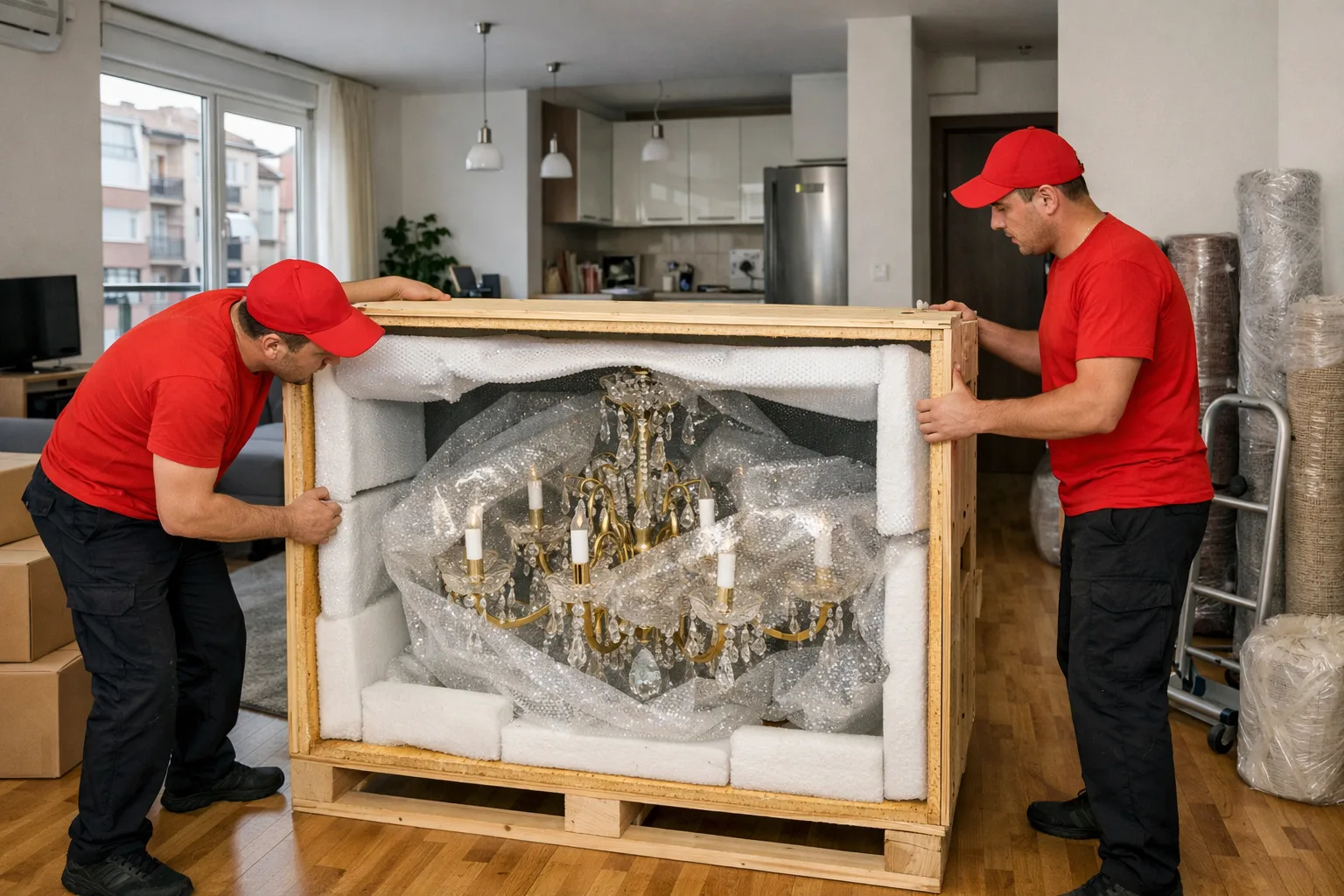
Packing the chandelier is not complete without proper handling during loading, transport, and unloading. The chandelier should be carried by two people, holding it by sturdy and stable parts, avoiding dragging or jerking that could damage delicate elements. Use protective gloves when lifting to prevent slipping and damage.
The transport space should be stable, clean, and spacious enough so the chandelier does not come into contact with other items. Positioning the chandelier upright and securing it further with ties or foam cushions increases safety during transit. It is also recommended to use cushioning pads under the package to reduce vibrations. If you cannot transport it yourself, hire a professional furniture transport service to further ensure the safe transport of your chandelier.
During transport, avoid rough terrain, sudden braking, and sharp turns, as vibrations and shocks can cause damage even if the chandelier is properly packed. It is also recommended to regularly check the packaging condition during longer trips. If possible, inform the driver about the specifics of the transport so extra care can be taken in handling.
If the chandelier is not transported immediately but stored for a longer period, it is important to ensure conditions that will not compromise its structure and appearance. The storage area should be dry, with stable temperature and low humidity to prevent corrosion or damage to electrical parts. Ideally, the space should have good ventilation and temperature control.
The packed chandelier should be placed where it will not be subjected to pressure from other items or vibrations. Ideally, it should stand on a shelf or surface that cushions shocks, providing additional protection from damage. Avoid storing it on the floor or in places prone to flooding or damage from animals.
Regularly check the condition of the packaging and chandelier, especially if stored for more than a few months. Refresh the protection as needed, replace damaged materials, and ensure the packaging is intact to prevent potential issues. Also, periodically inspect electrical components and metal parts for signs of corrosion or damage.
Upon arrival at the new location, carefully remove the chandelier from its packaging using photos and notes taken during disassembly as a guide. Before starting assembly, verify that all parts are present and undamaged to avoid issues during installation. Organize the parts in the order of assembly for more efficient work.
Use appropriate tools for assembly and handle glass and electrical parts with care. Do not force parts as this may cause cracking or damage. If unsure about the procedure, consult a specialist or the chandelier manufacturer for specific instructions.
Finally, check that the chandelier is securely mounted and all electrical connections are properly made. If you are not confident with electrical work, be sure to hire a qualified electrician to avoid accidents and ensure safe operation. Also, test the chandelier’s functionality before final installation to detect any irregularities in time.
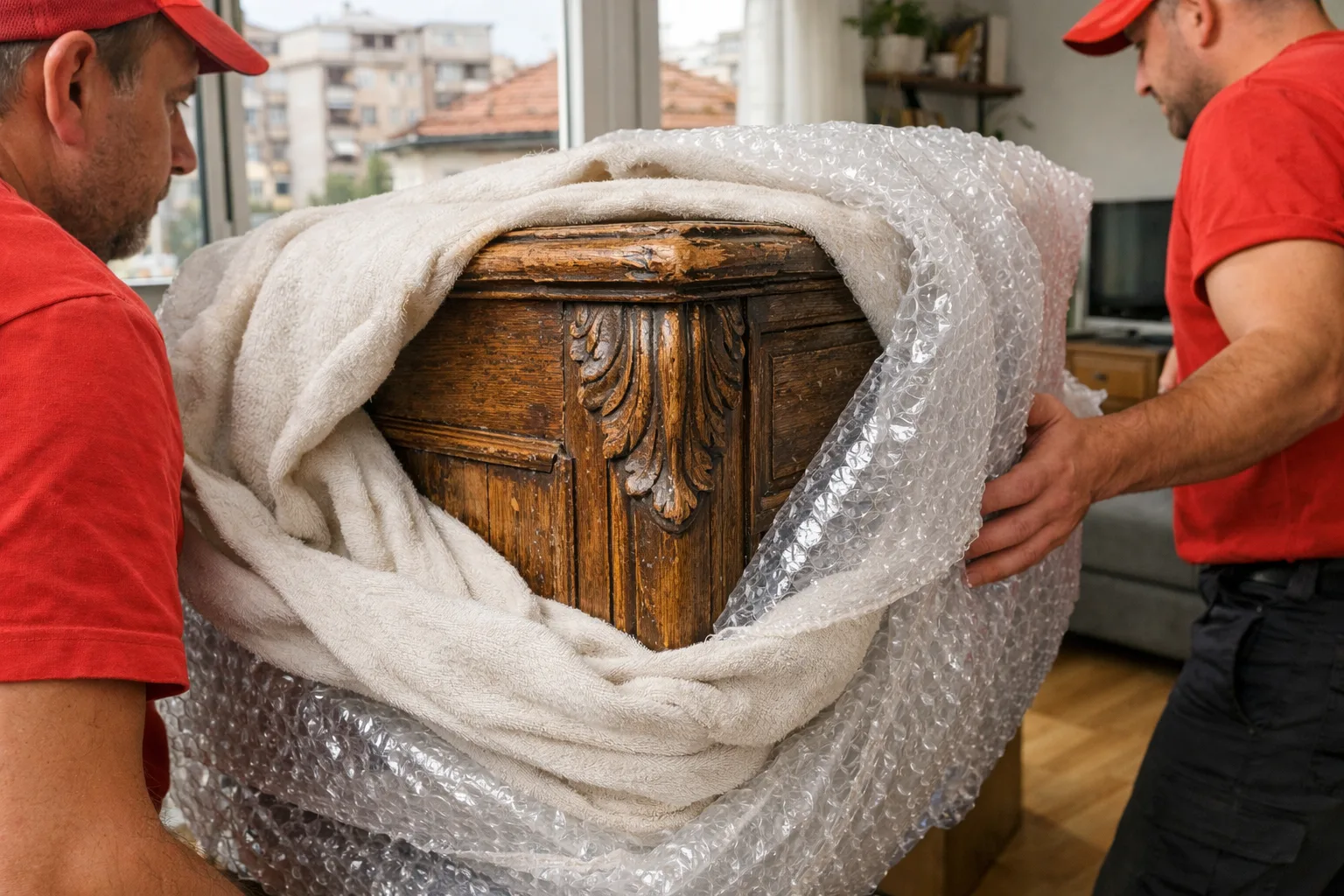
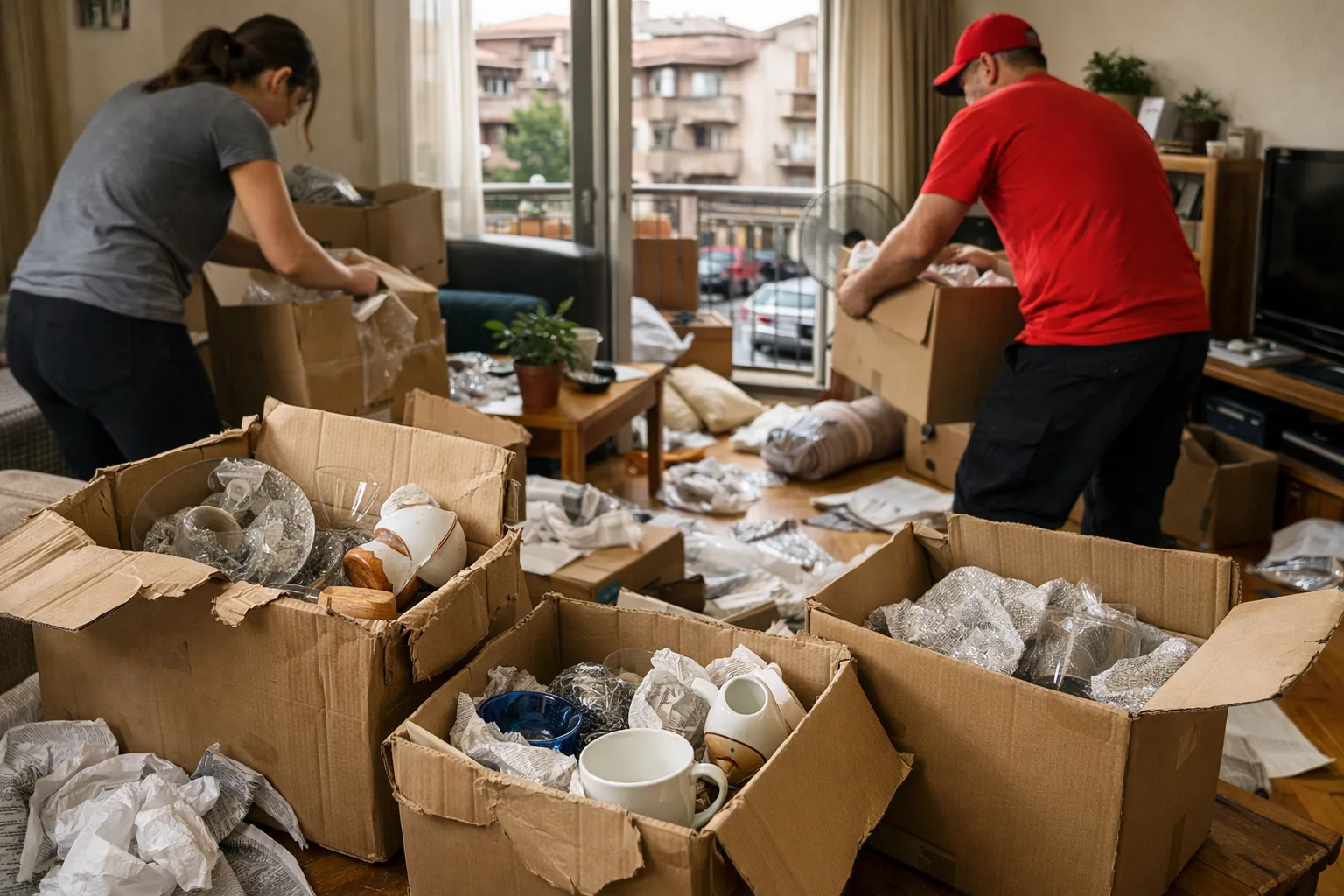
Advantages of Professional Packing Before Moving in Belgrade

We will respond to you as soon as possible.
Below we answer the most common questions and concerns that arise when packaging chandeliers, focusing on practical advice and solutions for specific issues.
Large chandeliers require detailed disassembly and careful labeling of each part. It is recommended to use wooden crates with internal reinforcements and soft protective materials. Fill any gaps inside the crate to prevent movement. Hiring a professional moving team can also simplify the process.
If you lack an appropriate box, it’s best to use a wooden crate or rent specialized packaging from moving companies. You can also make your own box using thick cardboard panels and reinforcements, but this requires experience and additional materials.
Electrical parts should be insulated with plastic wrap or sealed plastic bags. It is important that the chandelier is completely dry before packing, and the packaging should be moisture-resistant. Also, avoid storing in areas with high humidity.
Disassembling parts allows for safer packing and reduces the risk of damage, especially for glass and decorative elements. Packing the entire chandelier in one piece is only suitable if it is compact and well protected.
It’s best to use stickers with numbers or letters on each component and record them in a notebook or photograph each step of disassembly. Also, small screws and connectors should be packed in labeled bags that are easy to track.
Glass balls should be individually wrapped in bubble wrap or soft cloths and packed in boxes with dividers or appropriate molds. Fill any gaps in the box with soft materials to prevent movement and impacts.
It is recommended to start packing the chandelier several days before the move to allow enough time for careful disassembly, protection, and packing of all parts without rushing. This reduces stress and the risk of mistakes.