
Tips for International Moves
How to Pack Furniture for a Move to Germany?
How to Pack Furniture for a Move to Germany?

Enter at least 3 characters.
Relocating a company from Germany to Serbia is a complex and multi-layered process that requires detailed planning, thorough organization, and careful management of all transition phases. This process is not only a logistical challenge but also an opportunity to optimize operations, adapt to a new market, and leverage the advantages Serbia offers as a business destination. Initial steps include analyzing the company's current status, identifying key resources, and defining relocation goals. It is important to understand how legal, tax, logistical, and human factors interact and how to align them for successful project execution. This guide will provide you with detailed information and practical advice for every segment of the process, with a special focus on the specifics of the Serbian business environment, helping you avoid common obstacles and maximize the potential of the new location.

Detailed planning is the foundation of a successful company relocation from Germany to Serbia. Besides listing business activities, equipment, and employees, it is important to define the timeline and budget for the entire process. Involving all relevant departments in planning allows for identifying potential challenges and timely solutions. It is also recommended to develop a detailed risk plan covering possible issues during transportation, administrative procedures, and business adaptation.
Engaging experts for relocations from Germany to Serbia can significantly enhance process efficiency. They not only assist in cost estimation and obtaining necessary permits but also coordinate with customs authorities and logistics partners. It is important to verify the references and experience of these experts, as well as whether they offer insurance services for transported assets.
Communication with employees should be transparent and timely. Informing them about plans, deadlines, and expectations reduces uncertainty and increases their engagement. It is also advisable to organize workshops or meetings where employees can ask questions and provide suggestions. A well-designed activity schedule with clearly defined responsibilities contributes to coordination and reduces stress during the move.
The legal framework for company relocation requires careful study and alignment with the legislation of both countries. Registering a company in Serbia may involve establishing a new legal entity or transferring the headquarters of an existing company, depending on the legal form and business needs. Consulting lawyers specialized in international business law helps choose the most favorable option and prepare the necessary documentation.
Tax aspects are crucial for legal security and financial optimization. Serbia has specific tax regulations that differ from Germany’s, including corporate tax, VAT, and other levies. Proper understanding and application of these regulations prevent possible penalties and enable the use of tax incentives, such as benefits for foreign investors or privileges for certain industries.
Contracts with employees, suppliers, and clients should be thoroughly reviewed and adapted to local laws. This includes aligning employment contracts with Serbian labor law, as well as revising delivery and payment terms. Legal security in these areas ensures business continuity and avoids disputes.
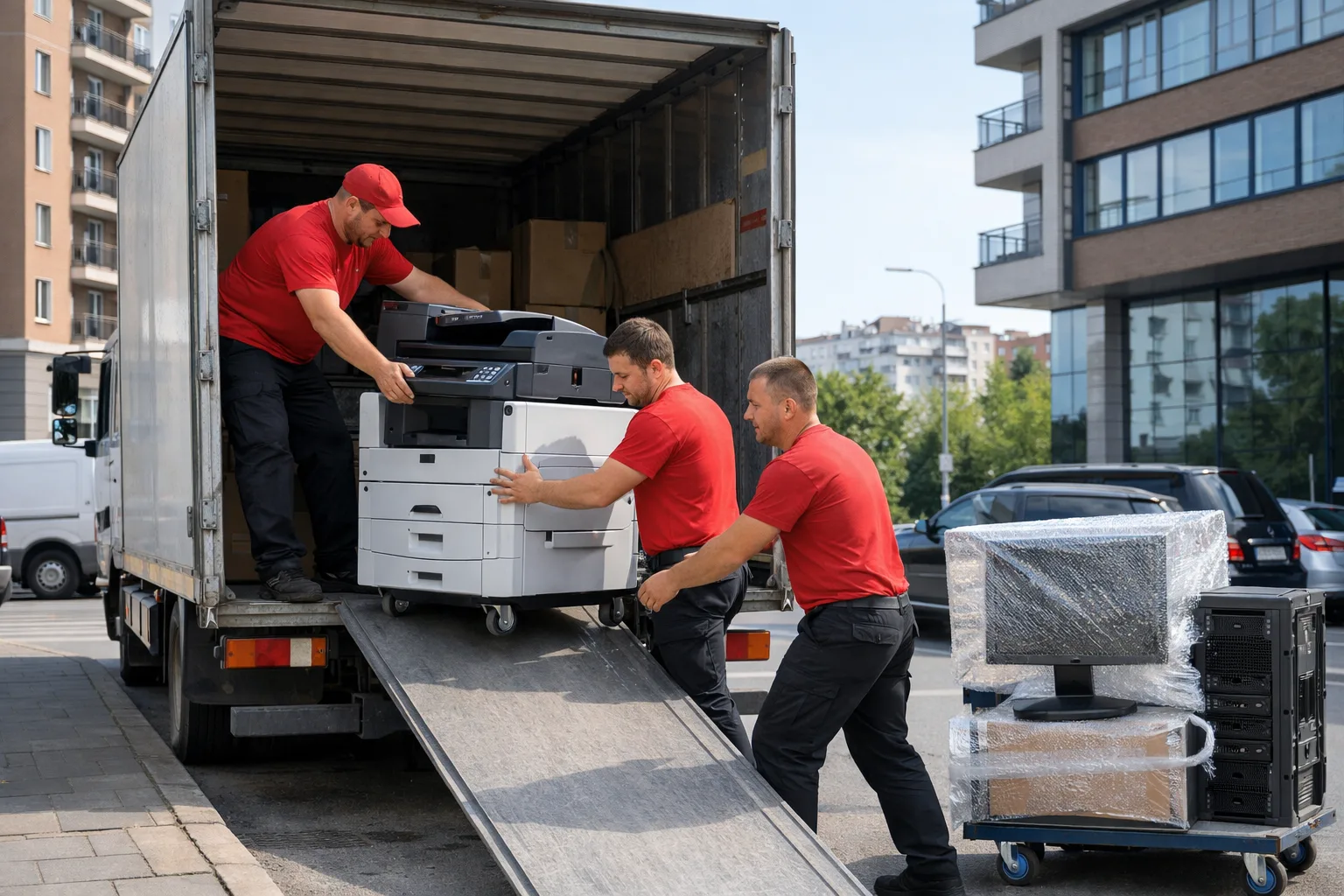
Efficient logistics organization involves a detailed analysis of the type and quantity of equipment, as well as selecting the most suitable mode of transport. Road transport is most commonly used due to its flexibility and speed, but depending on the type of equipment and costs, rail or combined modalities may also be considered. It is important to engage a professional company for corporate relocations with experience in international transport and appropriate insurance.
Proper packing of equipment is crucial to prevent damage during transport. Specialized materials and techniques are used, such as antistatic films, protective boxes, and labeling of fragile parts. It is also recommended to create a detailed packing list and photograph the equipment before transport for documentation and potential claims. For added security, we recommend hiring professionals for relocation packing.
Real-time transport tracking allows timely response in case of issues. Digital tools and shipment tracking apps provide transparency and better coordination with all involved parties. Additionally, planning extra time for customs procedures and possible border delays reduces the risk of delays in establishing operations at the new location.
Understanding the specifics of the Serbian market is essential for successful company integration. This involves analyzing consumer habits, competitive environment, and regulatory requirements. Utilizing local market research and consulting with experts helps identify growth opportunities and potential challenges to overcome.
Engaging local experts and consulting firms can accelerate the adaptation process. They can assist in defining marketing strategies, optimizing sales channels, and aligning products or services with local requirements. Also, using local media and digital platforms enables more effective targeting of audience groups and increases brand visibility.
Considering linguistic and cultural differences contributes to better communication with clients, partners, and employees. Organizing training for employees on local business customs and ethics can improve interpersonal relations and business reputation. Additionally, adapting communication materials and customer support into Serbian increases accessibility and customer trust.
The Serbian tax system differs from the German one in rates, tax bases, and available incentives, requiring detailed analysis before relocation. It is important to understand how the company's tax obligations will change, including corporate income tax, VAT, property taxes, and other levies. This analysis enables financial flow planning and cost optimization.
Consultations with tax advisors familiar with both systems help identify opportunities to reduce tax burdens, such as utilizing tax reliefs, investment incentives, or privileges for certain sectors. It is also necessary to consider implications on international tax treaties and avoidance of double taxation.
Financial management during relocation requires transparency and precise bookkeeping. Preparing a detailed budget covering all relocation costs, including logistics, legal services, and infrastructure investments, allows timely monitoring and cost control. It is also recommended to establish a system for regular reporting and analysis of financial performance during the transition.

Employees are a key success factor in the company relocation process, so their support and motivation are of utmost importance. Transparent and timely communication about plans, deadlines, and expectations reduces uncertainty and increases engagement. Organizing workshops, meetings, and individual discussions helps resolve concerns and strengthen team spirit.
For employees relocating to Serbia, it is important to provide support regarding administrative procedures, such as obtaining work and residence permits, finding accommodation, and familiarizing with local living conditions. Providing such assistance facilitates adaptation and reduces stress related to the change of environment.
At the same time, hiring local staff and integrating them into existing teams should be considered. Training, mentoring, and team-building programs contribute to effective collaboration and employee development. Maintaining motivation and productivity during the transition requires careful planning and continuous management support.
Before relocation, it is necessary to conduct a detailed assessment of technological infrastructure in Serbia, including availability of fast and stable internet, IT support, and business services. This is especially important for companies dependent on digital technologies and cloud solutions. Checking equipment and software compatibility with local standards and regulations prevents technical issues after relocation.
Installation and configuration of the necessary systems must be completed before starting operations at the new location to avoid downtime and productivity losses. In some cases, adapting existing equipment or acquiring additional devices compliant with local requirements and standards may be necessary.
Investing in modern technology and continuous employee training on new systems contributes to increased efficiency and competitiveness of the company. Additionally, establishing local technical support that can promptly respond to issues and provide necessary assistance to employees is recommended.
Effective communication among all participants in the relocation process is crucial for success. It is necessary to establish clear communication channels, define responsibilities, and assign contact persons for each segment of the process. Regular updates and transparency reduce the risk of errors and misunderstandings.
Using digital project management tools, such as document-sharing platforms, calendars, and task tracking systems, enables better coordination and progress monitoring. Regular meetings and reports help identify problems and facilitate timely decision-making.
Transparency with employees, partners, and clients about all changes and expectations helps reduce stress and builds trust in the relocation process. Organizing workshops, Q&A sessions, and other forms of interactive communication further clarifies doubts and strengthens collaboration.
How to Pack Furniture for a Move to Germany?

How to Move Furniture from Abroad to Serbia

Common Mistakes Made During International Moves
How to Save Money on an International Move?
We will respond to you as soon as possible.
Below are answers to the most common questions regarding relocating a company from Germany to Serbia, which will help clarify doubts and better prepare you for this process.
The most important legal steps include registering the company in Serbia, complying with local laws, addressing tax matters, and reviewing contractual relationships with employees and partners. Consulting legal experts is essential for properly executing all procedures.
Choosing a moving company should be based on experience with international relocations, availability of references, service offerings including packing, transport, and customs clearance, as well as flexibility in scheduling and pricing.
Common obstacles include customs procedures, potential border delays, inadequate equipment packing, and unforeseen costs. Proper planning and hiring professionals help overcome these challenges.
It is necessary to analyze local consumers, competition, and legislation, adjust marketing strategies and products, and establish effective communication with local partners and clients. Involving local experts can be highly beneficial.
It is important to monitor differences in tax rates and laws, correctly report and pay taxes, and optimize financial operations in accordance with Serbian regulations. Consulting tax professionals is advisable.
Clear communication of plans and expectations is vital, providing support to relocating employees, resolving administrative obstacles, and maintaining motivation. Additionally, planning integration of local workers and training for new working conditions is necessary.
It is essential to ensure a stable internet connection, install the required IT equipment and software, verify system compatibility with local standards, and train employees to use the new technology. This ensures uninterrupted operations and increases efficiency.