
Reasons to Hire a Professional Moving Agency
Reasons to Hire a Professional Moving Company

Enter at least 3 characters.
Moving day is one of the most demanding days, both physically and mentally. With numerous tasks, carrying heavy boxes, and organizing, it's easy to lose focus and energy. That's why proper nutrition plays a key role in keeping you strong, focused, and ready to handle all the challenges this day brings. In this guide, we will provide detailed advice on which foods and meals are best suited for moving day, how to avoid energy slumps, unpleasant issues like dizziness or bloating, and how to eat practically, deliciously, and healthily while on the go. Additionally, you'll learn how to plan meals and snacks in advance to avoid stress and unnecessary interruptions throughout the day. Prepare for your move the right way and enable your body to function optimally all day long!

Moving is one of those days when your body is subjected to great exertion – from carrying heavy boxes, rearranging furniture, to prolonged standing and walking. All these activities require adequate energy and endurance, which cannot be achieved without proper nutrition. If you neglect the intake of quality foods, you may quickly feel tired, dizzy, or even weak, which can jeopardize your productivity and safety during the move.
Besides physical strength, mental clarity and concentration are extremely important. Inadequate nutrition can lead to a drop in blood sugar levels, causing nervousness, irritability, and reduced decision-making ability. Therefore, it is important that meals are rich in complex carbohydrates, proteins, and healthy fats, which provide a stable and long-lasting source of energy.
Also, the stress that accompanies moving can negatively affect the immune system. Foods rich in antioxidants, vitamins, and minerals, such as fresh fruits and vegetables, can help strengthen the body's resistance and reduce inflammatory processes. This way, not only will you have more energy, but you will also feel better throughout the day.
Don't forget that proper nutrition also affects your mood. Foods rich in omega-3 fatty acids, such as nuts and seeds, can help reduce stress and anxiety, which is especially important when under the pressure of moving. Investing in quality nutrition means investing in your health and efficiency during this demanding day.
Breakfast on moving day should be carefully chosen to provide you with the necessary energy without feeling heavy or uncomfortable in your stomach. Ideally, the meal should contain a combination of complex carbohydrates, proteins, and healthy fats, which will help you maintain a stable energy level during morning activities.
Oatmeal with fresh fruit and nuts is an excellent choice because it is rich in fiber that slows digestion and provides a lasting feeling of fullness. Whole grain toast with avocado and boiled egg offers a good balance of protein and healthy fats, while Greek yogurt with honey and berries combines probiotics and antioxidants that support the immune system.
It is important to avoid heavy and greasy meals, such as fried eggs with bacon or meals rich in refined sugars, as they can cause drowsiness and slow you down during the day. Also, an overly sweet breakfast can lead to a rapid spike and then drop in blood sugar, negatively affecting your concentration and energy.
Besides food choices, pay attention to meal timing. It is recommended to have breakfast at least 30 to 60 minutes before starting moving activities, so your body has time to digest the food and use the energy properly. If you are in a hurry, prepare breakfast the night before, such as a smoothie or prepared oatmeal, to avoid unnecessary stress in the morning.
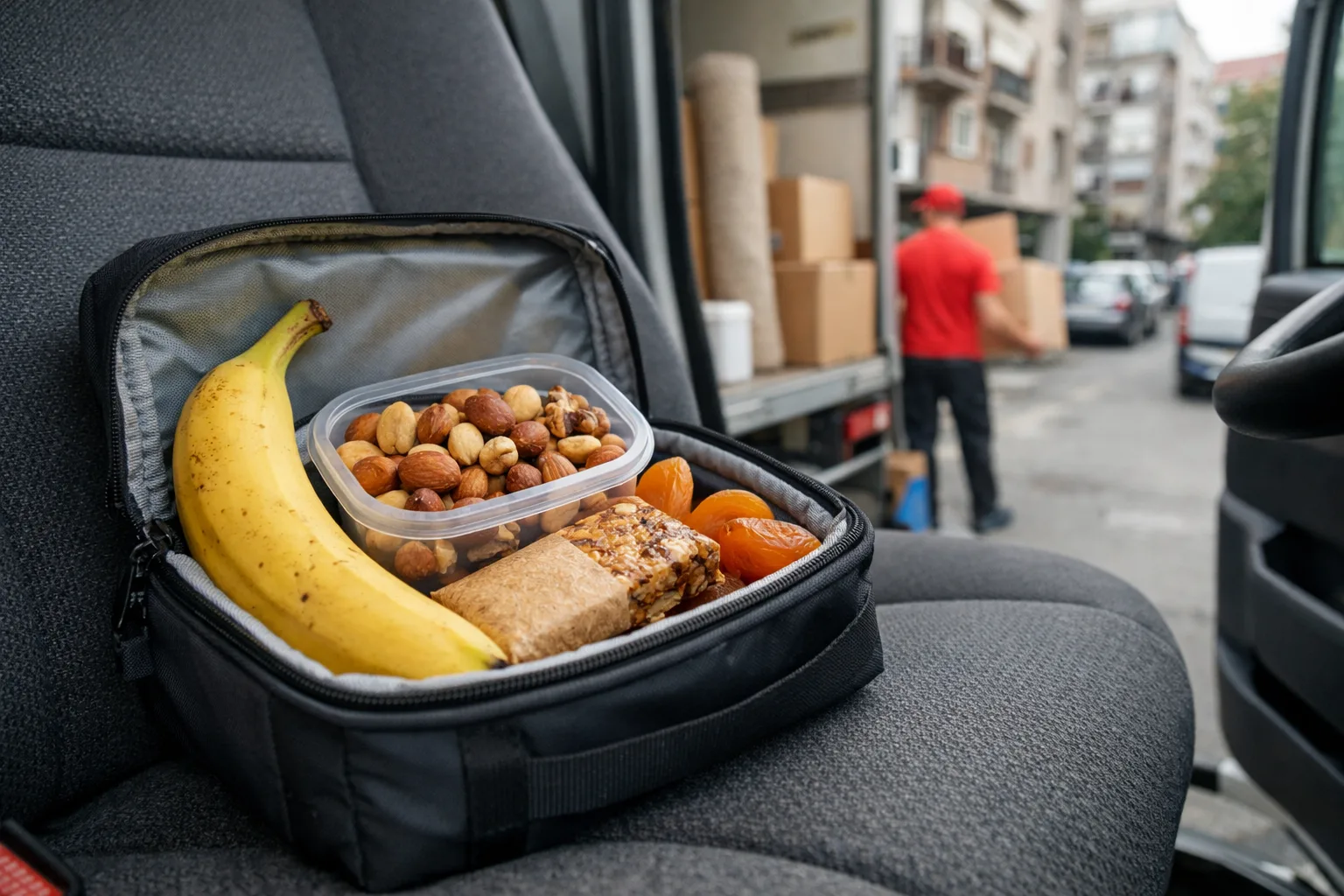
During the moving day, between main meals, it is important to have practical and nutritious snacks on hand that will quickly restore your energy and prevent a drop in concentration. Ideal snacks are those that are easy to carry, do not require refrigeration, and can be eaten on the go.
Fresh fruit like apples, bananas, or pears is an excellent choice because they are rich in natural sugars, fiber, and vitamins. Nuts and seeds, such as almonds, walnuts, or sunflower seeds, provide healthy fats and proteins that help maintain satiety and stable energy levels.
Energy bars made with natural ingredients, without added sugars and artificial additives, can be a great ally during a demanding day. Also, whole grain crackers with hummus or other protein-rich spreads make a tasty and nutritious snack.
It is important to avoid snacks high in refined sugars, such as sweets, chocolate bars, and carbonated drinks, as they cause sudden energy spikes and crashes, which can lead to fatigue and loss of focus. Plan your snacks to help maintain energy and concentration throughout the day.
Water is a fundamental element for the proper functioning of the body, and its importance is especially evident during physically demanding activities like moving. Dehydration can cause fatigue, headaches, dizziness, and reduced concentration, which can negatively affect your efficiency and safety.
It is recommended to drink at least 2 liters of water throughout the day, but it is important to take smaller sips evenly distributed over the entire day. You can also include natural drinks like lemonade without added sugar or herbal tea, which refresh and contribute to hydration.
Avoid alcohol and excessive caffeine intake, as they act as diuretics and can further dehydrate the body. If you enjoy coffee, limit it to one or two cups and be sure to compensate with water.
A practical tip is to always have a bottle of water at hand, whether you are on the move or taking a break. Also, if the day is warm, consider electrolyte intake through natural sources like coconut water or low-sodium drinks to maintain mineral balance in the body.
Lunch on moving day should be carefully planned to provide you with the necessary energy to continue activities without causing heaviness or drowsiness. It is best to choose meals rich in proteins, complex carbohydrates, and vegetables, which will help you maintain strength and concentration.
Chicken or fish combined with whole grain rice and fresh salad represent an ideal meal because they are easily digestible while being rich in nutrients. Vegetarian options like beans with quinoa and vegetables also provide a good balance of proteins and carbohydrates.
Avoid fatty, fried, and heavy meals, such as breaded food or dishes with a lot of sauce, as they can cause fatigue and slow you down during the day. Also, large portions can overload the digestive system and reduce your productivity.
If you don’t have time to prepare lunch, consider pre-made meals or healthy sandwiches with whole grain bread, lean proteins, and vegetables. This way, you will save time while providing your body with necessary nutrients.

Dinner after a hard day of moving should be light and easy to digest, allowing your body to rest and regenerate overnight. It is recommended to have dinner at least one to two hours before sleeping to ensure optimal digestion and avoid disrupting your sleep.
Meals such as vegetable soups, roasted vegetables with white meat, or a simple salad with whole grain bread are excellent choices because they are nutritious yet not heavy on the stomach. These meals aid muscle recovery and energy replenishment.
Avoid overly spicy, fatty, or heavy foods, as well as large amounts of carbohydrates, as they can disrupt sleep and cause stomach discomfort. Also, avoid late meals that may lead to digestion problems and insomnia.
If you are very hungry, you can add a small portion of protein or light carbohydrates, but it is important that dinner remains balanced and tailored to your needs after a strenuous day.
One of the key factors for a successful and stress-free moving day is good meal and snack planning ahead of time. Preparing food the night before or even several days earlier can save you valuable time and reduce morning stress.
Also, pack snacks in small moving boxes or bags that you can easily carry with you throughout the day.
Don’t forget to bring enough water or natural drinks for hydration. Planning meals and snacks helps you avoid the temptation to reach for fast and unhealthy food, which can negatively affect your energy and mood.
An organized approach to nutrition during moving contributes to better concentration, higher productivity, and an overall sense of satisfaction, which is very important when the day is filled with numerous tasks and challenges.
On moving day, it is important to avoid foods that can cause discomfort, fatigue, or energy drops. Heavy, fatty, and fried foods often lead to sluggishness and slow you down throughout the day.
Also, excessive amounts of sweets and carbonated drinks can cause sudden spikes and drops in blood sugar, negatively affecting your endurance and focus. Instead, choose foods that provide a stable source of energy.
Alcohol is strictly not recommended as it can affect coordination, reduce your ability to concentrate, and further exhaust your body. Excessive caffeine can also increase nervousness and contribute to dehydration.
Focus on easily digestible and nutritious foods that will help you stay energetic, focused, and ready to handle all the challenges that moving day brings. Proper nutrition is your secret to success and well-being during this demanding period.

Reasons to Hire a Professional Moving Company

Moving with the Help of Friends or Professionals – Which to Choose?

5 Items Professional Moving Companies Will Not Transport
We will respond to you as soon as possible.
Below we answer the most common questions related to nutrition during moving day to help you prepare your meals and snacks as best as possible.
It is not advisable to skip breakfast because it provides the energy needed to start a hard day. Instead, prepare a light and nutritious breakfast that you can eat quickly, such as oatmeal or yogurt with fruit.
The best snacks are those that are easy to carry and quick to eat, such as nuts, bananas, sugar-free energy bars, or whole grain crackers with hummus. These snacks provide energy without a heavy feeling.
Bring a water bottle or a thermal flask that you can refill. Also, take small sips frequently to avoid dehydration. Avoid caffeinated and alcoholic drinks as they increase fluid loss.
Choose light and easily digestible meals like cooked vegetables, soups, and whole grain bread. Avoid fatty, spicy, and heavy foods that can worsen discomfort. Also, eat smaller portions more often throughout the day.
Ideally, eat three main meals and two to three smaller snacks throughout the day. This helps maintain a steady energy level and prevents a significant drop in blood sugar.
A moderate amount of coffee can help increase alertness and energy, but it should be limited to one or two cups. Too much caffeine can cause nervousness and dehydration, which is not recommended during a strenuous day.
Dinner should be light and rich in proteins and vegetables, such as baked fish with salad or vegetable soup. Avoid fatty and heavy foods to allow your body to rest and regenerate overnight.