
Reasons to Hire a Professional Moving Agency
Reasons to Hire a Professional Moving Company

Enter at least 3 characters.
Moving with children is a complex and often emotionally demanding process that can cause stress and uncertainty for both parents and the youngest family members. Successful adaptation to a new environment depends on careful preparation, good organization, and open communication within the family. In this guide, we will provide you with detailed advice and practical recommendations to help make the moving process as smooth as possible and help children more easily accept the changes that come with a new home. Additionally, we will focus on concrete steps that will help reduce anxiety in children and create a positive atmosphere throughout the entire process.

It is important to involve children in the moving process as early as possible so they have enough time to understand what to expect and gradually prepare for the changes. Talk openly about the reasons for relocating, the new place of residence, and the positive aspects that await them, as well as possible challenges, such as adjusting to a new school or environment. This approach helps children feel more secure and reduces feelings of uncertainty.
Show them pictures of the new home, the surroundings, or even organize a joint walk around the new neighborhood if possible. A visual experience of the new space can significantly help children build a positive image of the place they are moving to. Also, using stories or children's books about moving can help children identify with characters and understand their feelings during this process.
It is important for parents to be patient and ready to answer all of the children’s questions, even if they are repeated. Encourage children to express their feelings, whether they are fears, excitement, or sadness about leaving old friends. Regular conversations and open communication strengthen trust between parents and children, and early preparation significantly reduces anxiety and eases adaptation.
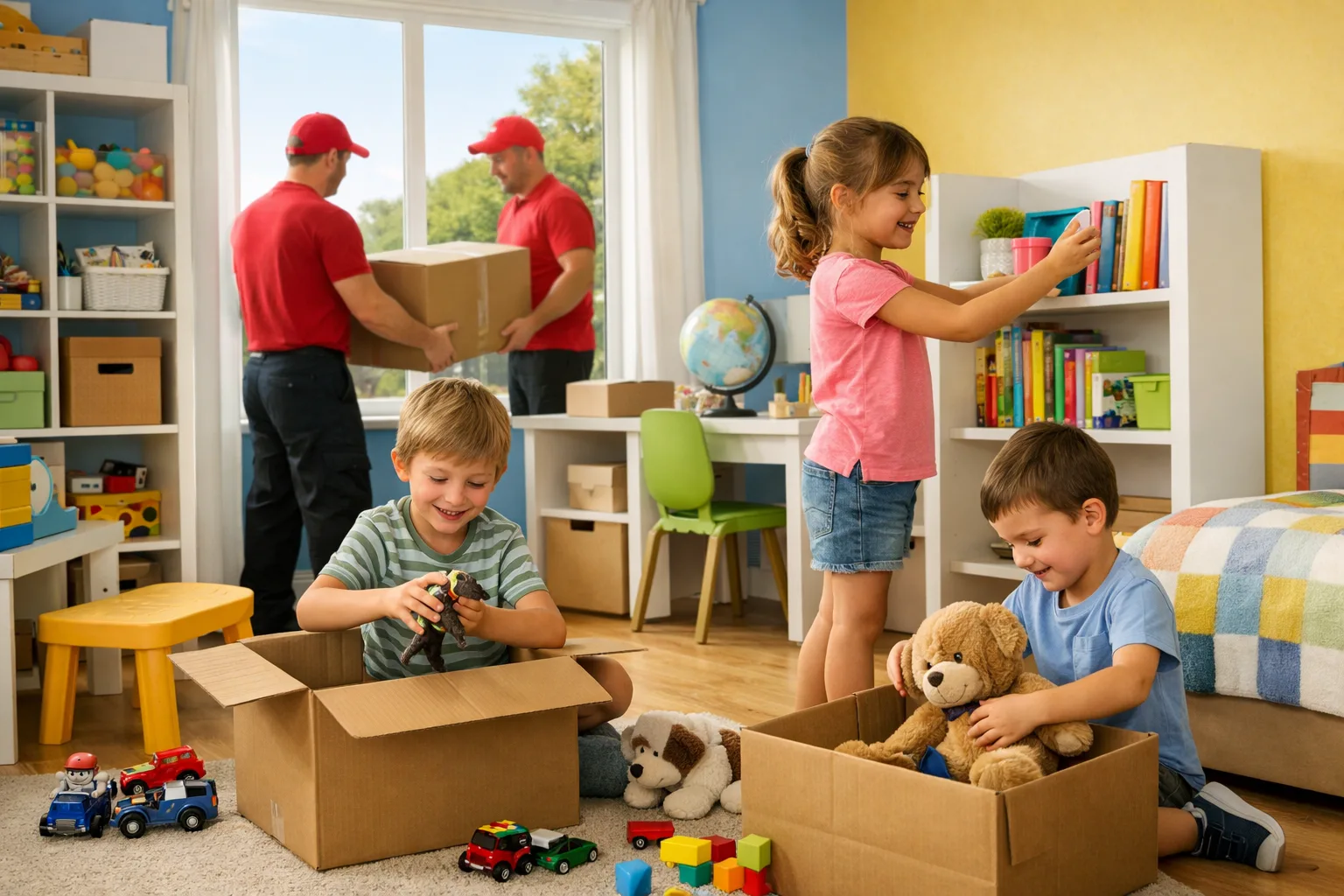
Packing is one of the most stressful parts of moving, but involving children in this process can make everything less tiring and even fun. Allow them to pack their toys, books, and clothes with your help, giving them a sense of control and responsibility. This can also be an opportunity to learn organization and planning.
Create a task schedule tailored to the child’s age. For example, younger children can pack their favorite toys into special boxes that will be easily accessible, while older children can help label boxes, assemble furniture, or even plan the layout of rooms in the new home. Involving children in such tasks increases their motivation and sense of belonging.
Use clear labels on boxes and picture stickers to help children recognize their belongings. Also, leave several moving boxes with essentials for the first night in the new home, including favorite toys, change of clothes, and hygiene items. This approach makes the first day in the new space easier and reduces stress for the little ones.
Children feel best when they have a stable and familiar routine, so it is important to maintain it as much as possible during the move. Try to keep regular meal times, playtime, and bedtime, even if the days are filled with moving activities. Preserving routine provides children with a sense of security and stability during times of change.
Prepare small rituals to help children relax, such as bedtime story reading, family movie nights, or walks in nature. These rituals not only provide security but also strengthen family bonds and create positive memories associated with the new home.
Immediately upon arrival at the new home, set up a play and rest area tailored to your children's interests and needs. This corner should be a place where children can relax and feel comfortable, which significantly helps with quick adjustment and reduces stress during the first days.
Changing schools is one of the biggest concerns for children during a move and can cause feelings of insecurity. It is important to talk openly about the new school, emphasizing positive aspects such as new learning opportunities, meeting new friends, and participating in extracurricular activities that might interest your child.
Show interest in the school your child will attend – visit it together, meet the teachers, or find information about extracurricular activities that might be appealing. Getting involved in exploring the new school helps the child feel more secure and prepared for the changes.
Encourage your child to stay in touch with old friends via phone, video calls, or social media, while also encouraging them to be open to new acquaintances. Provide support and encouragement during the first weeks at the new school, as this is when the child needs understanding and security the most.
On moving day, ensure that children have a safe place where they can play or rest. If possible, hire a friend or family member to look after them while you handle the organization and supervision of the apartment move. This will allow you to focus on logistics, and the children will feel safer.
Pack a bag with items your children will likely need during the day and first night, such as food, drinks, favorite toys, diapers, or a change of clothes. Also include basic hygiene items and medications if necessary. This bag should be easily accessible so you can quickly respond to their needs.
Try to make moving day as fun and relaxed as possible. Organize short breaks for play or walks between activities to keep the children engaged and calm. It is important that children are not overly stressed and are involved in a positive atmosphere, which will contribute to better adaptation.

Upon arrival at the new home, involve children in arranging their rooms. Allow them to choose the furniture layout, decorations, or wall colors if possible. This approach helps children feel at home and gives them a sense of control over the new space.
Create a routine that includes shared activities such as family meals, games, or reading to strengthen family bonds and create a pleasant atmosphere. These activities contribute to a sense of security and belonging, which is crucial for successful adaptation.
Be patient and understand that adjustment is a process that may take time. Encourage children to express their feelings and provide support at all times. The new home should become a place of safety and joy, and your support is key in this process.
Teenagers often experience moving as additional stress because they face changes in their social life and school responsibilities. It is important to give them space to express their frustrations and concerns without judgment so they feel understood and supported.
Involve teenagers in decision-making related to the new home, school, and leisure activities. Allow them to choose the decoration of their room or the activities they want to pursue. This increases their sense of control and responsibility, which is crucial for positively coping with changes.
Encourage teenagers to stay connected with old friends while actively participating in new social activities. Help them find clubs, sports teams, or other groups that interest them in the new location, making it easier to build a new social network and feel accepted.
If you notice your child showing significant signs of stress, anxiety, or depression during and after the move, it is important to consider consulting a psychologist or child counselor. Professional support can help identify and address issues promptly.
Pay attention to behavioral changes such as withdrawal, loss of appetite, sleep difficulties, or a drop in school performance. These symptoms may signal that your child needs additional help and support to better cope with the stress of moving.
Family therapy can be beneficial for all family members to learn how to better handle the changes and stress that moving brings. Don’t hesitate to seek professional help – it is a sign of responsibility and care for the well-being of your children and the entire family.

Reasons to Hire a Professional Moving Company

Moving with the Help of Friends or Professionals – Which to Choose?

5 Items Professional Moving Companies Will Not Transport
We will respond to you as soon as possible.
Moving with children brings specific challenges and questions. Below we answer the most common concerns parents have during this process.
It is important to talk to your child in a clear and calm manner, using simple language and positive examples. Use stories or picture books about moving, involve them in preparations, and emphasize the positive aspects of the new home. Encourage your child to express their feelings and be patient with their reactions.
Try to turn packing into a game, for example, a competition to see who can pack certain items faster or making a list of favorite items to pack. Give them small age-appropriate tasks and reward them with praise to increase motivation.
Be supportive by talking about their feelings and experiences. Contact teachers and inquire about options for additional support or involvement in extracurricular activities. Encourage your child to stay in touch with old friends while making new acquaintances.
Arrange for children to have a safe place away from the main moving activities, along with plenty of their favorite belongings. Plan breaks for rest and play throughout the day. If possible, hire someone to accompany or care for them while you finish the move.
If you notice significant behavioral changes such as withdrawal, anxiety, sleep problems, or difficulties with school responsibilities, it is advisable to consult a psychologist or pediatrician. Professional help can assist in overcoming stress and challenges more easily.
Include them in planning and decision-making related to the move and the new home. Talk openly about their concerns and provide support. Help them stay connected with old friends and find new activities that interest them in the new location.
Yes, establishing a familiar routine helps children feel more secure and reduces the stress of adjustment. Maintain regular meal times, playtime, and bedtime, as well as family activities they know and enjoy.