
Reasons to Hire a Professional Moving Agency
Reasons to Hire a Professional Moving Company

Enter at least 3 characters.
Preparing the access and entrance for the arrival of the moving company is a crucial step that can significantly ease and speed up the moving process, especially in international relocations where logistics and organization are of utmost importance. A well-organized access allows trucks to get as close to the entrance as possible, reducing unloading time and the risk of damage to belongings. In this guide, we will explain in detail how to prepare your home and surroundings, what needs to be checked, and which measures to take to ensure the moving team’s arrival goes smoothly and without unnecessary complications. Besides the basic steps, it is important to keep in mind additional details that can contribute to efficiency, such as timely communication with the agency and neighbors, as well as having the necessary documentation prepared in advance. This way, you will not only reduce the stress associated with moving but also enable the professionals to perform their job more efficiently and quickly.
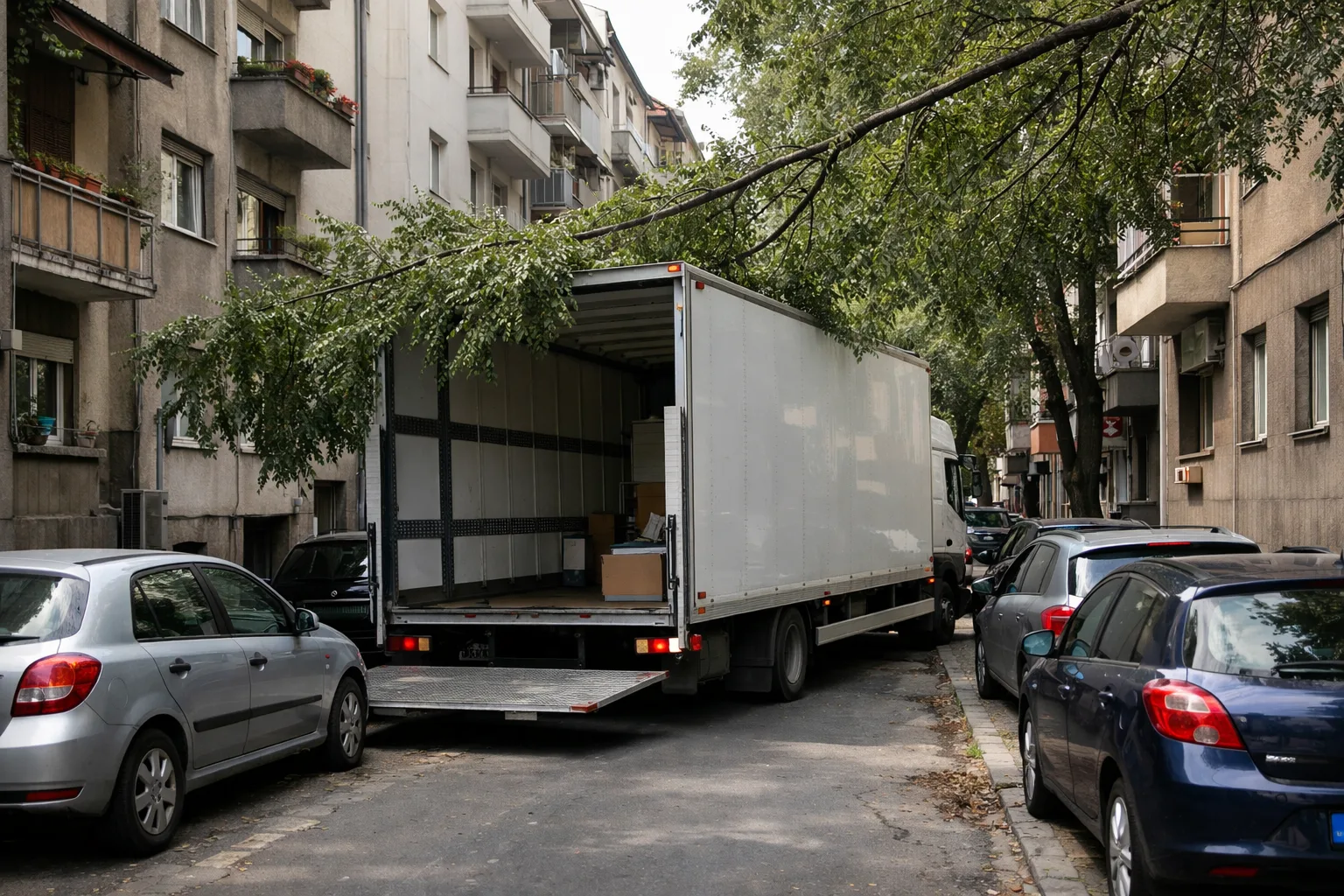
The first step in preparing the access for the arrival of the moving company is a thorough check of the access routes to your home. It is important that the road the truck will take is wide enough, free of obstacles such as parked vehicles, construction sites, or low tree branches that could obstruct the passage of a large vehicle. If you live on a narrow street or in an area with restrictions for heavy vehicles, inform the agency in advance so they can prepare a smaller truck or additional equipment.
Also, check whether the roads in front of your building are in good condition and if there are any works that could prevent access. If there are traffic restrictions or parking bans, it is necessary to contact local municipal services to obtain a permit for temporary space occupation. This is especially important for international moves where punctuality and speed are critical.
If the access is complex, it is advisable to take photos and create an access map to share with the agency. This way, the driver and moving team will have a clear understanding of the area, further reducing the possibility of surprises on moving day.
Additionally, it is useful to check the weather forecast for the moving day, as rain, snow, or strong winds can complicate access and handling of belongings. If possible, plan the move during a period of stable weather to avoid additional complications.
Don’t forget to check if there are special regulations or permits required for large vehicles to enter certain parts of the city, as some municipalities have strict rules that can affect route planning and truck arrival times.
One of the most important things is to secure adequate parking space for the truck as close as possible to the entrance of your building or house. The moving truck is often large and requires enough space for maneuvering, especially during international moves where specialized transport vehicles are used.
If you live in an apartment building with parking, check if it is possible to reserve a spot for moving day or if there is a garage where the vehicle can fit. In some cases, it is necessary to notify other residents or the building manager in advance about the arrival of the moving service to avoid congestion and blocked access.
If your street access has limited parking, contact the local municipality to request a temporary parking permit for the truck. This measure is especially important for international moves where the vehicle is often larger and requires more space than usual.
Also, consider hiring additional staff or neighbors who can assist with traffic direction and securing parking space. This can be very helpful in dense urban areas where maneuvering large vehicles is challenging.
Don’t forget to mark the parking area clearly with visible signs or tape on moving day so that all participants know where parking is allowed, avoiding misunderstandings or unnecessary delays.
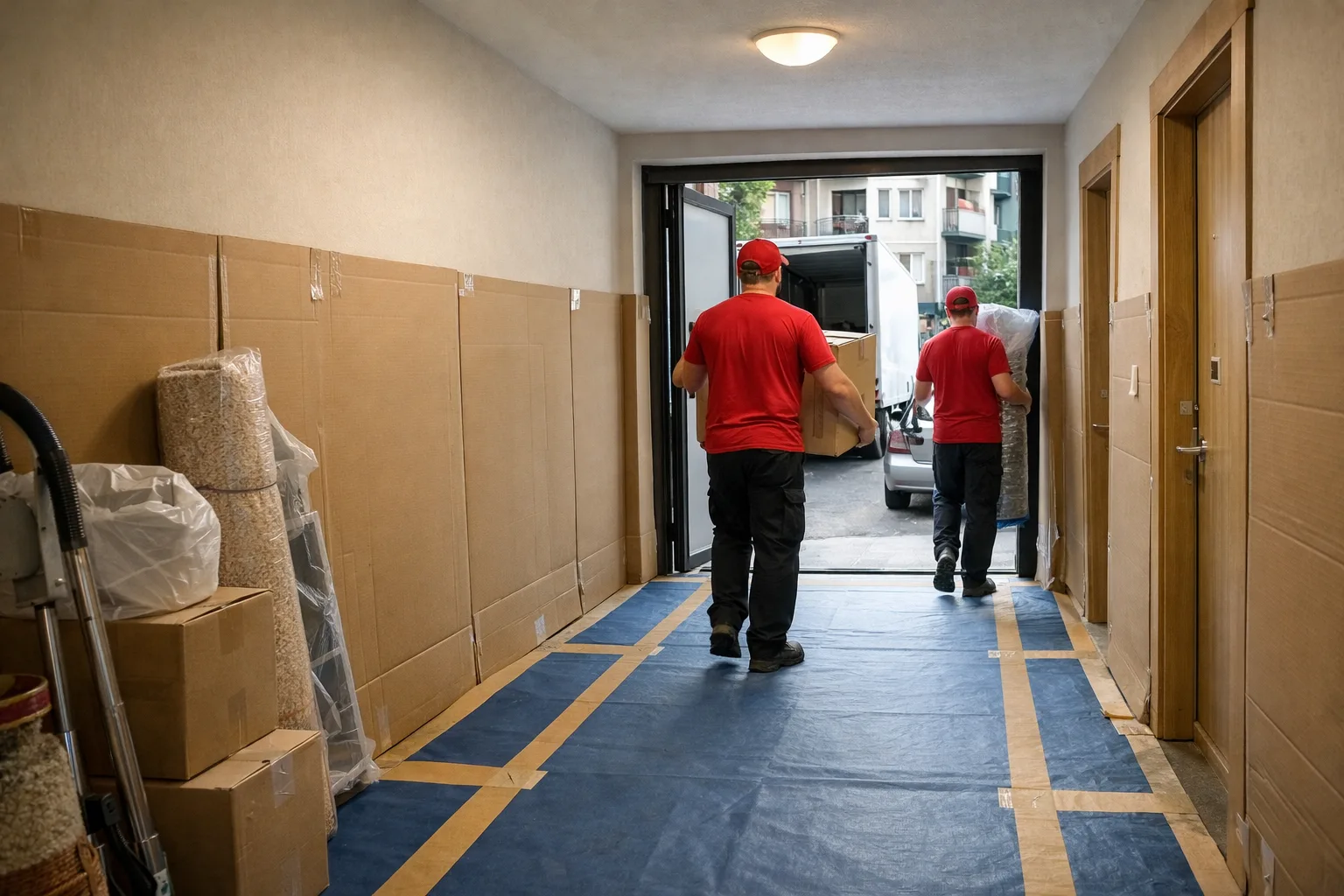
The entrance to your home should be completely clear and free of obstacles that could slow down the moving team’s work. Remove all items such as shoes, rugs, plants, and furniture from staircases and hallways. This will allow unobstructed passage and reduce the risk of damage or accidents.
Pay special attention to the safety of staircases and access points – check that the stairs are sturdy and free of damage that could endanger workers or the transport of belongings. If there are inclines or declines, consider placing protective mats that prevent slipping or reinforce the surface.
In case of rainy weather or adverse conditions, provide appropriate tarps or covers to protect your belongings and enable safer work for the moving team. This shows preparedness and care, which can positively impact the efficiency and speed of the process.
Also, ensure that all hallways and entrances are well-lit, especially if the move takes place in the evening or during the winter months when daylight is shorter. Adequate lighting reduces the risk of accidents and facilitates the moving team’s work.
Don’t forget to inform the moving team about any specific entrance features, such as stairs with sharp corners, narrow passages, or the presence of pets, so they can adjust their activities and pay extra attention to safety.
Check whether the entrance doors and hallway doors are wide enough to allow larger items and furniture to pass through. If necessary, remove doors from hinges or take off handles to increase passage space. Such preparations greatly facilitate handling larger items and save time.
Also, check if the hallway floors are even and stable. In case of unevenness or damage, repair them or at least warn the moving team about possible obstacles so they can use additional protection or alternative approaches.
If your entrance is equipped with a security system or sensors, inform the moving team to prevent unwanted alarm activation. Provide access to keys or codes for entry so the process proceeds without delays or complications.
Consider temporarily removing or protecting wall decorations, mirrors, and other fragile items located in the hallway to prevent damage during the carrying of furniture and boxes.
If hallways are narrow or have sharp corners, it is recommended to place protective pads or tape on wall edges to reduce the risk of damage to furniture and walls during transport.
In residential buildings, it is very important to coordinate the arrival of the moving team with neighbors and the building manager. This way, you can get support in freeing up parking spaces or assistance in organizing passage through common areas.
Inform neighbors about the moving day and time to avoid unnecessary obstacles and ensure unobstructed passage through hallways and entrance areas. Neighbors are often willing to help by temporarily moving cars or other items that might hinder the team’s work.
Building managers can assist you in obtaining necessary permits for temporary use of common areas or parking spaces, as well as coordinating with municipal services. A good relationship and timely communication with them is very beneficial for a successful and swift moving process.
Also, consider having the building manager or neighbors present on moving day to assist in resolving any unforeseen situations or issues that may arise during the process.
Don't forget to thank your neighbors and the building manager for their cooperation, as good communication and mutual understanding can significantly help reduce stress and complications during the move.
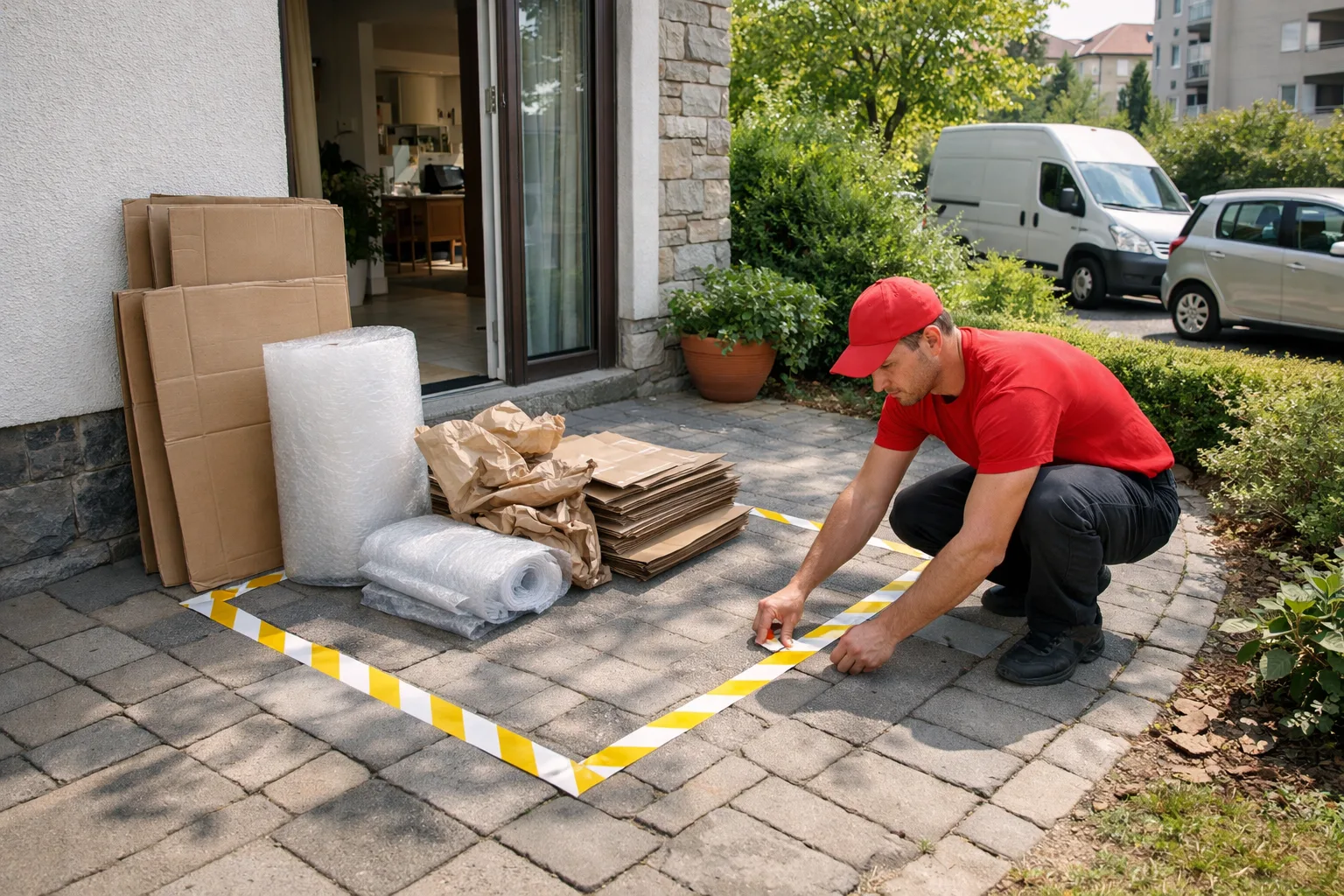
The moving process generates a significant amount of waste from packaging materials such as cardboard boxes, wraps, and tapes. Before the moving team starts work, ensure there is a clearly marked spot where all waste will be disposed of.
This area should be easily accessible, preferably near the entrance or parking spot, so workers can quickly and efficiently dispose of used packaging. This helps maintain cleanliness and reduces the chance of congestion or obstacles during unloading.
If possible, provide recycling bins or containers so that packaging materials can be properly disposed of. This practice not only facilitates the moving team's work but also contributes to environmental protection.
Also, plan in advance how waste will be removed after the move, whether by hiring municipal services or a private company, to avoid garbage accumulation around your home.
Don't forget to inform the moving team about the designated area for packaging and waste disposal, as well as recycling rules in your neighborhood, so waste can be sorted and disposed of correctly.
Ensure you are available on moving day and have all necessary contacts and documents ready that the moving team might request. This includes the moving contract, address confirmations, passports, or permits for international relocation.
Also, inform the team in advance about specifics of your home, such as the presence of pets, zone restrictions, or special instructions for handling delicate items. Clear and timely communication greatly enhances the efficiency and safety of the process.
If additional services such as furniture assembly or storage are needed, be sure to mention this before the team's arrival so they can provide appropriate equipment and personnel. This level of organization reduces the risk of unforeseen situations.
Additionally, it is recommended to have a prepared inventory list of items being moved, as well as special labels or stickers to help identify boxes and furniture, which further facilitates the moving team's work.
Don't forget to check that all necessary documents are valid and up to date, especially for international moves where customs and administrative procedures are more complex and require precise documentation.
To avoid damage to walls, floors, and railings when carrying heavy items, it is recommended to install protective films or cardboard panels in the passage areas. This is especially important in older or newer buildings with delicate surfaces.
If you have carpets or other sensitive underfloor heating, protect them additionally to prevent damage or staining. The moving team will appreciate your responsibility and care, which can also lead to better cooperation and attention from their side.
If possible, ask the agency to bring extra protection for entrance surfaces and staircases. Professional moving companies often have this material, but it is important to notify them in advance so they come prepared.
Also, consider placing temporary protective mats in areas where furniture and boxes are most frequently carried to further reduce the risk of scratches and damage.
Don't forget to inspect the entrance areas and staircase after the move, and if necessary, perform cleaning or minor repairs to maintain the good appearance and functionality of the space.

Reasons to Hire a Professional Moving Company
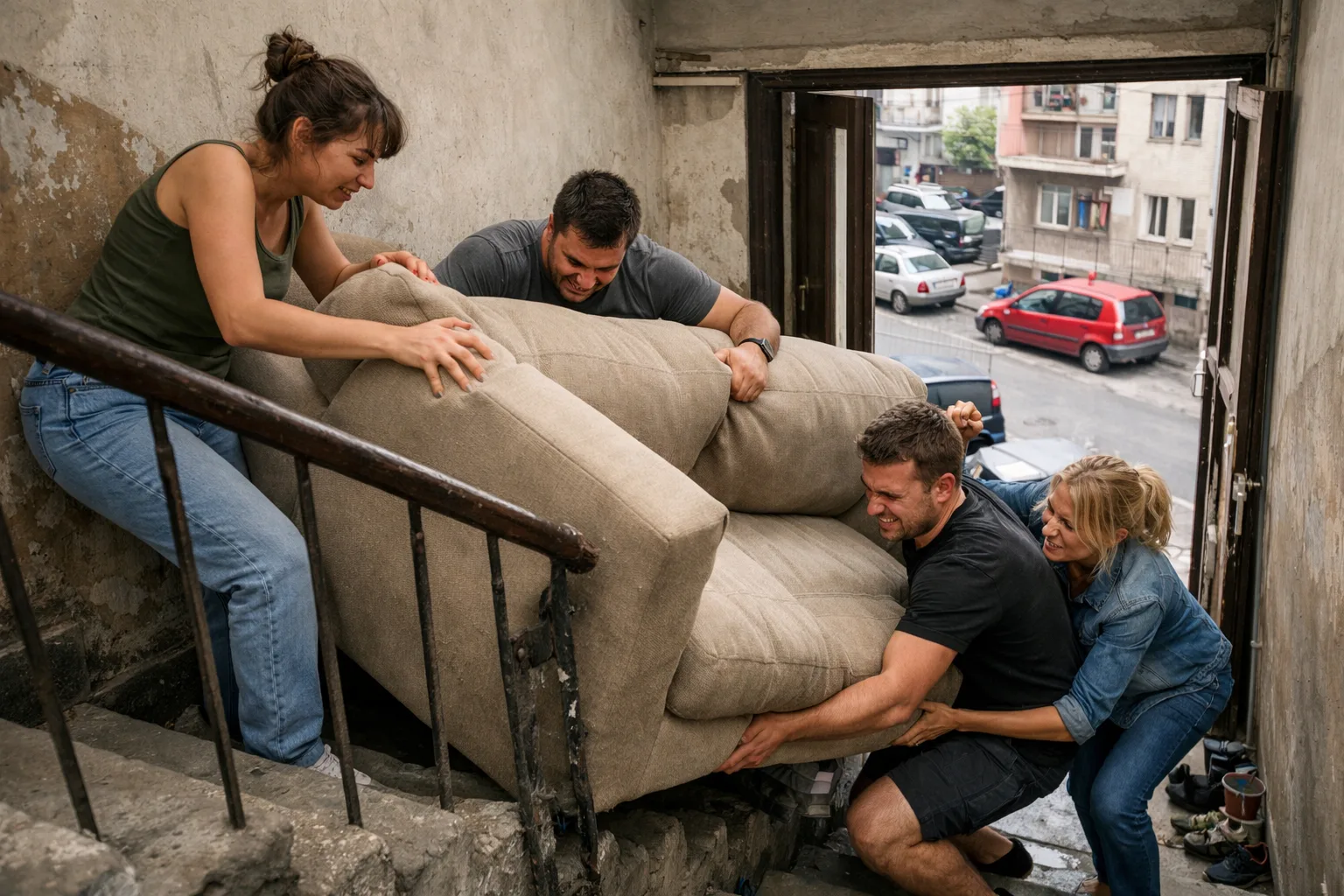
Moving with the Help of Friends or Professionals – Which to Choose?

5 Items Professional Moving Companies Will Not Transport
We will respond to you as soon as possible.
Below we answer the most common doubts and questions related to preparing access and entrance for the arrival of the moving company, with a special focus on the specifics of international moves.
Contact the local administration or municipal services several weeks before the move to request a temporary permit to occupy space on the street. Explain that it is a move and provide the exact date and time. In some municipalities, there is a procedure for issuing such permits which may include placing no-parking signs during the specified period.
It is recommended to remove the door from its hinges or take off the handles to increase the passage space. If that is still insufficient, consider passing through other doors, windows, or ordering disassembly of larger furniture pieces before the move.
It is best to provide the building manager with all details about the date and time of the move, as well as access and parking needs. Request assistance in coordinating with other residents and, if necessary, obtaining permits for using common areas.
Yes, it is advisable to provide a clearly marked and easily accessible place for disposing of used packaging. This facilitates the work of the moving team and helps keep the space tidy during and after the move.
Use protective films, cardboard panels, or special mats that can be placed on walls and floors. Professional moving companies often bring this material, but it is helpful to notify them in advance so they can be prepared.
Prepare tarps or protection for the entrance and access to shield belongings from rain or moisture. Also, check with the moving company about the possibility of postponing or adjusting the schedule in case of extreme weather conditions.
Send them photos of the access and entrance with detailed descriptions of obstacles or specific conditions. You can do this via email or phone, and it is also good to be available for additional questions shortly before the move.