
Reasons to Hire a Professional Moving Agency
Reasons to Hire a Professional Moving Company

Enter at least 3 characters.
Moving abroad is one of the most demanding logistical undertakings, especially when it comes to packing the truck for transport. This process requires detailed preparation, precise organization, and a systematic approach to ensure the safe and efficient crossing of your belongings across borders. Improper packing can lead to property damage, transport delays, or additional costs, which is why every step must be carefully planned. In this guide, we will provide you with detailed advice and practical recommendations for preparing and packing the truck for an international move, including key checks to help you avoid common mistakes and ease the entire process. Additionally, we will focus on practical techniques and tips to help you maximize space, protect your belongings, and organize the move in a way that reduces stress and saves time.
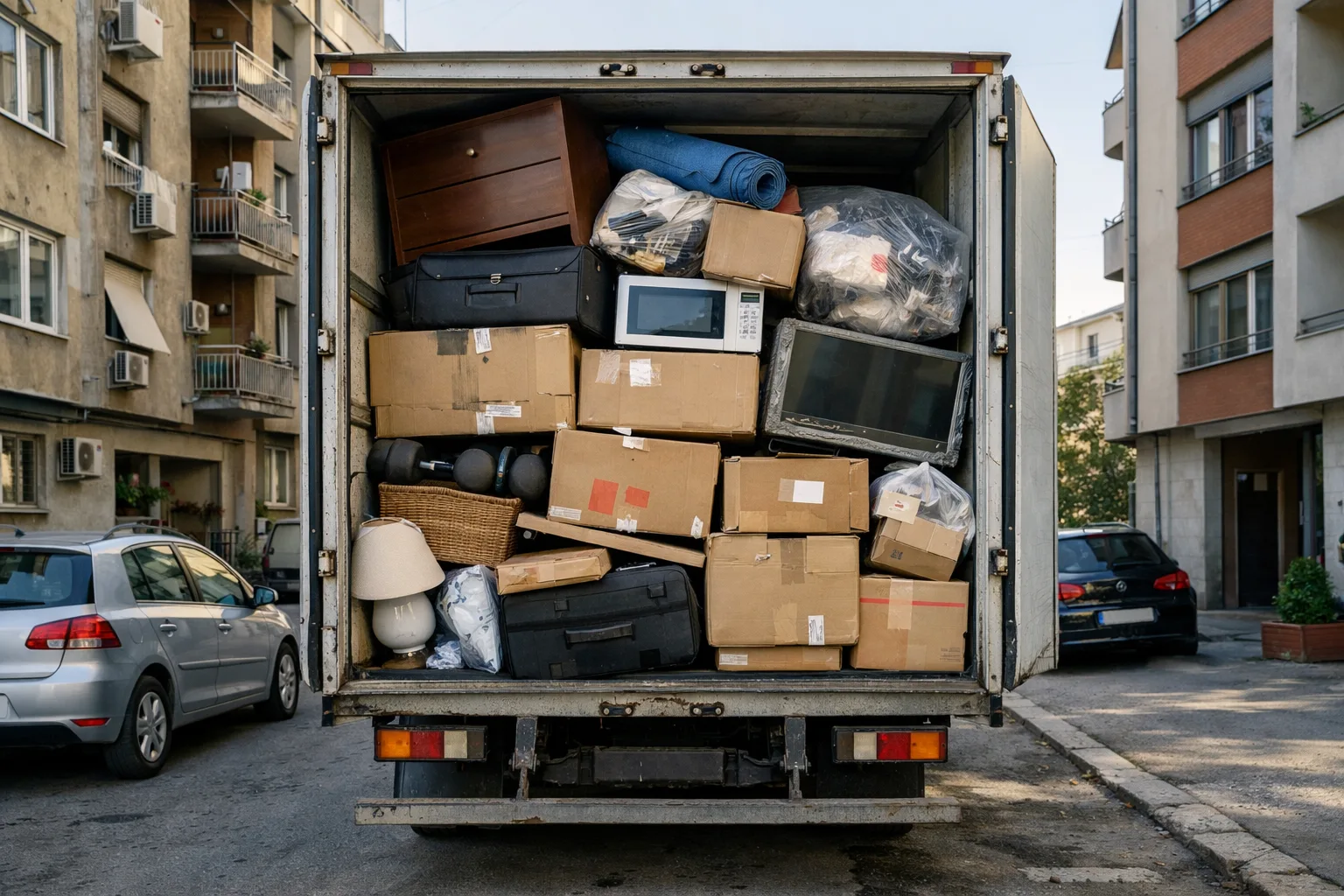
The first step in preparing for a move is a detailed assessment of all the items you plan to transport. It is advisable to make a detailed list or even photograph the items to have a clear picture of the scope of the move. This record will help you accurately determine the size and capacity of the truck you need, which is crucial for optimal space utilization and avoiding unnecessary costs.
Besides volume, it is important to consider the weight of the items, as transport vehicles have load limits. Exceeding the weight limit can lead to fines or even dangers during driving. If you are unsure about the assessment, it is recommended to engage professional companies or experts in international moves who can perform precise analysis and offer optimal solutions for packing and transport.
Also, planning the packing schedule is extremely important. Ideally, start the process several weeks before the planned moving date so you can distribute tasks and avoid stress. Organize packing in phases: first pack items you rarely use, then those you need until the last moment. This way, you will have enough time for possible adjustments and additional preparations, as well as organizing help if needed.
To further ease the assessment, consider using digital tools or inventory apps. They can help you more accurately record the quantity and type of items, as well as track packing progress. Also, consider the possibility of selling, donating, or discarding some items before the move, which will reduce the volume of transport and save costs.
Don’t forget to include an assessment of additional equipment and supplies you will need during the moving process itself, such as boxes, protective materials, and tools for furniture disassembly. Good planning of these details contributes to more efficient and safer packing.
Quality packing materials are the foundation for the safe transport of your belongings. It is recommended to use sturdy, multi-layer cardboard boxes that can withstand weight and pressure during transport. Additionally, plastic wrap and stretch film are essential for protection against moisture and dust, especially on longer international journeys. If you don’t have enough packaging, you can also use moving boxes offered by specialized companies.
For fragile items such as glass, porcelain, or electronic equipment, it is necessary to use specialized wraps like bubble wrap, styrofoam, or polyurethane foam. These materials provide additional cushioning and reduce the risk of damage due to vibrations or impacts during transit.
Don't forget to protect furniture and larger items. Thick blankets, quilts, and plastic wraps shield surfaces from scratches and impacts. Additionally, furniture corners should be further protected with special plastic or rubber elements that absorb shocks. Properly securing items inside boxes and on pallets prevents movement and damage during transport.
Besides basic materials, consider using specialized boxes for certain items, such as wardrobe boxes with hanging frames or reinforced boxes for books. These materials facilitate packing and protect belongings from deformation.
Also, keep in mind that proper packing is just as important as choosing the right materials. Use appropriate stacking and filling techniques inside boxes to prevent contents from shifting. Always have extra materials on hand for emergency repairs or additional protection during packing.
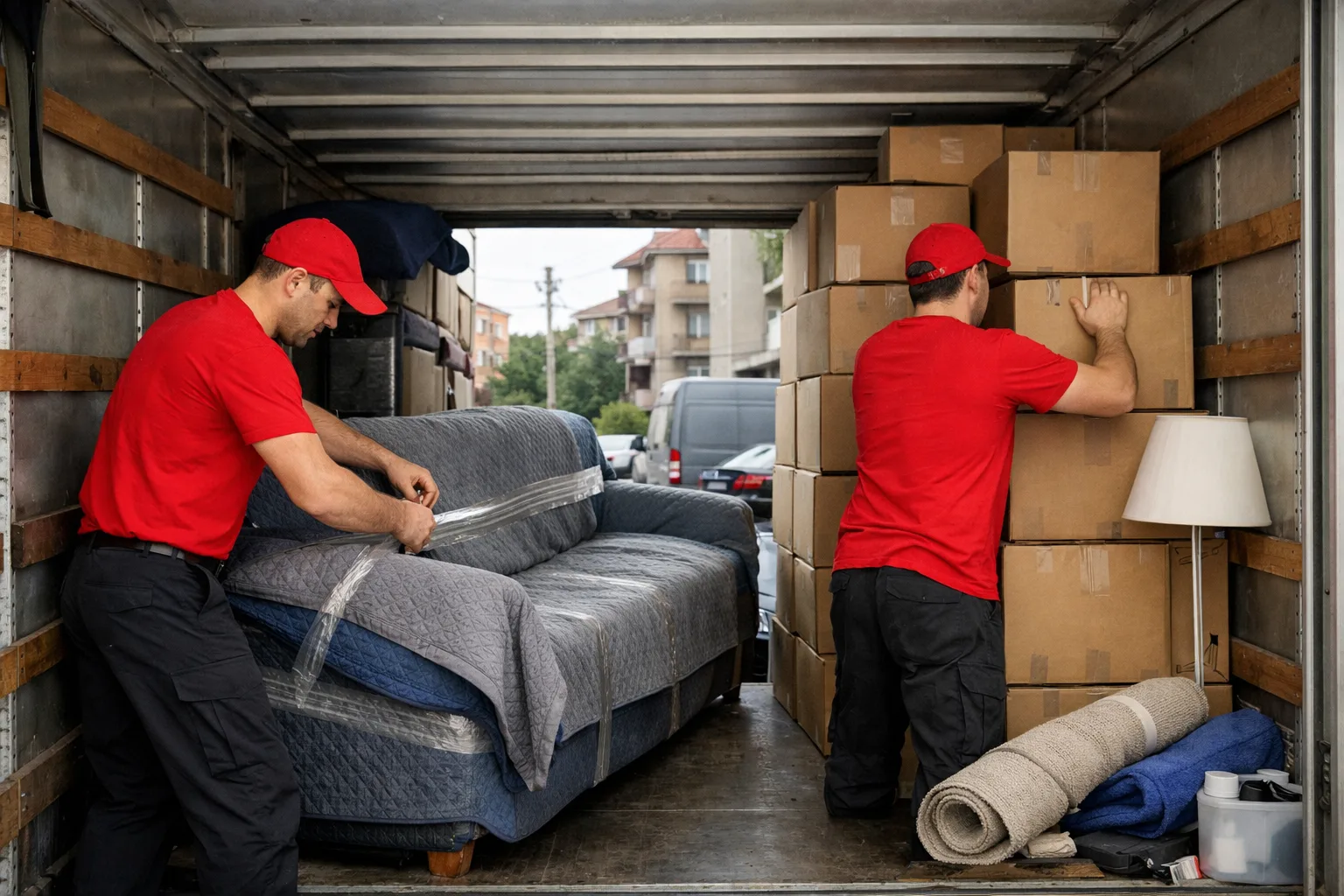
Efficient organization of space in the truck is crucial for safe transport and maximizing vehicle capacity. Heavier and larger items should be placed at the bottom of the truck, as this ensures stability and prevents damage to lighter items above.
Utilize the vertical space of the truck by stacking boxes up to the ceiling, but be careful not to leave gaps that could cause items to shift during transit. Gaps are best filled with soft materials like pillows, blankets, or packing paper, which provide additional protection for the contents.
It is also important to consider accessibility for items you will need immediately upon arrival. Boxes with essential supplies, documents, or food should be labeled and placed in easily accessible spots. This practice significantly eases unpacking and settling into the new space.
When stacking items in the truck, use straps and nets to secure the load and prevent movement during the drive. This is especially important on longer journeys and uneven roads, where any shift can cause damage.
Plan the layout so that heavy and large items are positioned near the truck doors, facilitating unloading and reducing the need to move items around. Also, leave space for passage if necessary, allowing easy access to certain boxes or items during transport.
Fragile items require special attention and precise packing techniques. Each item should be individually wrapped in bubble wrap, then carefully placed in a box with an additional protective layer such as styrofoam or paper filler to prevent movement inside the box.
Be sure to mark boxes containing fragile contents with clear and visible labels like "Fragile" or "Handle with Care" on multiple sides. This warning greatly assists workers during unloading and handling, reducing the risk of damage.
For sensitive electronic devices such as TVs, computers, or audio equipment, it is recommended to use original packaging if available. If not, specialized transport boxes with extra cushioning and moisture protection are necessary to ensure maximum safety during long and often unpredictable international transport.
In addition to standard techniques, consider using special boxes with compartments for delicate items like glassware or porcelain figurines. These dividers prevent contact between items and further reduce the risk of breakage.
Also, when packing electronic devices, remove batteries if possible to prevent leakage or damage during transport. Keep cables and accessories in separate, clearly labeled bags inside the boxes, which facilitates unpacking and reduces the chance of loss.
Larger pieces of furniture require careful preparation before packing. Disassembly is often necessary to facilitate packing and reduce the risk of damage. Remove legs from tables, take drawers out of dressers, and disassemble beds, carefully labeling and packing all parts together.
Protecting furniture is essential – use thick blankets, quilts, and plastic wraps to prevent scratches, impacts, and damage during transport. Pay special attention to glass elements; if possible, remove and pack them separately with additional protection.
Place heavy items at the bottom of the truck and secure them with straps or tie-down belts. Using wooden supports or blocks further stabilizes the furniture and prevents movement during transit, reducing the risk of damage and increasing transport safety.
When disassembling, use bags or boxes for smaller parts like screws and nuts, clearly label them, and keep them together with the corresponding furniture parts. This will save you time and make reassembly at the new location easier.
Also, consider hiring professional workers for disassembling and assembling furniture, especially if the items are heavy or complex to handle. Their experience can significantly reduce the risk of damage and speed up the entire process.
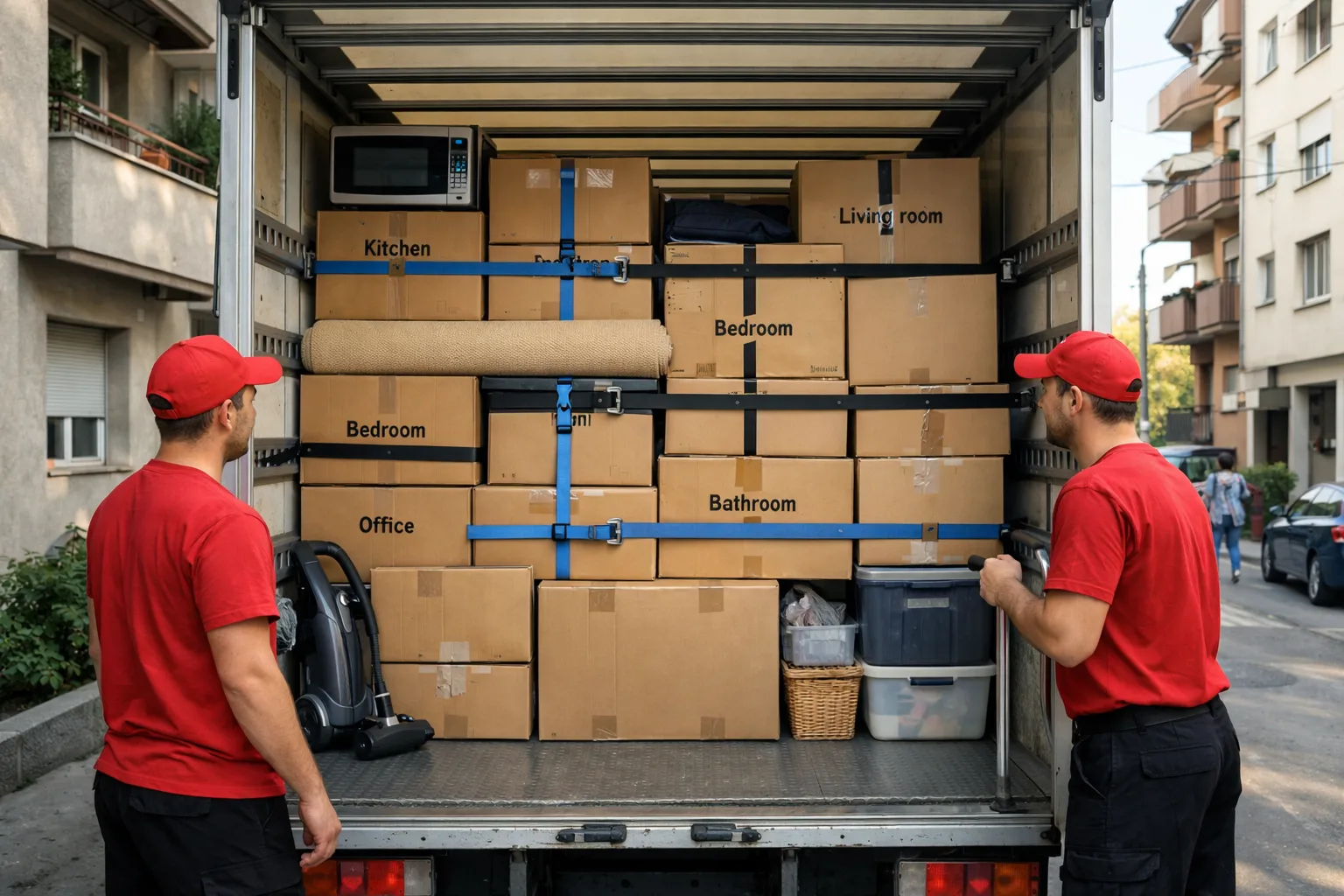
Clear and precise labeling of boxes is essential for efficient unpacking and organization in the new space. Each box should have a label indicating its contents and the room it belongs to, which significantly speeds up the process of arranging items by rooms.
For international moves, in addition to labeling, it is necessary to have complete and accurate documentation of the shipment contents. This inventory is crucial for customs procedures and can prevent delays or additional costs. It is recommended to keep copies of all documents and have them on hand during transport.
If you are moving special items or hazardous materials, be sure to inform yourself about the regulations of the country you are moving to. It is necessary to obtain all required permits, certificates, or confirmations to avoid problems at the border and ensure the smooth crossing of your belongings.
Besides basic labels, use different colored stickers or markers to mark boxes by rooms or unpacking priority. This visual organization facilitates work and reduces the possibility of errors during unloading.
Also, pay attention to properly filling out customs documentation, including invoices, declarations, and permits. If you are unsure about the procedures, consult experts or agencies specialized in international moves to avoid complications.
Safety during packing and transport is extremely important both for your belongings and for the people involved in the process. Before starting packing, check the technical condition of the truck and transport equipment to avoid unforeseen problems during the drive.
Consider purchasing insurance for your belongings during transport, especially if they are valuable or fragile items. Insurance can cover damage caused by accidents, theft, or breakage, thereby reducing the financial risk of the move.
During packing, use protective equipment such as gloves and safety glasses to prevent injuries. Also, when lifting heavy items, pay attention to proper lifting techniques and, if necessary, hire professional workers or enlist friends' help to avoid physical injuries.
In addition to personal protection, pay attention to proper handling of packing tools and equipment. Regularly check the condition of binding straps, knives, and other aids to prevent accidents and damage.
Also, plan breaks and rest periods during packing and loading, as fatigue can lead to mistakes and injuries. An organized and careful approach contributes to the safety of all participants in the moving process.
Upon arrival at the new destination, the first thing you should do is check the condition of your belongings and compare them with the inventory you made before the move. Pay attention to any damage or missing items and record them immediately so you can respond promptly.
Plan unpacking so that you first open boxes with essential everyday items, such as kitchen utensils, clothing, and hygiene products. Boxes with seasonal or rarely used items can be left for later, making your initial organization easier.
Organize the space so that it is functional and tidy. Use the labels on the boxes to arrange them by rooms, speeding up the adaptation process in your new home. Also, consider furniture placement and room layout before unpacking to maximize space usage and create a pleasant atmosphere.
To further ease unpacking, make a plan by rooms and priorities before you start opening boxes. This will help you stay organized and avoid chaos during the first days in your new space.
Also, consider enlisting the help of friends or professionals for unpacking, especially if you have a large number of boxes or complex furniture. Teamwork will make the process faster and less stressful.

Reasons to Hire a Professional Moving Company
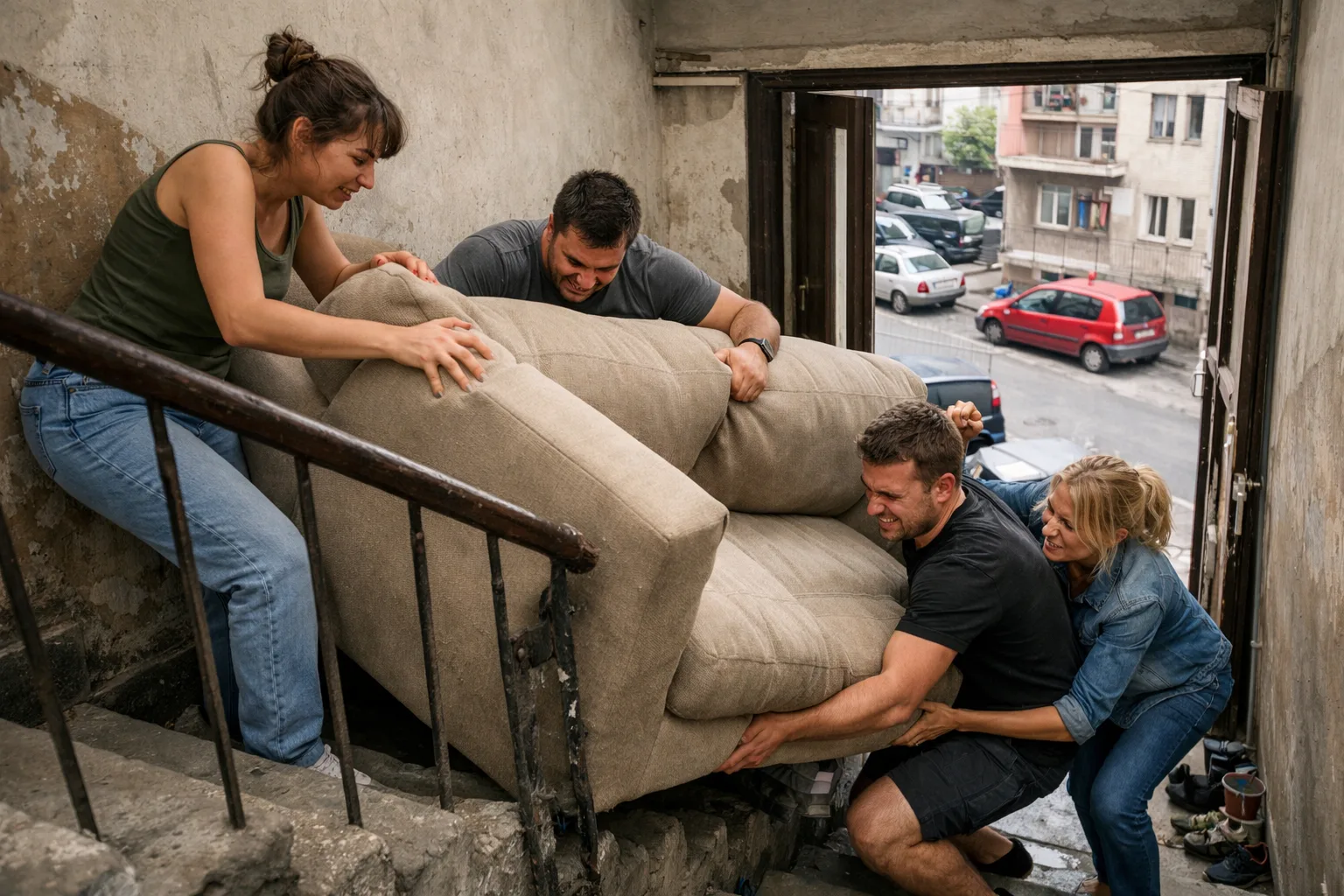
Moving with the Help of Friends or Professionals – Which to Choose?

5 Items Professional Moving Companies Will Not Transport
We will respond to you as soon as possible.
Below we answer the most common questions related to packing a truck for international moves, so you can be confident and prepared for every step of the process.
Electronic devices should be packed in their original boxes if available, or in specialized transport boxes with additional cushioning. It is recommended to remove cables and accessories, and always wrap devices in bubble wrap and place them in a secure spot where they won’t be exposed to pressure or moisture.
For international moves, hiring professional workers is advisable due to their expertise and equipment. They know how to properly protect items, load the truck, and secure the necessary documentation. However, if you have experience and time, with good preparation you can organize the packing yourself.
The key is proper weight distribution, packing without gaps, and using straps or belts for securing. Also, using blocks or wooden supports helps stabilize items and prevent movement, reducing the risk of damage during transport.
The most important are a detailed inventory list, customs declarations, permits for transporting certain items, and if necessary, certificates of origin or ownership. It is also important to have a contract with the moving company and an insurance policy if you have insured your luggage.
Label each box clearly with its contents and indicate the room for placement in the new home. Ideally, use different colors or markings for different rooms, which makes organizing items immediately upon arrival easier.
Disassembly is recommended for larger and heavier furniture pieces to reduce the risk of damage and ease transport. However, some pieces may be too large to disassemble or require special tools, so it is important to assess each case individually.
Delicate items should be specially wrapped in bubble wrap, placed in wooden crates or specialized transport boxes. It is recommended to hire professionals for packing such items and arrange additional insurance during transport.