
Reasons to Hire a Professional Moving Agency
Reasons to Hire a Professional Moving Company

Enter at least 3 characters.
Moving into a student dormitory is a significant step in every student's life, bringing new challenges and opportunities for independence. Preparing and packing can be stressful, especially when space is limited and needs are many. It is important to approach this process systematically and with enough time to avoid unnecessary stress and confusion. This guide will provide you with practical advice on how to organize packing, choose the right items, and maximize space, so your move goes as smoothly and quickly as possible. You will also learn how to prepare for unexpected situations and maintain order in your new space, helping you adapt quickly and enjoy student life.

Before you start packing for the student dormitory, it’s important to make a detailed plan. First, create a list of essential items, then divide them into categories such as clothing, school supplies, hygiene products, and kitchenware. This categorization will help you stay organized and ensure you don’t forget anything important. Also, consider priorities – which items you will need immediately upon arrival and which can be unpacked later.
Check the dormitory rules regarding allowed items and maximum dimensions of belongings you can bring. Some dorms have restrictions on electrical appliances or furniture, so it’s important to be informed beforehand to avoid any inconveniences. Also, find out about storage options within the dorm and the rules for using common areas.
Create a packing schedule to avoid last-minute rush. Ideally, start packing at least two weeks before the move, packing one category of items per day, which will allow you to prepare and check everything thoroughly. Include time for reviewing and possibly adding to your packing, as well as organizing help from friends or family if needed.
Packing boxes are a key element of any move. For moving into a student dormitory, it is recommended to use smaller and medium-sized moving boxes that are easier to carry and organize. Boxes should be sturdy, with lids or closures to protect items from damage and dust. Consider buying or borrowing stackable boxes, which will help you maximize space during transport and storage.
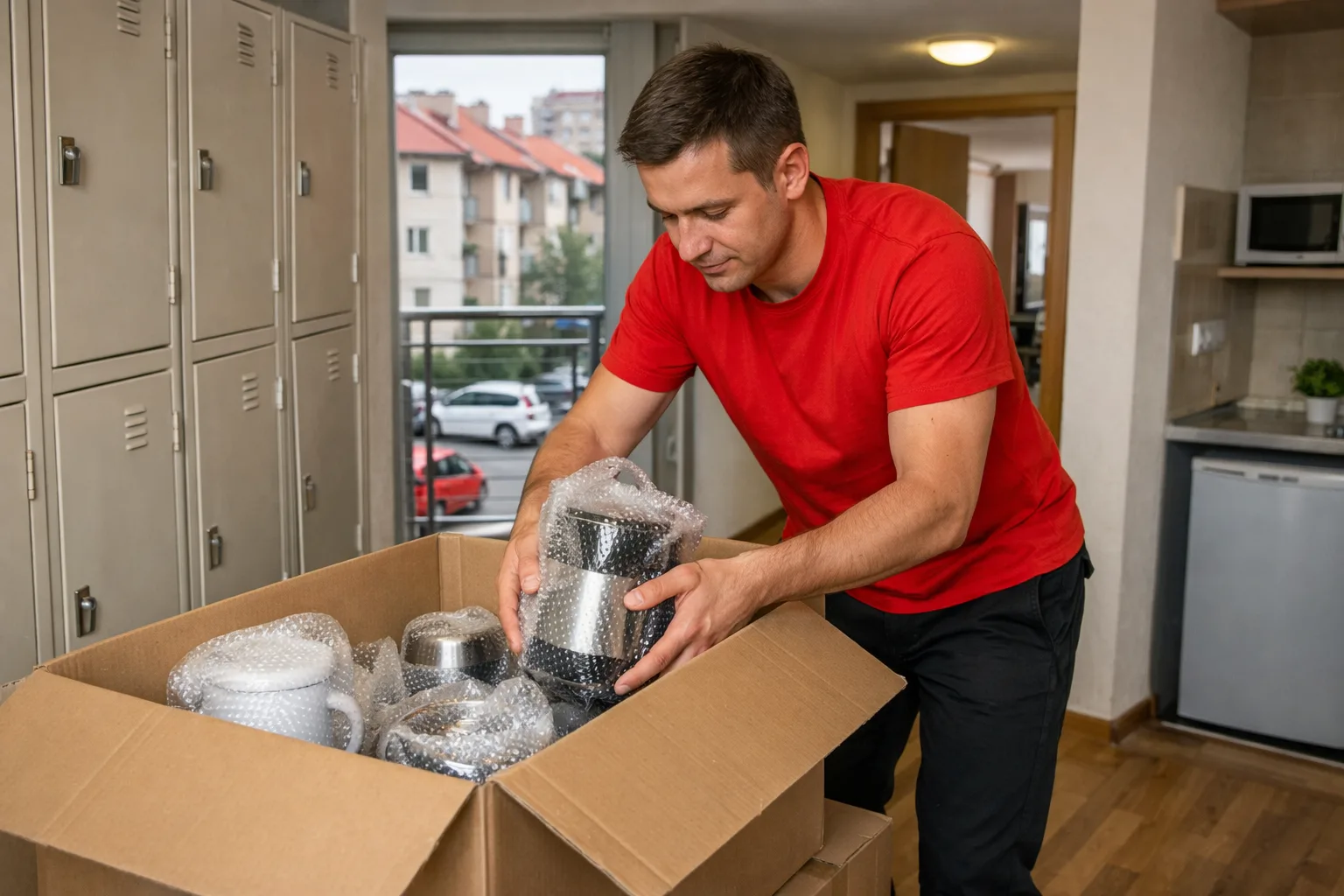
In addition to boxes, use various protective materials such as bubble wrap, newspapers, or protective cushions for fragile items like plates, glasses, or electronic devices. Moving into a student dorm often involves sharing common spaces, so it’s important that all your belongings are safely packed. Also, consider using zippered bags for easier access to certain items on moving day.
Don’t forget to label your boxes. Clearly write what is inside each box and which category it belongs to, as well as the room or part of the dorm where it should be placed. This will greatly simplify unpacking and finding items. Use different colored stickers or markers for quick category identification, which can be very helpful if you are moving with several people.
Clothes take up a significant portion of your space, so it's important to pack them smartly. Before you start, sort your wardrobe – remove items you won't wear or that aren't suitable for the season. This will save valuable space and make organizing easier. Consider seasonal packing by packing clothes you’re not currently using separately and storing them out of the way.
Use vacuum bags for clothes to significantly reduce their volume. These bags remove air and save space in boxes or suitcases while protecting clothes from moisture and dirt. For quick access, arrange clothes by type and most frequently used items. You can also use small packing bags that allow easier sorting and carrying of clothes.
Don't forget to pack accessories like belts, socks, and underwear in small transparent boxes or pouches. This will help you avoid searching for small items in boxes and keep everything neatly organized. Also, consider packing shoes in separate bags or boxes to protect clothes from dirt and facilitate transport.
School supplies are essential for daily student life but can take up a lot of space if not properly organized. Use pencil cases with multiple compartments for pens, markers, and other small items, and pack thicker notebooks and books together in sturdy boxes. Also, consider digitizing some materials to reduce the number of physical books and papers you carry.
Pack electronic devices like laptops, chargers, printers, or external drives separately and protect them with appropriate materials. Use original boxes if you have them or wrap devices in bubble wrap to prevent damage during transport. Keep cables and accessories organized by packing them in small bags or boxes with labels for easy identification.
When packing electronic devices, label the box with a fragile warning and contents. Also, make a list of all devices to easily check later if everything arrived undamaged. Consider making backup copies of important data before the move, which can be very helpful in case of loss or damage.
Hygiene essentials like towels, soaps, toothbrushes, and cosmetics should be packed so they are easily accessible as soon as you arrive at the dormitory. Use transparent bags or small boxes so you can quickly find everything you need. Also, consider packing basic cleaning supplies and personal hygiene products in a separate emergency bag.
Kitchen utensils and dishes should be minimal since most dormitories have shared kitchens. Pack basic items like plates, cups, cutlery, and pots in one box, but be mindful not to overpack due to limited space. Consider buying multifunctional kitchen items that save space, such as collapsible bowls or multi-use cutlery.
If you plan to use small kitchen appliances like kettles or toasters, check if they are allowed in the dorm and pack them carefully, wrapped in protective material. Such items are often useful for quick meal and drink preparation. Also, keep in mind safety regulations and rules regarding the use of electrical appliances in shared spaces.
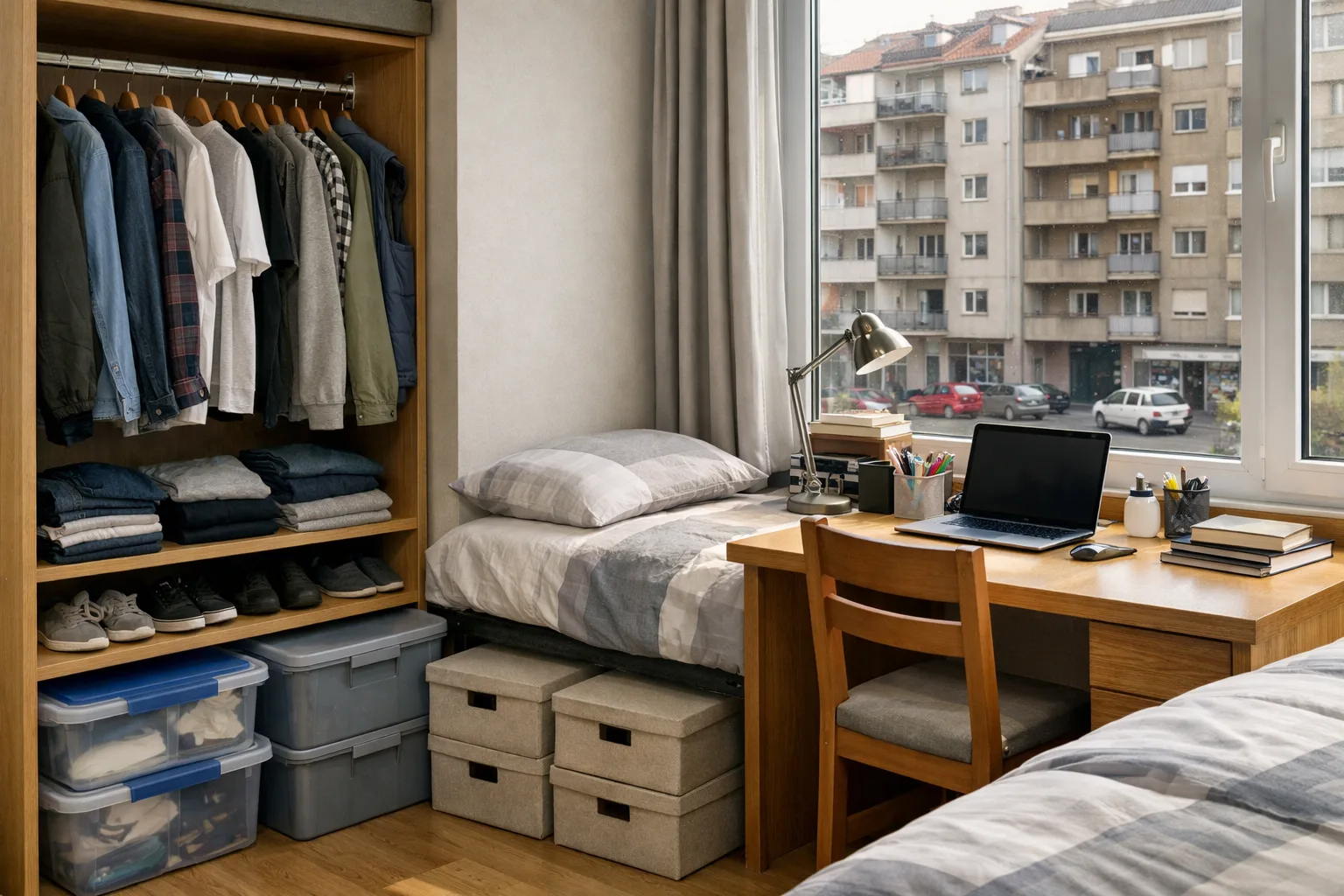
When you arrive at the dormitory, it’s important to start organizing the space immediately. Place labeled boxes in appropriate spots to avoid unnecessary moving later. First, arrange clothes in wardrobes or drawers, then organize school supplies and personal items. Plan the layout so that your most needed items are easily accessible.
Use vertical space and shelves for additional organization. Use storage boxes under the bed or hanging organizers for clothes and small items. This kind of organization helps keep the room tidy and functional, which is crucial for a successful student life. Also, consider multifunctional furniture that can serve for storage and save space.
Leave some space for personal items and decorations that will help you feel more comfortable and at home. A well-organized space contributes to productivity and a more relaxed learning environment. Include elements that help with time management, such as wall calendars or note boards.
Unpacking right after moving can be exhausting, but with a good plan, it can go smoothly without stress. Start unpacking the items you need most, like clothes and hygiene essentials, then move on to school supplies and other belongings. Organize unpacking by priorities and categories to avoid chaos. If you want the process to be even easier, you can hire professionals for moving packing who will help you pack and unpack quickly and safely.
Regularly maintaining tidiness in your room is crucial to prevent chaos. Develop the habit of putting things back in their place after each day and cleaning the space regularly. This will save you time and energy during exam periods. Also, conduct regular reviews of your belongings to discard unnecessary items and keep the space organized.
Use small boxes or organizers for small items, cables, and accessories to avoid losing things. Additionally, periodically review your belongings and get rid of what you no longer need, helping to keep the space tidy and functional. Consider digital solutions for organizing documents and notes, which can further simplify your student life.
Unexpected situations during a move to a student dormitory can include delays in room handover, damage to belongings, or lack of space for all your items. To better handle these issues, it is recommended to have a backup plan and extra bags or boxes for items you might not be able to store immediately. Also, consider storing certain items with friends or in storage if possible.
Be sure to have basic personal hygiene supplies and clothing for a few days on hand in case of delays in unpacking or accessing your room. This will allow you to feel comfortable while resolving unforeseen problems. Prepare a basic tool kit for minor repairs or adjustments in the room as well.
If you use a professional moving service, communicate clearly with them about all specifics and requirements. Good coordination and planning can significantly reduce stress and complications during the move. Also, keep emergency contact information handy and check if there is an option for moving with workers who can assist with carrying and arranging items during the move-in.

Reasons to Hire a Professional Moving Company

Moving with the Help of Friends or Professionals – Which to Choose?

5 Items Professional Moving Companies Will Not Transport
We will respond to you as soon as possible.
Below we answer the most common questions related to packing and preparing for a move to a student dormitory. These answers will help you avoid common mistakes and make your moving process easier.
It is recommended to start packing at least two weeks before the planned moving date. This will help you avoid rushing and allow you to organize your belongings by categories thoroughly.
Use vacuum bags for clothes that remove air and significantly reduce the volume of your wardrobe. Also, sort your clothes and pack only the pieces you plan to wear during your student life.
Most student dormitories have rules about allowed appliances, so it is important to check before moving. Usually, smaller appliances like electric kettles are allowed, while larger devices are often prohibited.
Use bubble wrap, newspapers, or special packing cushions for fragile items. Boxes should be sturdy and well sealed, with clear labels indicating fragility.
Before moving, sort your belongings and bring only what you really need. Use organizational boxes and utilize vertical space in the room for storage.
Start unpacking the most essential items such as clothes and hygiene products. Organize the space immediately and arrange items into functional zones, which will help keep the room tidy and comfortable.
For moving into a dormitory, it is often sufficient to pack your belongings yourself, as the volume is smaller. However, if you have heavier or larger items, professional assistance can ease the process and protect your belongings from damage.