Tips for Van Moves
Should you choose a van or a truck for your move?
Should you choose a van or a truck for your move?

Enter at least 3 characters.
When planning a move or transporting items by van, it is important to know which objects cannot fit into this type of vehicle due to their size, shape, or weight. In this guide, we will thoroughly explain the seven most common items that do not fit in a van and provide tips on how to prepare for their transport. This way, you will avoid unpleasant surprises and unnecessary costs. We will also offer practical advice on packing, protecting, and organizing space inside the van, as well as recommendations for alternative transportation methods when a van is insufficient. Additionally, we will explain how to properly measure the van's space and optimize the arrangement of items to maximize the available room. Special attention will be given to safety aspects of transport, including proper securing of cargo and protection of fragile items. Finally, we will provide tips for communicating with professional movers and choosing the appropriate vehicle depending on the type and quantity of items to be transported.
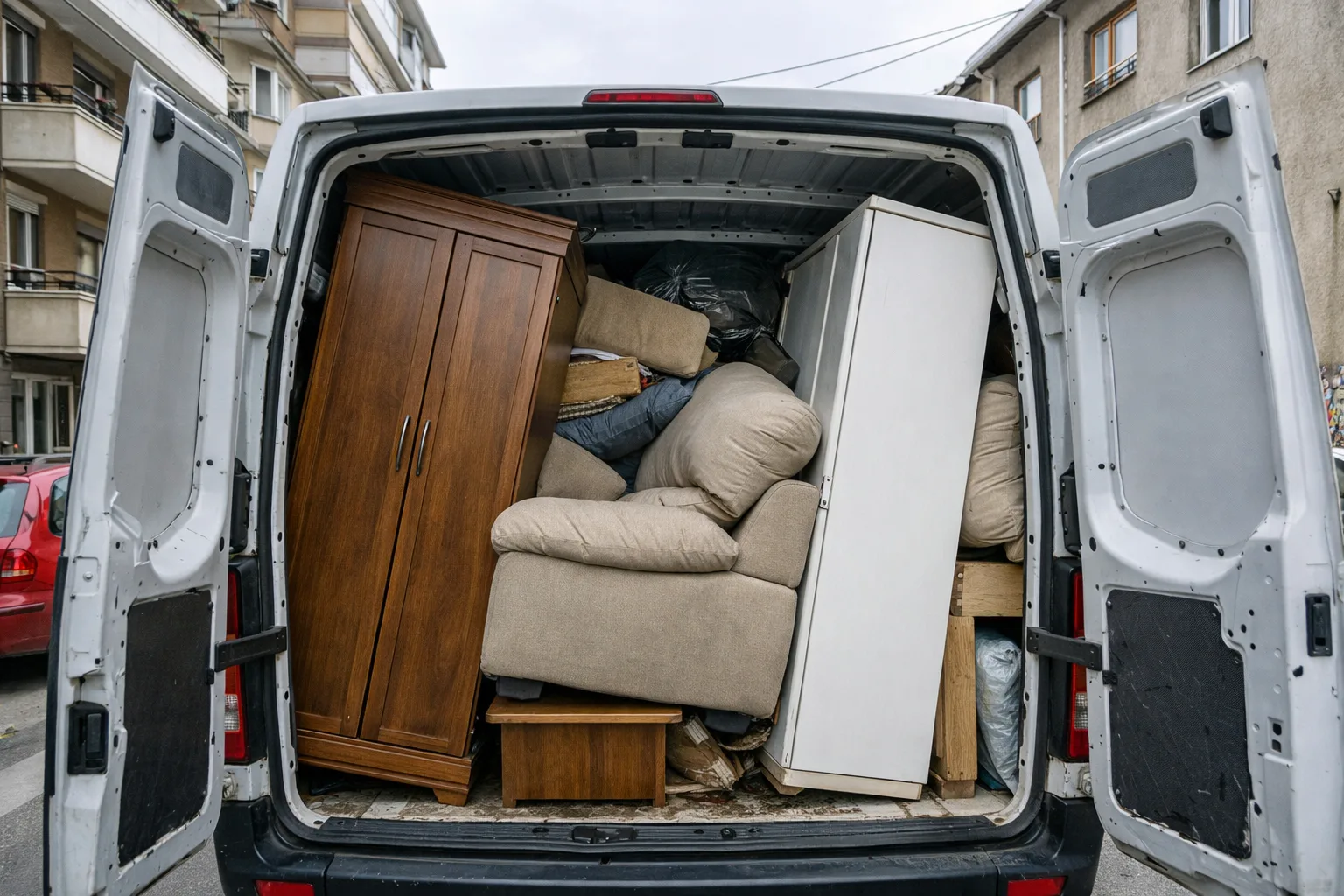
A van has limited cargo space dimensions, usually up to 3 meters in length, about 1.7 meters in width, and up to 1.8 meters in height. Furniture pieces such as sofas, large wardrobes, double beds, or massive dressers often cannot fit in a van due to their length or height. It is important to precisely measure each piece of furniture before moving and compare it with your van's interior dimensions to avoid difficulties during loading.
Such furniture requires either a professional moving truck or disassembly into smaller parts if possible. Before packing, it is important to measure the furniture dimensions and compare them with your van's dimensions to know if they will fit. If disassembly is possible, it is recommended to do it carefully and keep all parts and screws for reassembly.
Example: a large wooden wardrobe 2 meters high and 1.5 meters wide will not fit in a standard van due to height and volume, so a larger truck or specialized transport is needed. In such cases, hiring a professional moving service for special cargo can be the most efficient solution, as they have the experience and equipment to handle large furniture pieces.
A practical tip is to try to disassemble furniture into as small parts as possible before moving, removing drawers, shelves, and doors, as this can significantly reduce dimensions and facilitate transport. Also, be sure to protect furniture edges with protective films or blankets to prevent damage during loading and transit. Use straps or stretch wrap for additional stability and protection during transport.
Another useful tip is to place larger and heavier pieces at the bottom when packing furniture into the van, and lighter, more delicate items on top. Also, pay attention to evenly distributing weight to maintain vehicle stability during driving.
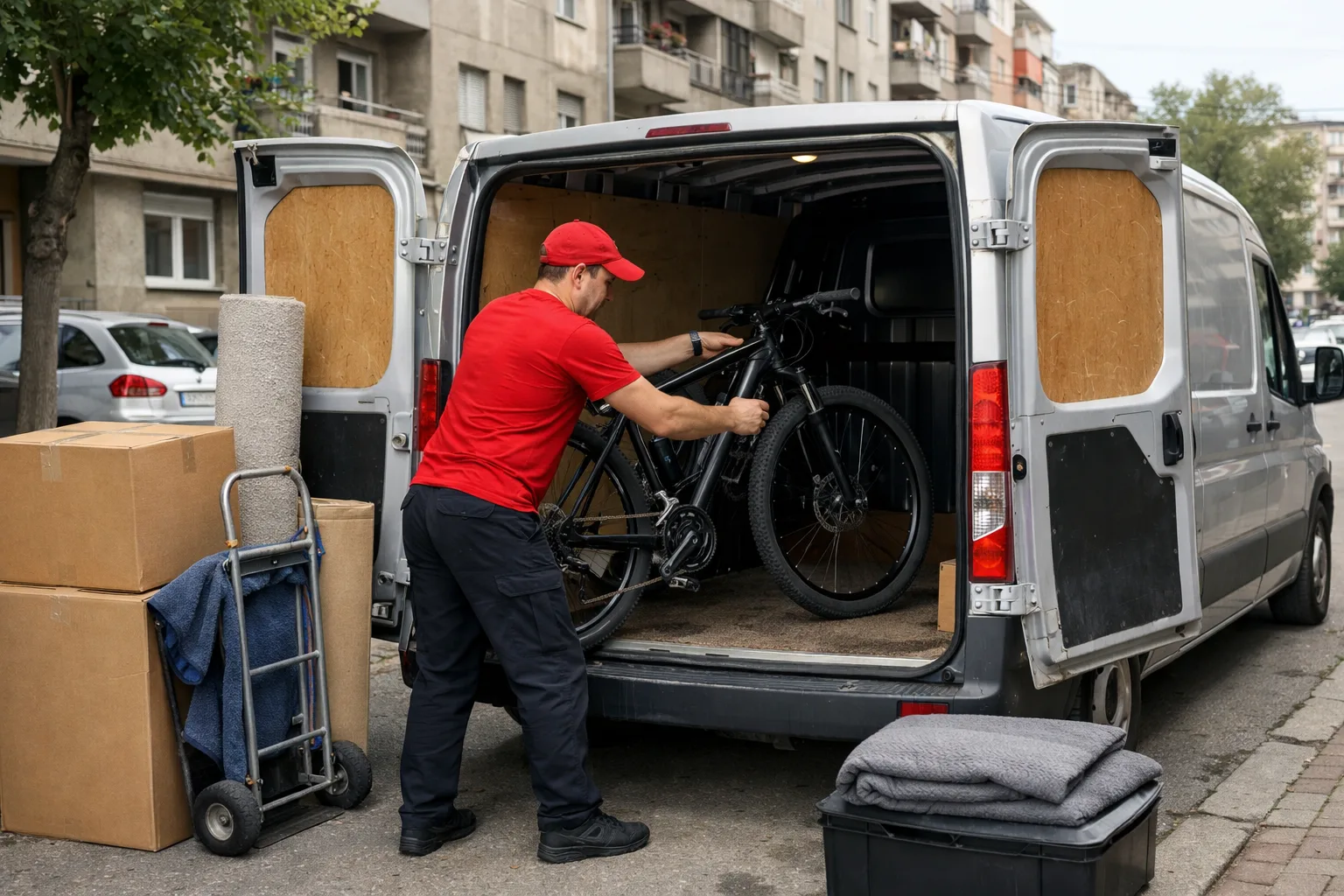
Bicycles take up a lot of space in the van, especially if they are not disassembled. A full wheel and handlebars increase the dimensions, which can make it difficult to pack multiple bicycles or additional equipment into the van. If you plan to transport several bicycles, it is important to plan the arrangement in advance to maximize space utilization.
Removing the wheels and seat significantly reduces the space bicycles occupy. For safe transport, it is recommended to use protective covers and position the bicycles so they do not get damaged during the ride. You can also use special racks or holders inside the van to stabilize the bicycles.
If you have multiple bicycles or additional equipment like bike racks, consider renting a larger vehicle or professional transport, as the van can quickly become overcrowded. In some cases, additional space on the vehicle's roof can be used for transporting bicycles, but it is essential to properly secure the equipment and check legal regulations regarding roof transport.
Before you start packing, clean the bicycles of mud and dirt to avoid dirtying the van's interior. Also, use straps or ties to secure the bicycles and prevent them from moving during the ride, which could cause damage. Regularly check the fastening during longer trips to avoid accidents.
Another practical tip is to protect sensitive parts of the bicycles, such as the gears and chain, with special covers or cloths. This will prevent damage and extend the lifespan of your equipment.
Tall and wide plants in larger pots often cannot fit into the van without risk of damage. Their irregular shape and height can be an obstacle when arranging items in the vehicle. Additionally, plants are sensitive to sudden movements and vibrations during transport, which can jeopardize their health.
It is best to transfer plants in smaller pots or temporarily transplant them into lighter containers. Also, they should be carefully placed so they are not exposed to strong wind gusts or vibrations during the ride. If transplanting is not possible, try to stabilize them inside the van using straps or boxes.
For tall plants that cannot fit into the van, it is recommended to transport them in the passenger compartment or hire specialized transport with more space. You can also consider transporting them in an open vehicle with appropriate protection from weather conditions.
When transporting plants, be sure to protect them from tipping over by securing them with straps or placing them in boxes that stabilize them. Also, avoid overwatering the plants before transport to prevent water leakage inside the van. It is recommended to water the plants a day before transport so the soil is moist but not soaked.
Another useful tip is to keep plants away from direct sources of heat or cold inside the vehicle during transport, as sudden temperature changes can negatively affect their condition.
Sports equipment like surfboards or sailboards are characterized by their length and inflexible shape, making them unsuitable for a standard van. They are often longer than the cargo space or too wide to fit. Therefore, it is important to plan the transport method in advance and secure appropriate equipment.
For transporting such equipment, roof racks on the car or specialized transport containers are usually used. The van is not designed for such items due to limited space and risk of damage. Using roof racks allows safe and practical transport but requires careful securing and adherence to prescribed weight limits.
If you have such equipment, plan ahead and secure appropriate gear for safe transport, as cramming them into the van can lead to breaks or scratches. Also, consider renting a vehicle with a larger cargo space or hiring professional carriers specialized in sports equipment.
When using roof racks, always check the vehicle roof's maximum load capacity and properly secure the boards with straps or special holders. Also, protect the edges of the boards with foam or rubber padding to prevent damage during the ride. Regularly check the fastening during the trip to avoid accidents.
Another tip is to, if possible, transport such equipment during periods of favorable weather conditions to reduce the risk of damage from rain or strong wind.
Large household appliances such as refrigerators, washing machines, or stoves are often too heavy and bulky for a van. Besides dimensions, the weight the vehicle can safely carry is also important. Overloading the vehicle can cause damage and compromise traffic safety.
Transporting such appliances requires careful loading and weight distribution in the vehicle to prevent damage or loss of stability during transit. Additionally, some appliances need extra protection to avoid damage. For example, refrigerators and washing machines should be kept upright during transport.
If your van lacks sufficient capacity, it is better to hire a truck or a larger capacity van, as well as a professional moving service experienced in handling such items. Professionals have the appropriate equipment such as transport dollies and securing straps, which facilitate loading and unloading.
When loading appliances, use dollies or lifting straps to avoid injuries and damage. Also, ensure that appliances are empty and unplugged, and that refrigerators and freezers are defrosted before transport. This will prevent water leakage and damage to the vehicle's interior.
Another useful tip is to protect appliances with suitable materials like blankets or bubble wrap to prevent scratches and impacts during transport. Also, be sure to secure the appliances inside the vehicle so they do not move during transit.
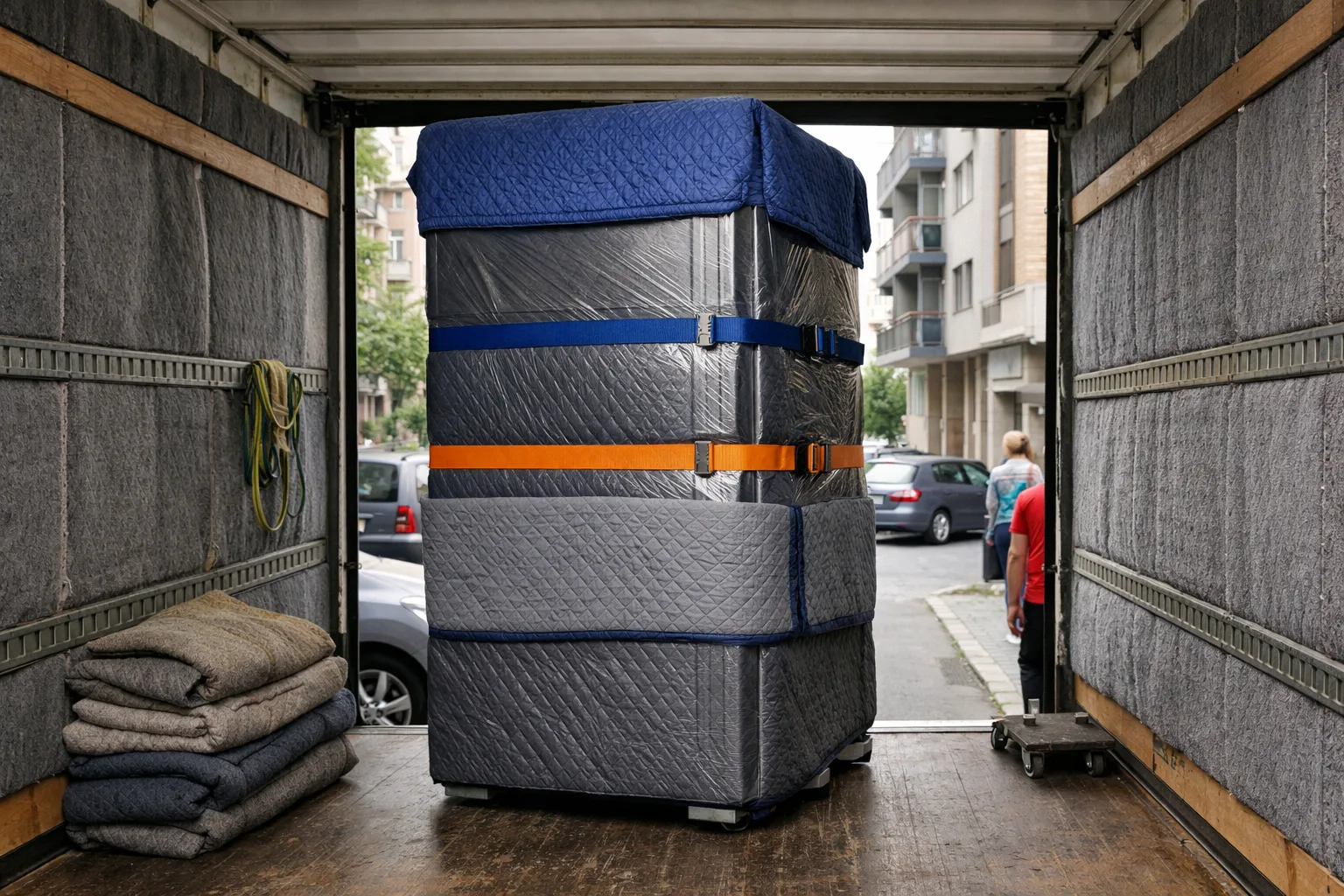
Boxes that are too tall, wide, or long can be problematic for loading into a van. A standard van has limited height and width, so some boxes won’t fit or will complicate stacking other items. Improperly stacked boxes can lead to content damage or issues during transit.
It is recommended to pack items in boxes no larger than approximately 60x40x40 cm to allow easy stacking and maximize space utilization. Larger items should be disassembled or repacked into smaller boxes. Also, box weight should be adjusted to facilitate carrying and stacking.
If you have large packages, consider alternative transport options or transporting those items separately to avoid damage or loading problems. In some cases, it is possible to use additional roof space or hire a larger vehicle.
Use quality boxes that can withstand the weight of the contents and clearly label them with contents and "fragile" or "this side up" markings. Also, utilize the space inside boxes smartly by filling gaps with old newspapers or bubble wrap. This will prevent items from shifting inside the box and getting damaged.
Another tip is to place heavier and larger boxes at the bottom when stacking in the van, and lighter and smaller ones on top. Also, pay attention to even weight distribution to maintain vehicle stability during transit.
Furniture with glass surfaces, foldable parts, or irregular shapes is difficult to fit into a van. Such pieces require careful packing and often specialized protection to prevent damage during transport. Planning and preparation are key for successful transport of such furniture.
Protective films, bubble wrap, and boxes for fragile parts are essential to prevent damage during transport. Also, irregular shapes complicate stacking and space utilization in the van, so careful packing arrangement is important.
In some cases, such parts may need to be transported separately or carried by hand to avoid breaks and scratches. Professional moving services often have experience and equipment for handling such items, so their assistance is recommended.
When packing glass or fragile parts, use thick wrap and cardboard corners for extra protection. Also, label packages as "fragile" and inform the driver about careful handling to reduce the risk of damage during transport.
Another tip is to leave enough space between pieces when loading such furniture into the van to avoid collisions. Use cushions, blankets, or foam materials for additional shock absorption.
Equipment like skis, snowboards, metal frames, or construction tools often take up a lot of space and have specific shapes that do not fit easily into a van. Therefore, it is important to measure dimensions in advance and plan the transport method.
For such items, it is recommended to use roof racks or special transport boxes that protect the equipment and allow safe transport without compromising interior vehicle space. Roof racks are especially useful for long and thin items like skis or boards.
If you are planning a move or transportation of such equipment, measure the dimensions in advance and consider whether a van is the right choice or if a larger vehicle or additional transport space is needed. Professional movers can offer specialized vehicles tailored for such items.
For metal structures and tools, be sure to secure them with straps or in specialized boxes to prevent shifting and damage during transit. Also, regularly check the bindings during longer trips to ensure the safety of the cargo.
Another useful tip is to use protective covers or wraps when packing such equipment to prevent scratches and damage. Additionally, label boxes or equipment with warnings about weight or fragility to facilitate handling during loading and unloading.
Should you choose a van or a truck for your move?
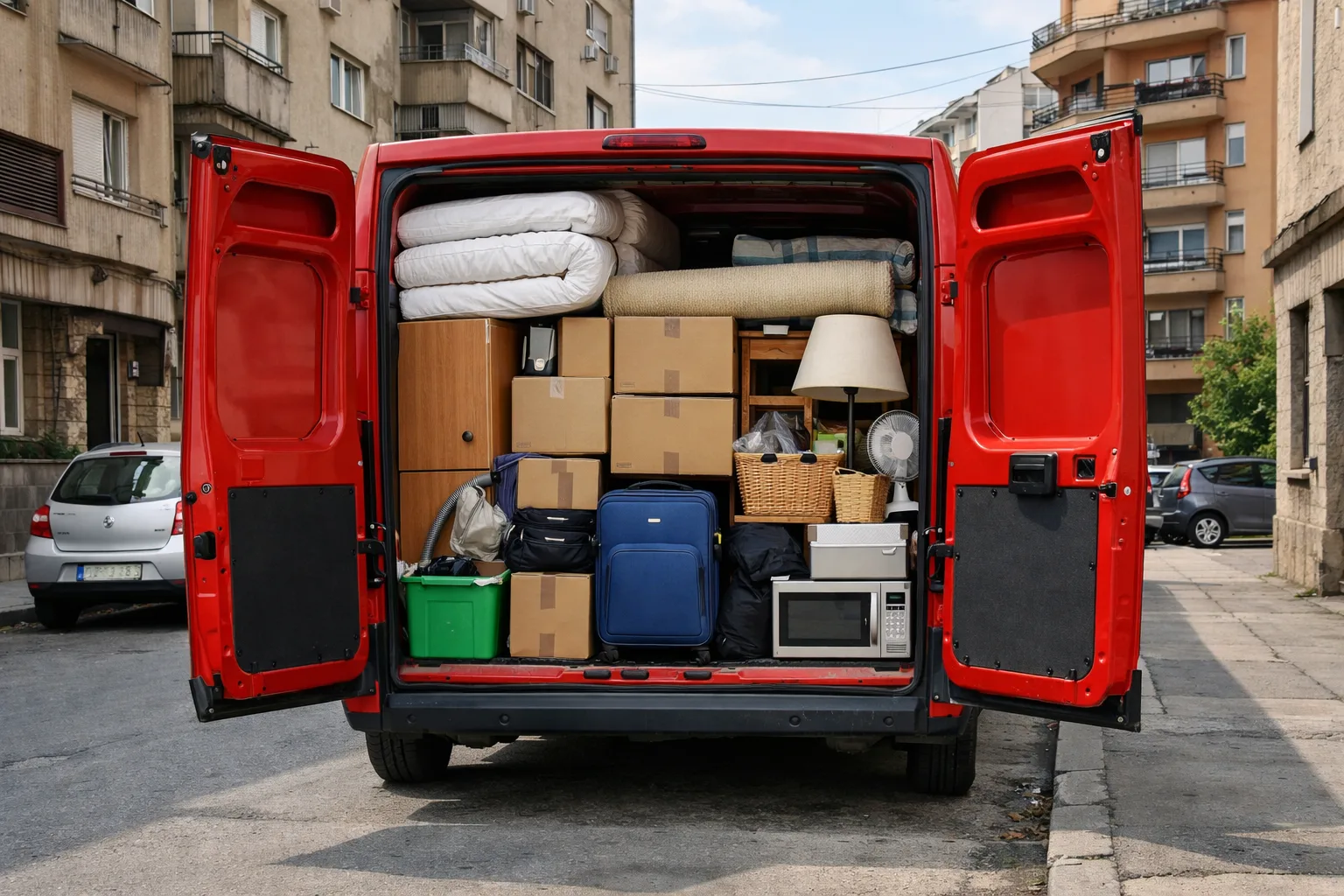

How to find fast and quality intercity van transport for your belongings?

Advantages of using van transport for items throughout Serbia
We will respond to you as soon as possible.
Below we answer the most common questions related to transporting items that cannot fit in a van, so you can be better prepared for your move or transport.
The best way is to measure the dimensions of the furniture (length, width, and height) and compare them with the internal dimensions of the van. Also, consider whether the pieces can be disassembled or arranged differently to take up less space.
If the plants cannot fit in the van, try repotting them into smaller pots or transport them in the passenger area of the vehicle where there is more space and better conditions for the plants. Alternatively, you can hire specialized transport with larger capacity.
Yes, provided you use appropriate roof racks and straps that are strong and secure. Also, be sure to protect the boards with foil or covers to avoid damage and reduce wind resistance during driving.
Use bubble wrap, special boxes for glass and delicate parts, as well as cushions or blankets for additional protection. Also, position them properly in the van to prevent movement during transit.
Try repacking items into smaller boxes that stack more easily. If that’s not possible, consider hiring a larger vehicle or splitting the transport into multiple trips to avoid damage or loading issues.