
Reasons to Hire a Professional Moving Agency
Reasons to Hire a Professional Moving Company

Enter at least 3 characters.
Moving during the winter months presents additional challenges, especially when dealing with snow and icy surfaces. Planning and proper preparation are key to a safe and efficient move in snowy conditions. In this guide, we will provide you with detailed advice and guidelines on how to avoid inconveniences and protect your belongings, as well as yourself, from potential hazards during a winter move. Additionally, we will focus on practical steps you can take to reduce stress and increase the efficiency of the entire process, from vehicle preparation to post-move activities. Understanding the specifics of winter conditions will help you organize better and avoid common mistakes that can lead to damage or injuries.
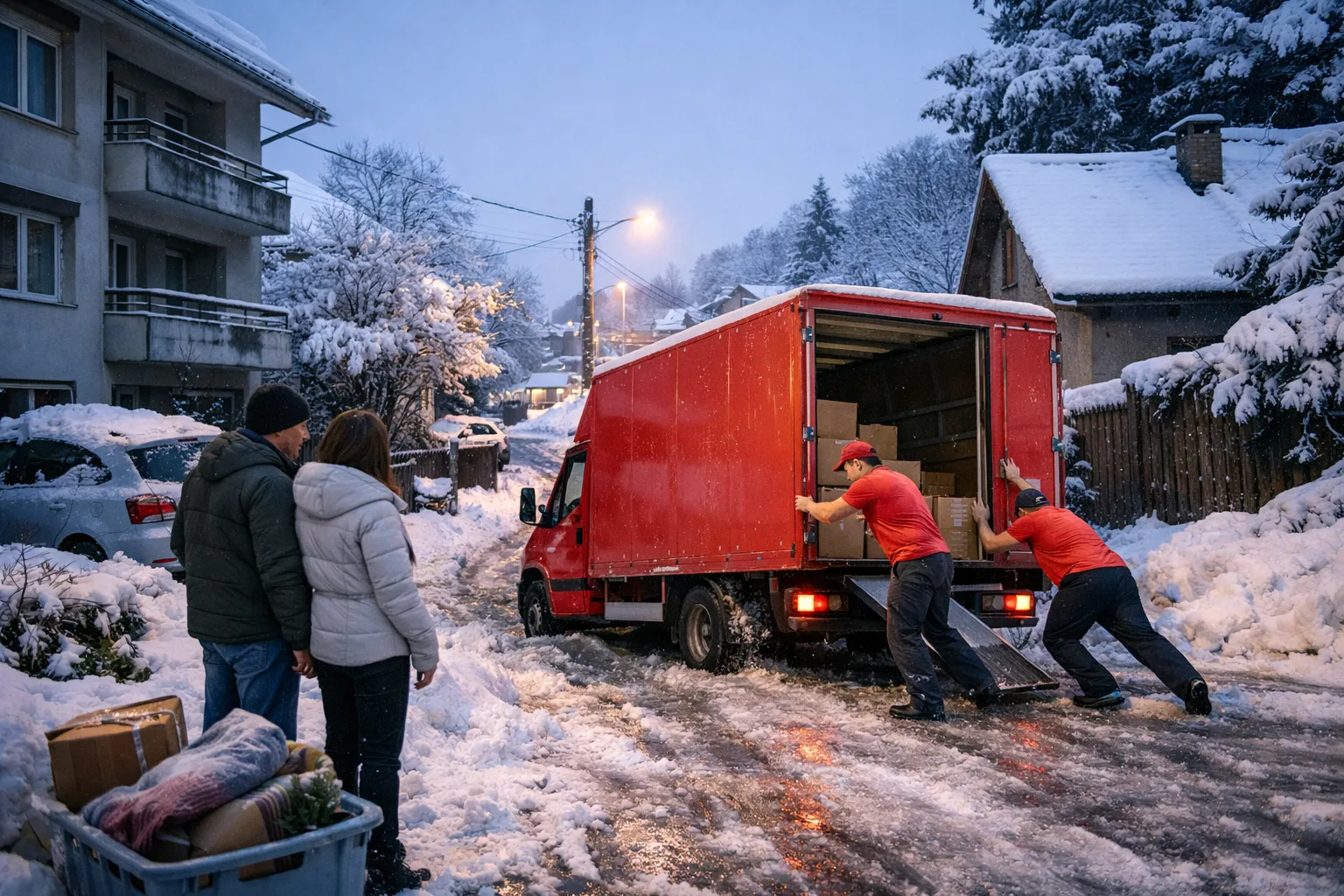
Before you start moving, it is important that the vehicle you use is ready for driving on snow and ice. Check the condition of the tires, as winter tires with adequate tread depth significantly improve grip and safety on slippery surfaces. Also, keep in mind that carrying tire chains is advisable as an additional safety measure in heavy snow conditions. Regularly check tire pressure, as low pressure can further reduce vehicle stability on ice.
Besides the tires, check the brakes, lighting signals, and windshield wipers. In winter conditions, visibility can be reduced, so it is crucial that all systems function flawlessly. Also, be sure to bring a snow shovel and grit (salt or sand) for added safety when moving and parking the vehicle. Don’t forget to have a basic first aid kit in the vehicle, as well as extra batteries for your mobile phone in case of emergency.
Remember to adjust your driving speed and handling according to road conditions. Driving on snow requires increased attention and slower speeds to avoid slipping and possible accidents. Plan your route in advance and check the weather conditions before departure. Also, avoid sudden braking and sharp turns, and if possible, use lower gears and manual transmission control for better vehicle handling in winter conditions.
During a move in snow, moisture can easily damage furniture and other items. Therefore, it is important to properly protect everything you carry. Use waterproof wraps or plastic covers for furniture to prevent moisture and cold penetration. Additionally, wrap furniture with old blankets or cushions that can serve as insulation and protection against impacts during transport.
Besides external protection, pay attention to packing internal items. Wrap delicate items in thermal insulation material or thicker paper to prevent damage from low temperatures. For example, glass and ceramic items should be additionally wrapped with soft materials like cotton fabrics. We recommend using professional moving packing for such situations, as experts know how to properly protect even the most sensitive items. Use boxes with dividers or extra protective layers to prevent shifting and breakage during carrying and transport.
Also, ensure that boxes are tightly closed and labeled as fragile. If you use cardboard boxes for packing, make sure they are not exposed to direct contact with snow or ice while outside. Consider using plastic boxes with lids for additional moisture protection, especially for items that are particularly sensitive or valuable.
It is best to plan a move over snow for the part of the day when weather conditions are most favorable, usually midday when the temperature is not the lowest and the snow is most stable. Avoid night moves or those during heavy snowfall. Also, monitor the weather forecast several days in advance so you can adjust plans according to changes.
Schedule activities so you have enough time for rest and warming up, as working in the cold can be exhausting. Taking breaks is important to prevent risks of frostbite and injuries. Organize the team so members alternate activities, reducing exposure to the cold and increasing productivity.
Also, prepare a plan B in case of sudden weather changes. Stay informed about the forecast and have additional equipment ready for quick response, such as extra clothing, hand and foot warmers, or backup heat sources. Include contacts for local emergency services and inform friends or family about the planned move and expected completion time.
Slippery surfaces pose a serious risk during a move. Wear footwear with non-slip soles or add-ons like special shoe grips that improve stability on ice. Also, ensure the footwear fits well and is comfortable to avoid foot injuries or falls.
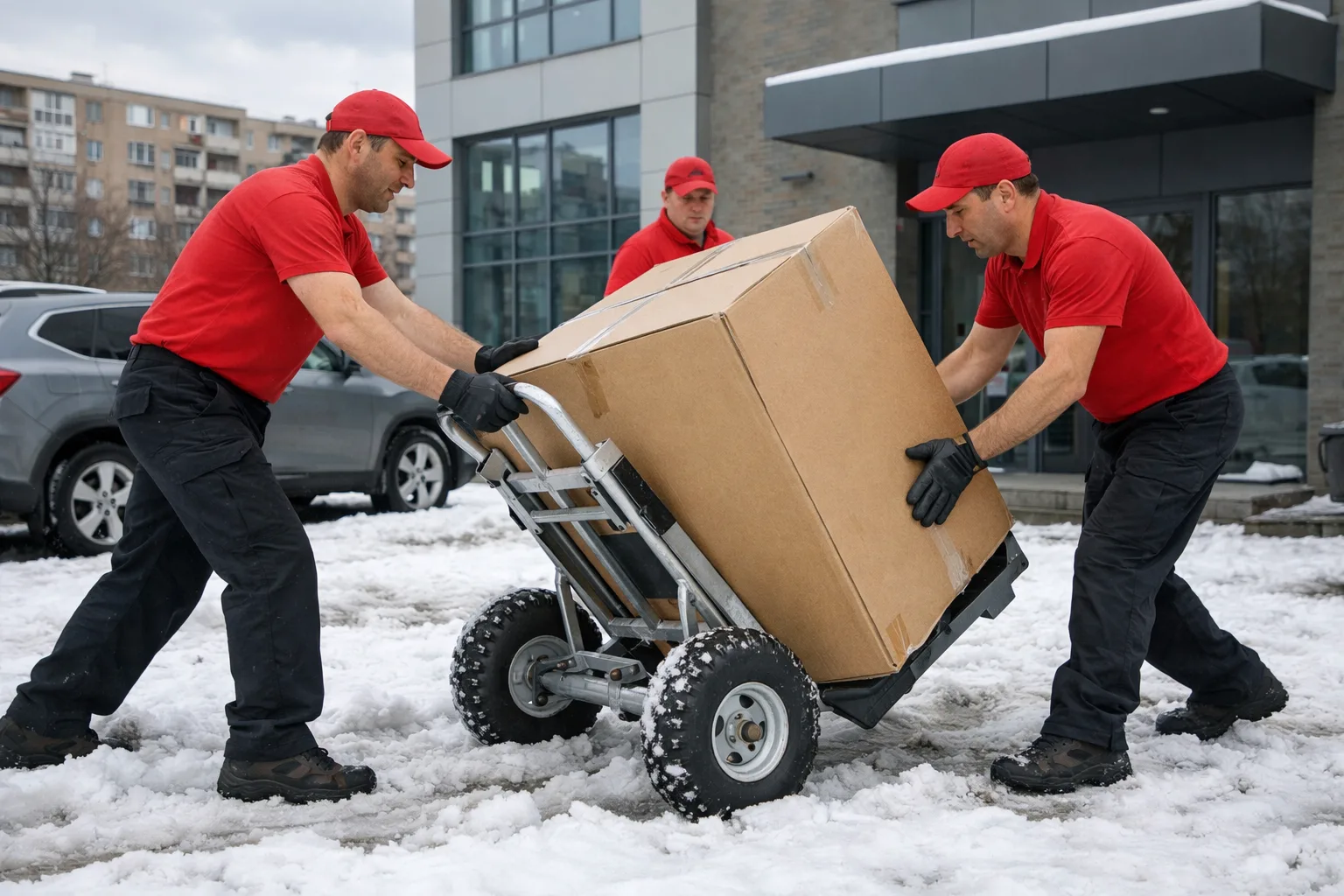
When carrying heavy items, use support straps or carts with pneumatic wheels adapted for snowy conditions. This reduces the risk of falling and makes transporting items easier. If using carts, check that the wheels are free of ice and snow to avoid sticking or slipping. If you want to avoid risk and effort, hire moves with workers trained for safe item transport in winter conditions.
Pay attention to carrying technique: keep the load close to your body and use your legs to lift instead of your back. If necessary, work in pairs to ensure better control and balance on slippery surfaces. Also, avoid sudden movements and try to walk slowly and steadily, watching each step to reduce the risk of falling.
Proper clothing is key for protection during a move in the snow. Wear layered clothing that provides good insulation and breathability. Don’t forget thermal underwear and warm, waterproof outerwear. Choose materials that quickly absorb moisture and dry to avoid cold caused by sweating.
Hands and head are especially sensitive to cold, so use warm gloves and a hat or a red cap if you are part of the moving team. Also, warm, non-slip boots that protect feet from cold and moisture are mandatory. Consider using thermal insoles in footwear for extra insulation and comfort during prolonged exposure to cold.
Pay attention to nutrition and fluid intake. Warm drinks and energy-rich food help the body cope better with the cold. Also, avoid alcohol as it can worsen body temperature loss. Take regular breaks in a warm place to warm up and reduce the risk of hypothermia or frostbite.

Before the moving vehicle arrives, clear snow and ice from the access and loading areas to ensure safety and work efficiency. Spread salt or sand on slippery parts to reduce the risk of falls. Regularly check the condition of surfaces during the move and add grit or clear new snow as needed.
If possible, provide a covered area for temporary storage of items. This will help prevent items from being exposed to additional snow and moisture during the moving process. Consider using tarps or temporary shelters that can protect belongings from adverse weather conditions.
Also, check that all passages and doors are properly thawed and functional. Frozen locks or hinges can slow down work and cause additional complications. Use de-icing agents and regularly check door mechanisms to avoid delays during the move.
Clear and timely communication with the moving team is crucial for a successful move over snow. Agree on the exact arrival time, responsibilities, and work schedule to avoid delays and misunderstandings. Use mobile phones or radios for quick and efficient communication during the moving process.
Pay attention to the safety instructions and recommendations provided by professionals, especially regarding movement on snow and ice. Hire a team experienced in working under winter conditions. Organize brief meetings before starting work to familiarize everyone with the plan and potential risks.
Regularly check the condition of equipment and the premises during the move to respond quickly if there are changes on site or unexpected obstacles. Ensure all team members are familiar with emergency procedures and know how to act in case of an accident.
After completing the move, be sure to dry all furniture and items exposed to moisture. Use dry towels and ventilate rooms to prevent mold and unpleasant odors. If possible, use dehumidifiers or heaters to speed up the drying process.
Check that all electrical devices and installations are safe and functional. If damage has occurred due to cold or moisture, immediately call a repair specialist. Also, inspect cables and outlets to avoid potential risks of short circuits or fire.
Finally, clear snow and ice from around the house or apartment, especially entrances and pathways, to ensure safety for all household members and guests. Regular maintenance of these surfaces during winter months reduces the risk of falls and allows easier access to the property.

Reasons to Hire a Professional Moving Company

Moving with the Help of Friends or Professionals – Which to Choose?

5 Items Professional Moving Companies Will Not Transport
We will respond to you as soon as possible.
Below we answer the most common concerns that arise when organizing and executing a move in winter conditions with snow.
The most important thing is to use winter tires with good tread depth and, if necessary, tire chains. Before departure, be sure to check brakes, lights, wipers, and windshield washer fluid. Drive slower and carefully, adapting to road conditions.
Use waterproof films or plastic covers to protect furniture and larger items. Wrap delicate items in thermal insulation material or thicker paper, and keep boxes in dry places, avoiding direct contact with snow.
Wear shoes with non-slip soles or use footwear attachments designed for snow and ice. Carry loads close to your body, use support straps or carts, and ask for help from another person if needed to maintain balance.
It is best to plan the move for midday when temperatures are slightly higher and the snow cover is more stable. Avoid nighttime hours and heavy snowfall to reduce the risk of accidents and difficult working conditions.
Wear layered thermal clothing, a warm and waterproof outer jacket, thermal gloves, and a hat or red cap for team members. Footwear should be warm with non-slip soles to prevent injuries and frostbite.
Prepare de-icing agents for locks or doors, such as special sprays or heat from a hairdryer. If the problem is serious, contact a specialist to prevent damage and ensure safe passage.
After moving, dry all items that were exposed to moisture, regularly ventilate the rooms, and check electrical appliances. If you notice any damage, act immediately to prevent further issues.