Tips for Van Moves
Should you choose a van or a truck for your move?
Should you choose a van or a truck for your move?

Enter at least 3 characters.
International moves are a complex process that requires careful planning and organization, especially when it comes to transporting belongings. Vans are one of the most common and practical choices for transporting various items due to their flexibility and availability. In this guide, we will thoroughly present seven types of items that people most often transport by van when moving abroad, along with practical tips to ensure your transport goes smoothly and protects your property. In addition to basic information, we will provide concrete recommendations for packing, organizing, and safe transport to help you avoid common mistakes and stress during your move.
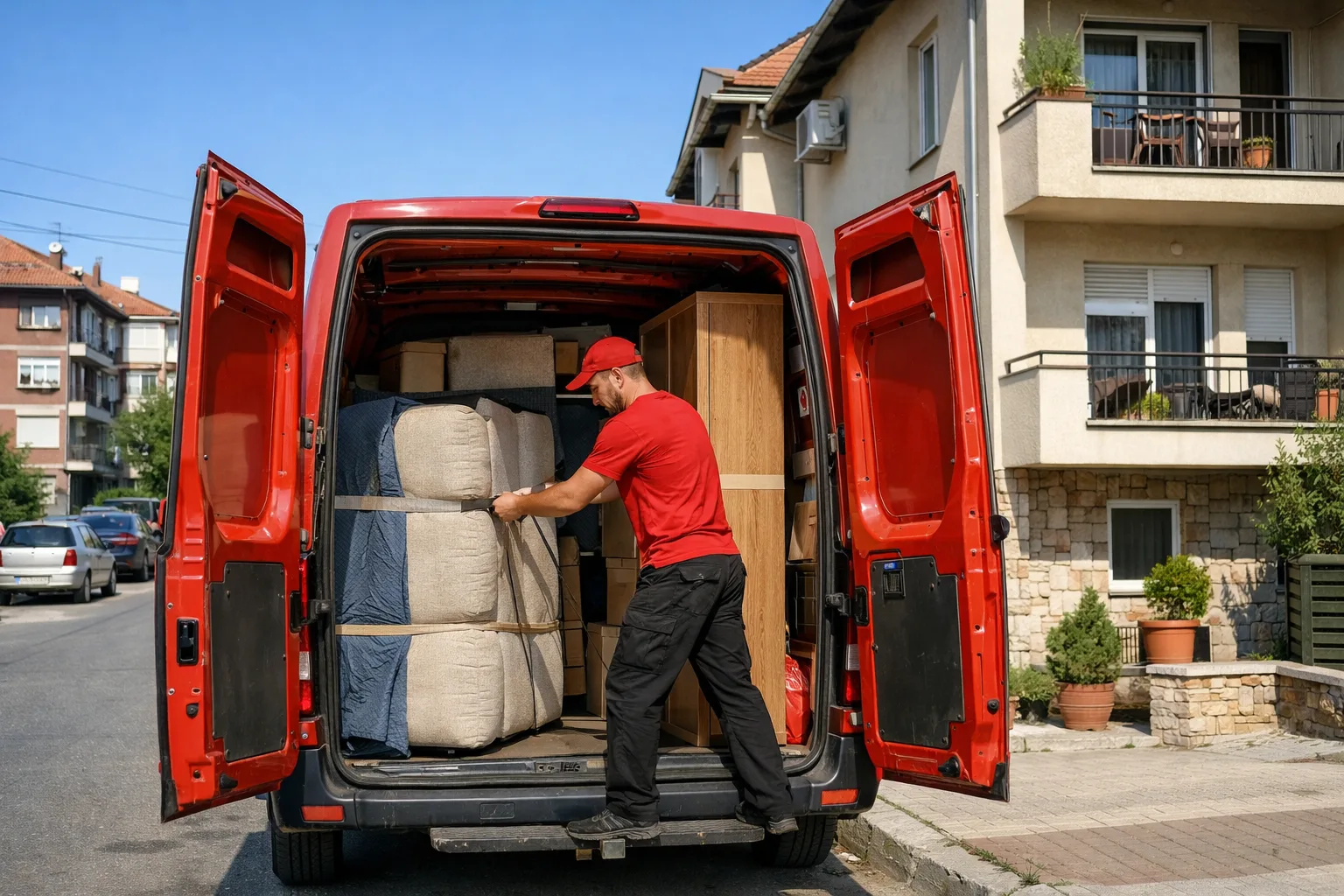
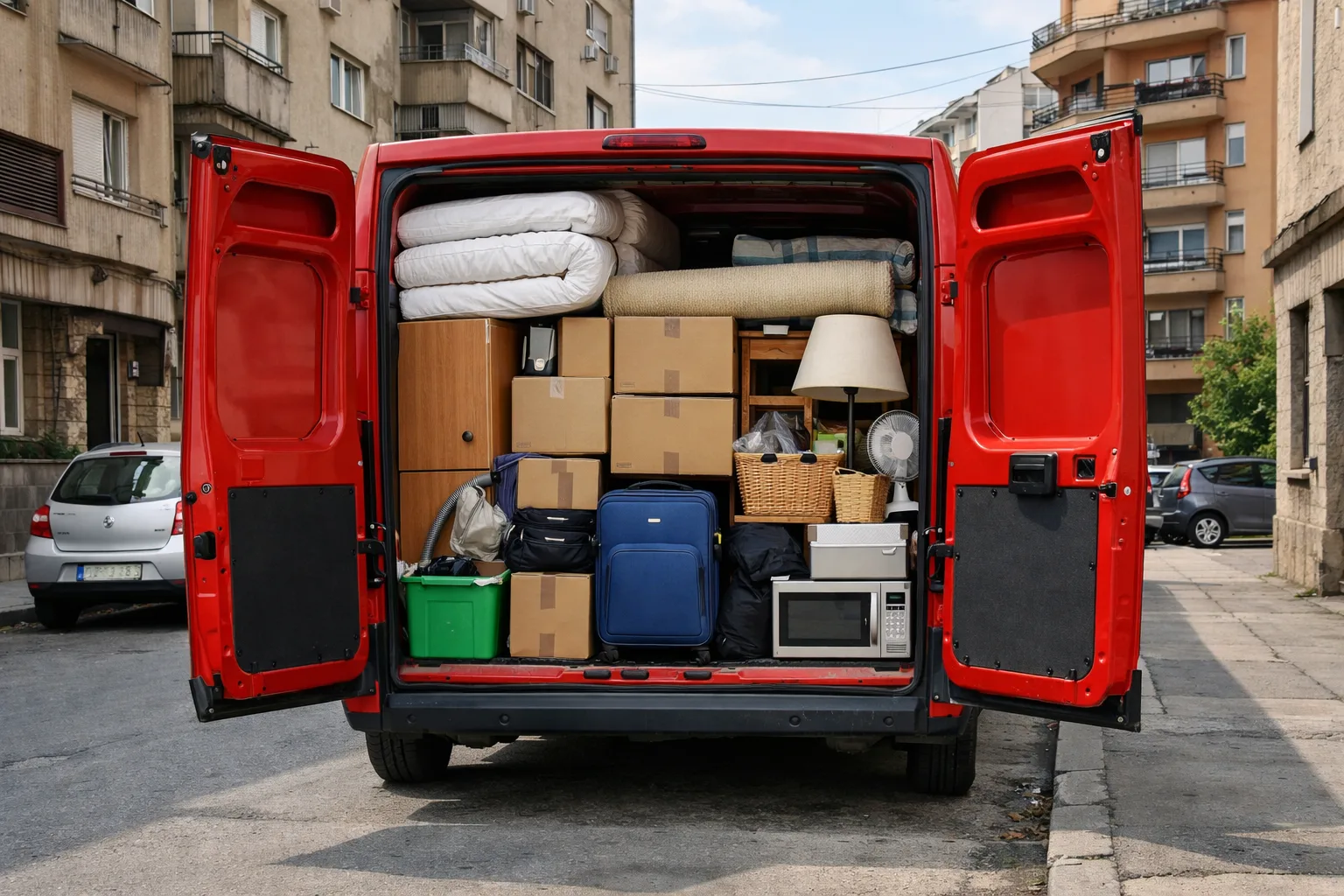
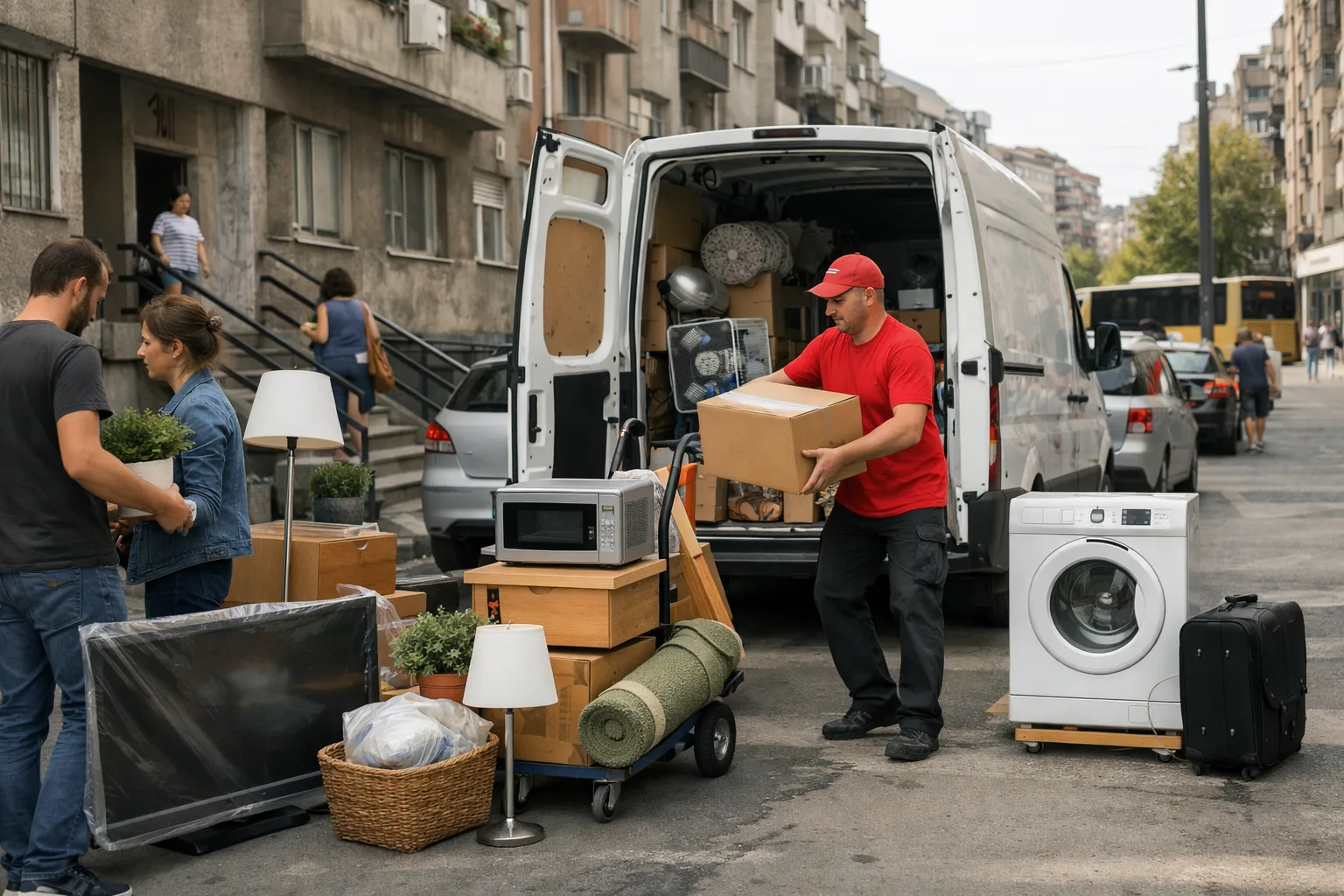
One of the most common loads transported by van during international moves is furniture and household appliances. People often decide to bring their favorite pieces of furniture, especially if they are quality or have sentimental value. A van is ideal for transporting items such as tables, chairs, wardrobes, as well as appliances like refrigerators, washing machines, and televisions.
When preparing furniture for transport, it is important to disassemble larger pieces to save space and reduce the risk of damage. Use protective films, blankets, and cardboard corners for additional protection of edges and surfaces. Household appliances should be completely emptied and cleaned, with cables and parts packed in separate bags attached to the device.
For loading into the van, place heavier and larger furniture pieces on the bottom and closer to the driver's cabin, while lighter items should be arranged on top. Secure the load with straps and nets to prevent shifting during the drive. Also, check the van's load capacity and avoid overloading the vehicle.
If you are transporting fragile household appliances, consider additional insurance or hiring professional moving services experienced in handling such loads, such as international moves.
Packing and transporting boxes with personal belongings is the next step in the moving process. These boxes contain clothing, footwear, household textiles, books, and other essentials for daily life. When transporting by van, it is important that boxes are securely closed and labeled to facilitate unloading and arrangement in the new home. It is also recommended to place heavier boxes at the bottom and lighter ones on top.
For efficient packing, use boxes of various sizes and avoid overfilling to prevent breakage or deformation. Use paper or bubble wrap for additional protection of fragile items inside the boxes.
Labeling boxes should be clear and detailed: indicate the contents and the room the box belongs to. This will help you organize your belongings in the new apartment and speed up unpacking.
When loading boxes into the van, leave aisles for easy access and arrange the cargo so that the weight is evenly distributed. If you have boxes with valuable or fragile items, consider transporting them in a separate, secure bag or even as personal luggage.
Also, keep basic essentials for the first night in your new home at hand, such as clothing, hygiene products, and basic kitchen utensils, so you can easily find them without having to unpack all the boxes immediately.
Electronic equipment such as computers, laptops, televisions, audio systems, and household appliances are sensitive items often transported by van. To protect them, it is crucial to use quality packaging, such as special boxes with foam padding or bubble wrap. Additionally, devices should be properly arranged in the van to prevent shifting and impacts during transit. For extra security and expertise, it is recommended to hire van moving services experienced in transporting sensitive electronics.
Before packing, make backup copies of important data from computers and other devices to avoid data loss in case of damage.
Turn off all devices and remove batteries if possible to prevent leakage or damage during transport.
Use original boxes if you have them, as they are designed for optimal device protection. If not, obtain specialized boxes for electronics or use sturdy cardboard boxes with additional protective layers.
When loading into the van, place electronic equipment where it will not be subjected to pressure from other heavy items. Ideally, they should be positioned on top or in a separate section of the vehicle, with enough space around them.
Avoid moisture and extreme temperatures during transport, as they can damage electronic components. If possible, the van should be enclosed and protected from weather conditions.
Finally, label boxes containing electronic equipment as "fragile" and "handle with care" so that everyone involved in the move is aware of the contents' sensitivity.
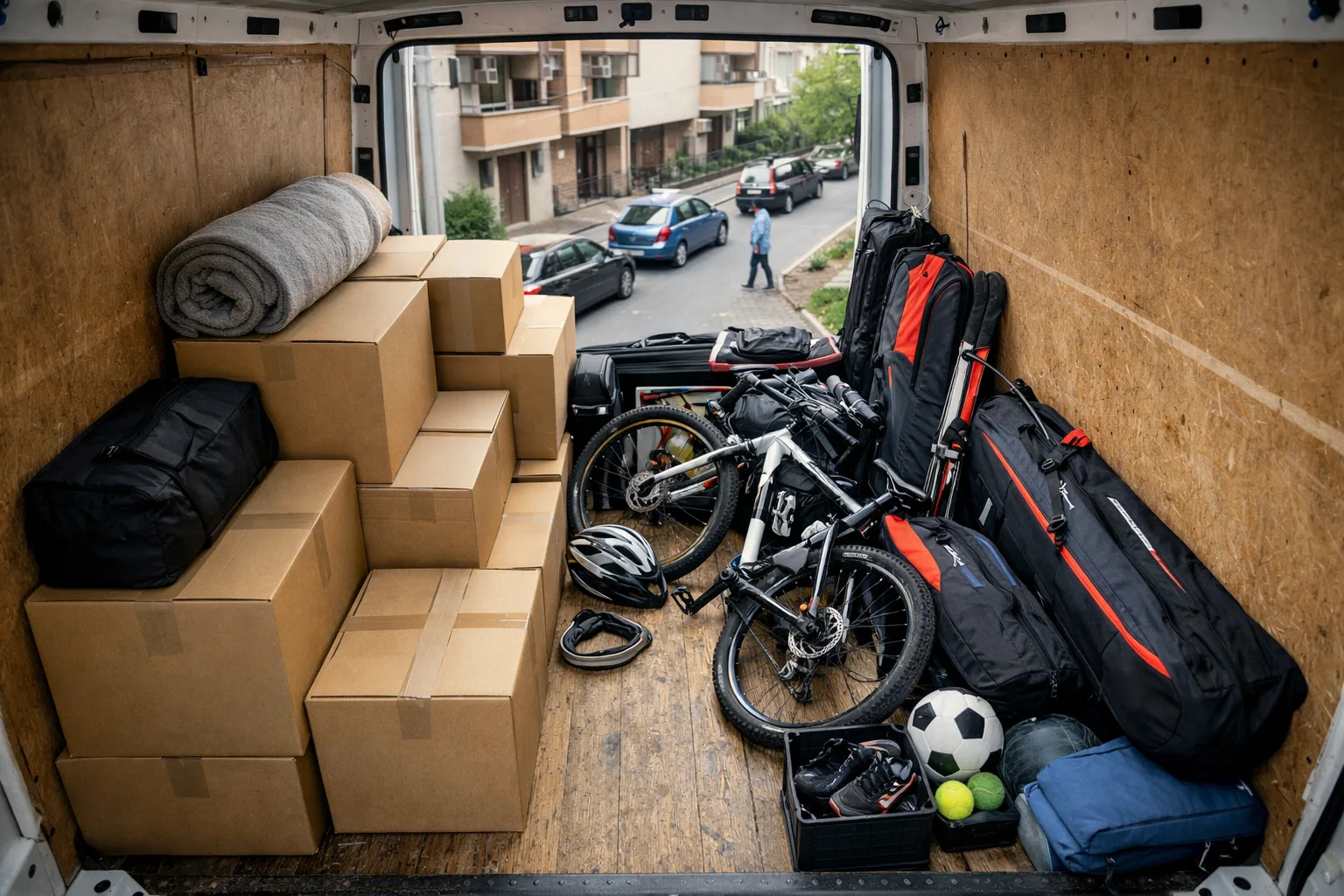
An increasing number of people transport bicycles and sports equipment during international moves. A van provides enough space and security for transporting these items, but it is important that the equipment is properly secured and protected. Bicycles are usually disassembled to take up less space, while sports equipment such as skis, rowing boards, or golf clubs are placed in special bags or cases for added protection.
Before disassembling the bicycle, take photos to help reassemble the parts after the move. Remove wheels, pedals, and the seat, and pack them in labeled boxes or bags.
Use protective covers for chains and sensitive bicycle parts to prevent damage and dirt during transport.
Sports equipment should be clean and dry before packing to avoid moisture buildup and unpleasant odors.
For larger items like rowing boards or skis, use specialized cases that protect against scratches and impacts.
When loading, secure bicycles and sports equipment with straps or nets to keep them stable during transit. Position them so they do not press against other items and are easily accessible for unloading.
If transporting expensive or specialized sports gear, consider additional insurance or hiring professionals for transport, such as international moving services.
Transporting plants by van can be challenging due to their sensitivity to temperature changes and shocks. If your move includes transporting plants, it is recommended to pack them in boxes with enough space for air circulation and to adjust the van conditions accordingly, for example, ensuring it is neither too cold nor too hot. Additionally, it is important to check the customs regulations of the destination country, as some plants may require special permits or be prohibited from import.
Prepare the plants by watering them the day before the move, but avoid overwatering immediately before transport to prevent soil or water spillage.
Use plastic or cardboard boxes with ventilation holes and line them with paper or fabric to prevent the plants from shifting during the drive.
For larger plants, protect branches and leaves by wrapping them with soft materials or breathable foil.
During the drive, the van should be ventilated and protected from direct sunlight or cold. If possible, avoid long stops in places with extreme weather conditions.
Inform yourself about the specific requirements of the plants you are transporting, as some species may be sensitive to transport or require special conditions.
At customs, prepare documentation about the plant species and permits if needed to avoid delays or issues when crossing the border.
Although pets are usually transported under special conditions, their equipment such as cages, carriers, food, and toys is often transported by van. Specialized services are typically hired for transporting the animals themselves, but if the equipment is transported by van, it must be neatly packed and easily accessible during the trip. This facilitates pet care upon arrival at the new location.
Prepare the equipment so that it is organized in clearly labeled boxes or bags, with essential care and feeding supplies on top or in easily reachable places.
Check the expiration dates of food and ensure sufficient supplies for the journey and the first days after arrival.
If traveling with pets, plan regular breaks for walking and resting, and keep the equipment in a place where it is easy to reach.
For transporting the animals themselves, consult with a veterinarian and specialized carriers about necessary conditions, vaccinations, and documentation.
If the van is not air-conditioned, pay attention to temperature and ventilation, as pets and their equipment require appropriate conditions to remain safe and healthy.
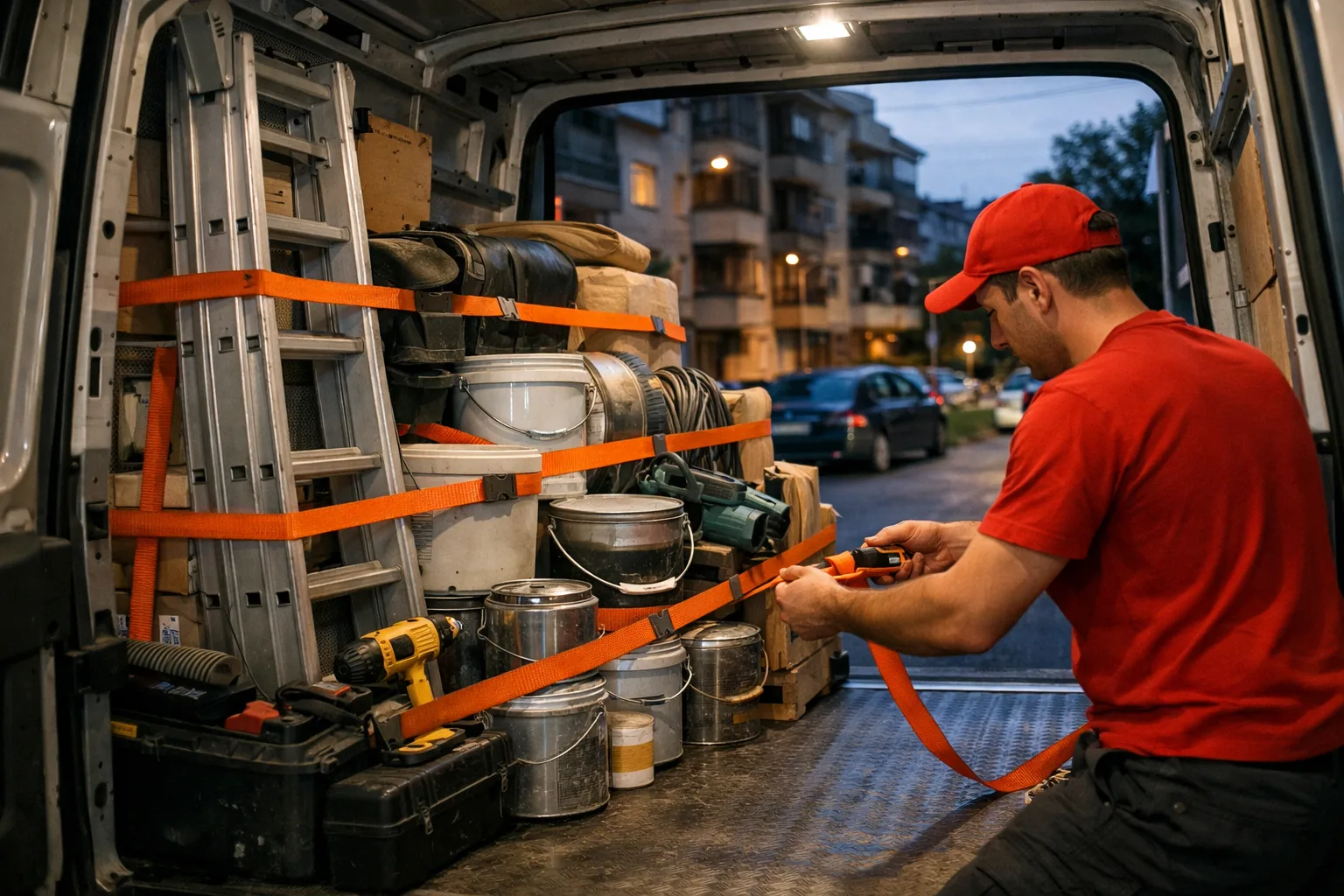
Some people transport construction materials and tools needed for renovations or small jobs in the new home by van. This includes items like paints, brushes, drills, ladders, and lumber. Due to the weight and shape of these items, it is important that they are securely fastened and properly arranged to prevent damage to them or other items in the van.
When packing tools, use boxes with compartments or specialized bags that allow organization and protection of sharp and heavy items.
Pack paint and other chemicals in leak-proof boxes and make sure they are tightly sealed to prevent spills during transport.
Place heavier items such as ladders and lumber at the bottom of the van and secure them with straps or nets.
Arrange tools and smaller items so they are easily accessible, especially if you plan to use them immediately upon arrival.
Ensure proper load balancing to avoid compromising the vehicle's stability during transit.
If you are transporting hazardous materials, such as paints or solvents, familiarize yourself with the regulations of the destination country and the requirements related to their transport.
Transporting food and drinks by van during international moves requires special attention to prevent spoilage and damage. Dry goods and canned food can be easily packed and transported, while fresh food is more complicated due to temperature requirements and customs regulations. If transporting food is necessary, it is recommended to use coolers and keep the transport time as short as possible, as well as to inform yourself in advance about the destination country's regulations.
Pack food in sturdy boxes or plastic containers that close securely and protect against moisture and dirt.
Use special holders or boxes for drinks to prevent bottles from breaking or spilling.
Transport fresh food, such as fruits, vegetables, or meat, in coolers or wheeled refrigerators whenever possible.
Avoid transporting perishable foods over long distances unless you have adequate cooling conditions throughout the journey.
Inform yourself about the customs regulations of the destination country, as some types of food and drinks may be prohibited or require special permits.
Label boxes containing food so you can easily find and use them in time, preventing spoilage and waste.
Should you choose a van or a truck for your move?

How to find fast and quality intercity van transport for your belongings?
Advantages of using van transport for items throughout Serbia
We will respond to you as soon as possible.
Below we answer the most common questions related to transporting various items by van during international moves. These tips will help you avoid common problems and simplify the entire process.
Furniture should be well wrapped in protective materials such as stretch wrap, cardboard edge protectors, and thick blankets to prevent damage and scratches. It is also recommended to disassemble larger pieces when possible and carefully arrange them in the van to prevent shifting during transit.
The best are sturdy medium-sized cardboard boxes that are easy to carry and can be securely closed. For heavier items like books, smaller boxes are recommended, while lighter items can be packed in larger ones. It is important that boxes are labeled and heavier ones are placed at the bottom.
Electronics should be packed in their original boxes if available, or use special packaging with foam inserts and bubble wrap. Devices should be arranged so they do not touch directly and are securely positioned in the van to prevent movement.
It depends on the country you are moving to. Some plants require phytosanitary certificates or are prohibited from import. Before moving, be sure to check customs regulations and prepare the necessary documentation to avoid issues at the border crossing.
Materials and tools should be securely fastened and separated from other items. Use straps or nets for securing, and place heavier pieces at the bottom. Also, ensure there are no hazardous materials that are not allowed for transport.
Dry and canned foods can be transported in standard boxes, but fresh food requires the use of coolers or refrigerators. Transport should be as short as possible, and before moving, check the customs regulations of the destination country regarding food import.
Yes, but it is important that the equipment is well packed and easily accessible. The equipment must not be exposed to heavy items or damage. For transporting the pets themselves, specialized services are recommended that guarantee the safety and comfort of the animals.